1. A hotel PMS is the central system hotels use to manage reservations, room inventory, guest records, check-in, payments, and reports.
2. A channel manager distributes rates and availability to OTAs, while a booking engine accepts direct reservations on the hotel website.
3. Modern hotel PMS platforms may include these tools or connect to them, but each system still has a different primary job.
Running a hotel involves guest reservations, room assignments, payments, and channel management. A hotel PMS brings the records behind those tasks together. This guide explains its purpose, features, benefits, and selection criteria for hotel owners and managers.
What Is a Property Management System in a Hotel?
A hotel property management system (PMS) manages a hotel's core operations. Traditional systems focused on reservations, room assignments, check-in, checkout, and billing. Modern hotel PMS platforms can also connect inventory, distribution, payments, guest communication, housekeeping, and reporting.
In practical terms, a hotel PMS is the operating center of the property. It records what has been booked, which rooms are available or ready, who is staying, what the guest owes, and how the property is performing.
A typical hotel PMS covers or connects the following modules:
- Room reservations and allocation management
- Front desk and housekeeping workflows
- Guest profiles and stay records
- Rates, room inventory, and availability
- Payments, folios, and reporting
- Channel and direct-booking connections
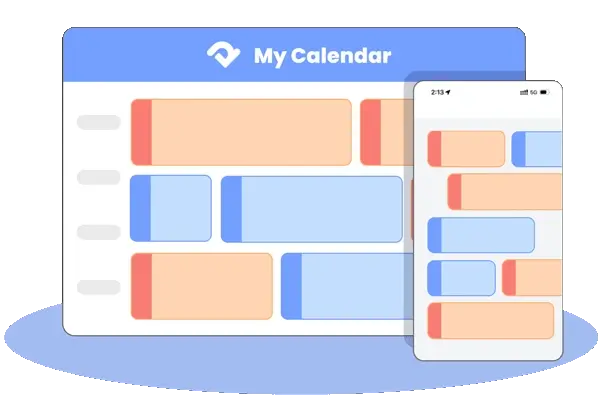
Many properties now choose a mobile-enabled hotel PMS or a cloud-based hotel PMS so managers and staff can access current information without relying on an on-site server.
PMS vs Channel Manager vs Booking Engine
These tools do different jobs. The hotel PMS manages stays and internal records. A channel manager exchanges rates, availability, restrictions, and reservations with OTAs. A booking engine accepts bookings on the hotel's website. Vendors may bundle all three or connect separate systems.
How a Hotel PMS Connects Daily Hotel Operations
A booking can start on an OTA or the hotel website. The channel manager handles the OTA connection; the booking engine handles the website journey. In the hotel PMS, the reservation can update inventory and support front desk, payment, messaging, and reporting tasks.
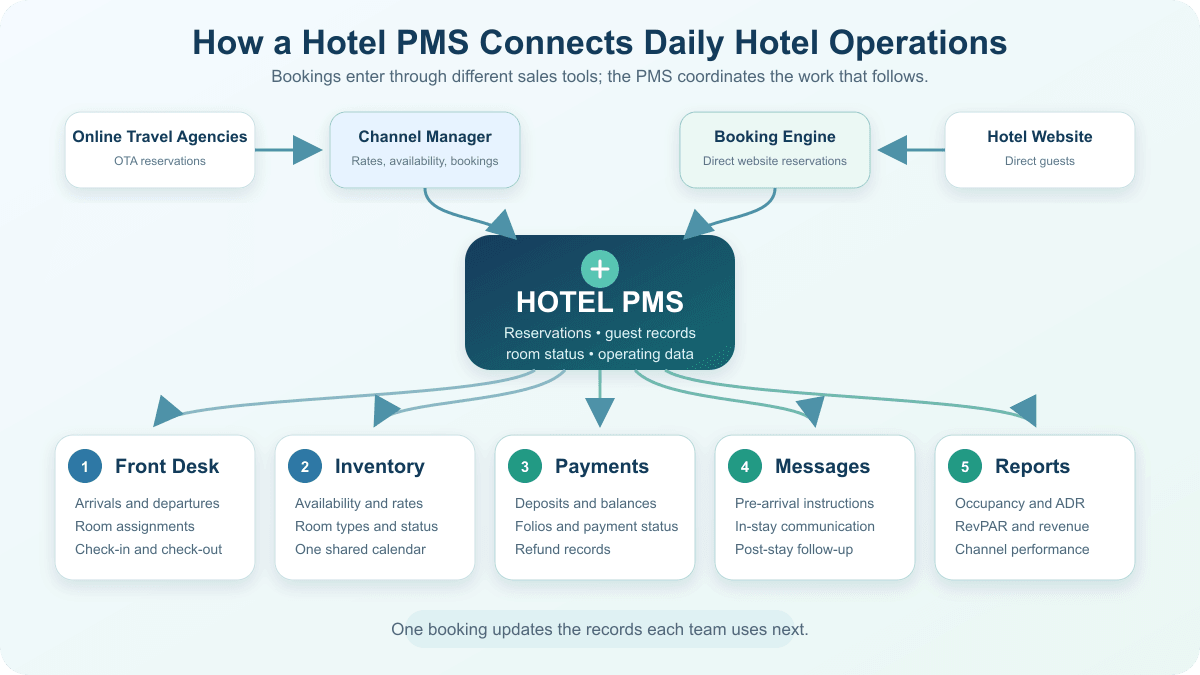
For example, when an OTA reservation enters Smart Order, the calendar and availability update. Staff can manage the arrival, payment, and revenue record without re-entering the booking in a spreadsheet.
See Your Hotel Workflow in One Place
Bring reservations, live availability, and operating reports into one hotel PMS built for independent properties. A free plan is available.
Why Is PMS Important in the Hospitality Industry?
Hotel teams handle changing availability, requests, payments, and bookings from several sources. A hotel PMS reduces manual reconciliation between calendars and records.
1. Operational Efficiency
A hotel PMS can reduce repetitive work such as entering reservations, assigning rooms, updating room status, and checking arrival details. Staff spend less time moving information between tools.
2. Centralized Information Management
Reservation details, guest profiles, billing history, and operating notes stay connected to the same records. This helps the front desk, housekeeping, and management work from consistent information.
3. Enhanced Guest Experience
A modern hotel PMS can support faster arrivals and relevant communication. Connected tools can send pre-arrival instructions and post-stay follow-up.
4. Revenue Visibility
Managers can see how occupancy, rates, and booking sources affect ADR, RevPAR, and revenue. Connected pricing and distribution tools may use that information.
5. Compliance and Security
A hotel PMS should provide controlled staff access and protect guest and payment-related data. The exact security, payment, and compliance responsibilities depend on the PMS, payment provider, and property setup.
Features of a Hotel Property Management System
The right feature set depends on property type and operating complexity.
1. Centralized Calendar Dashboard
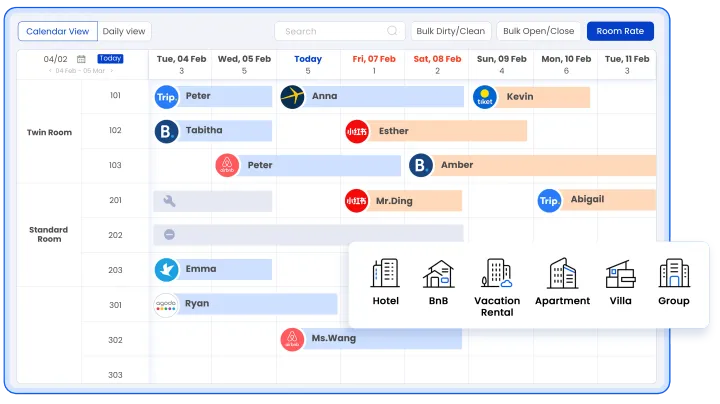
The calendar gives the front desk a current view of reservations, arrivals, departures, room assignments, and availability. Staff can spot gaps or conflicts without comparing separate calendars.
2. Channel Manager
A hotel PMS may include a channel manager or connect to one. The channel manager synchronizes rates, restrictions, and available inventory with connected OTAs and returns reservation changes to the hotel PMS.
3. Direct Booking Engine
A booking engine may be built into the same platform or connected separately. It displays availability and rates on the hotel website, accepts direct reservations, and passes confirmed booking details into the hotel PMS.
4. Mobile Operation
A mobile-enabled hotel PMS lets authorized staff review reservations, update room status, or manage arrivals away from the main desk. Available mobile functions vary by platform.
5. Payment Processing
An integrated or connected payment solution can support deposits, balances, refunds, and folio records. The hotel PMS should clearly show what is due and what has been recorded as paid.
6. Housekeeping Management
Housekeeping staff can update rooms as dirty, being cleaned, ready, or under maintenance. The front desk can use that status before assigning a room to an arriving guest.
7. Guest Communication Tools
Connected messaging tools can use reservation events to send confirmations, arrival details, in-stay messages, and feedback requests. Staff should still be able to review the guest and booking context.
8. Performance Reporting
Hotel PMS reports commonly monitor:
- Occupancy rate
- Average Daily Rate (ADR)
- Revenue per Available Room (RevPAR)
- Revenue and booking-source performance
These reports can reveal weak weekdays or differences between OTA and direct-booking revenue.
Advantages of PMS in a Hotel
The benefits of a hotel PMS come from keeping operational records connected and current.
1. Increased Productivity
Automating routine updates gives staff more time for arrivals, guest requests, and room readiness instead of duplicate data entry.
2. Better Guest Satisfaction
Accurate reservation details, quicker service, and fewer handoff errors support a smoother guest journey from booking to checkout.
3. Real-Time Visibility and Control
Managers can review live reservations, room status, and current performance from a cloud hotel PMS, subject to their permissions.
4. Lower Avoidable Operating Work
Connected workflows can reduce manual reconciliation, duplicate entry, and mistakes. Actual cost savings depend on the property and its previous processes.
5. Scalability
A suitable hotel PMS can support additional rooms, users, properties, or modules as the business grows.
6. Integration With Other Systems
A modern hotel PMS may connect with:
- Point of Sale (POS)
- Revenue Management Systems (RMS)
- Customer Relationship Management (CRM) tools
- Payment processors
- Accounting and marketing platforms
These integrations should reduce duplicate work and preserve a clear record of what happened in each system.
How to Choose the Right PMS for Your Hotel
Choose a hotel PMS around the work your property needs to complete.
1. User-Friendliness
Test whether front desk staff can find an arrival, change a room, record a payment, and complete checkout with limited training.
2. Cloud-Based vs On-Premise
A cloud hotel PMS offers remote access and vendor-managed updates. An on-premise system gives the property more local infrastructure responsibility.
3. Scalability
Confirm that the system can support your expected room count, users, properties, and operating model.
4. Integration Capabilities
Check the exact OTA, payment, accounting, messaging, and revenue systems you need. Do not assume every advertised category includes your provider.
5. Mobile Accessibility
Review which tasks work on a phone or tablet, not just whether the vendor offers a mobile app.
6. Reporting and Analytics
Make sure the hotel PMS can show occupancy, ADR, RevPAR, revenue, and channel performance for useful date ranges.
7. Support and Training
Ask how onboarding, data migration, staff training, and urgent support are handled before the property goes live.
8. Cost and Value
Compare the subscription with setup, integrations, payment fees, support, and any separate channel manager or booking engine costs.
The Future of Hotel PMS: Integration and Innovation
Hotel PMS development is connecting reservations, operations, payments, distribution, and guest services more closely.
1. Deeper System Integration
More hotel PMS platforms are connecting operational data with revenue, accounting, CRM, and guest-service tools.
2. AI and Predictive Analytics
AI tools may help teams summarize demand, identify unusual patterns, and support pricing or staffing decisions, with staff retaining oversight.
3. Voice and Chat Interfaces
Chat and voice interfaces may offer faster ways for staff or guests to retrieve information and complete routine requests.
4. Personalization at Scale
Connected guest profiles can help hotels recognize preferences and provide more relevant service across repeat stays.
5. Sustainability Integrations
Hotel PMS integrations may connect occupancy and room status with energy or resource-management systems.
6. Enhanced Security
Vendors will continue improving access controls, monitoring, identity verification, and data protection as hotel systems become more connected.
7. Guest Portals
Guest portals may bring booking details, payments, room selection, and in-stay requests into one self-service experience.
Frequently Asked Questions About Hotel PMS
What does PMS stand for in hotels?
PMS stands for Property Management System. In a hotel, it is the software used to manage reservations, rooms, guests, front desk activity, payments, and operating reports.
What is the main purpose of a hotel PMS?
The main purpose of a hotel PMS is to keep daily hotel operations connected. It gives staff one place to manage booking records, room availability, arrivals, departures, guest details, and performance information.
Is a hotel PMS the same as a channel manager?
No. A hotel PMS manages property operations and reservation records. A channel manager exchanges rates, availability, restrictions, and bookings with OTAs. The two systems may be bundled or integrated.
Is a booking engine part of a hotel PMS?
It can be. Some hotel PMS platforms include a booking engine, while others connect to a separate one. The booking engine serves website guests; the PMS manages the resulting reservation and stay.
What are the advantages of PMS in a hotel?
A hotel PMS can reduce duplicate entry, improve room and reservation visibility, support faster staff handoffs, and make occupancy, ADR, RevPAR, and revenue easier to review.
Do small hotels need a hotel PMS?
A small hotel can benefit when spreadsheets or separate channel calendars create repeated work or booking risk. The right hotel PMS should match the property's size and remain simple enough for the team to use daily.
Conclusion
A hotel PMS is the central operating system behind reservations, rooms, guest records, payments, and reporting. Channel managers and booking engines support distribution and direct sales, but they do not replace the PMS role inside the property.
For a boutique hotel, motel, guesthouse, or group, the right hotel PMS should make daily work clearer. Understanding how the systems connect helps you choose a setup that fits your team and guests.