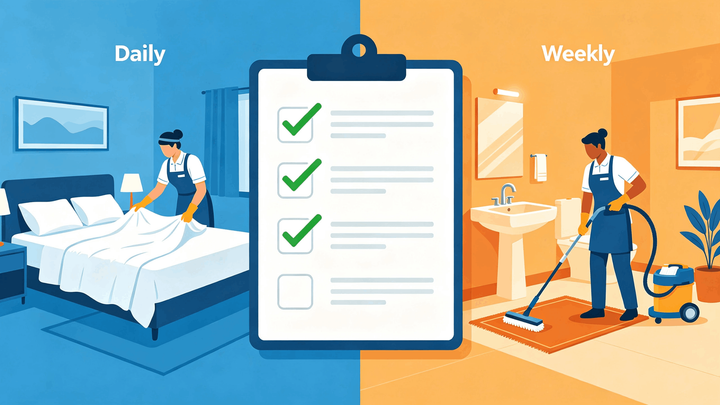
1. A hotel housekeeping checklist should cover guest rooms, bathrooms, public areas, back-of-house spaces, supplies, inspections, and maintenance flags.
2. Daily tasks protect guest readiness; weekly tasks prevent slow quality decline in corners, vents, upholstery, storage areas, and equipment.
3. The best checklist is connected to room status, arrivals, departures, and maintenance notes, not kept as a paper form that no one updates.
A housekeeping checklist is not just a cleaning reminder. In a hotel, it protects reviews, room readiness, staff accountability, and guest trust.
When housekeeping runs from memory, small misses become patterns. A bathroom fan gets dusty. A minibar is not restocked. A room marked "clean" is not actually ready for check-in. Repeated across rooms, these misses become a reputation problem.
This guide gives hotels a daily and weekly housekeeping checklist, plus a supervisor inspection structure for boutique hotels, small hotels, serviced apartments, hostels, and vacation rentals.
What a Hotel Housekeeping Checklist Should Include
A useful housekeeping checklist should cover more than visible cleaning. It should tell staff what to clean, inspect, restock, report, and when the room can be marked ready.
At minimum, it should include room surfaces, bathroom cleaning, linen replacement, trash removal, amenity restocking, floor care, odor checks, safety checks, maintenance issues, lost-and-found items, and final inspection.
The key difference from a home cleaning checklist is timing. Hotel housekeeping is tied to arrivals, departures, stayover service, early check-ins, late checkouts, and room changes.
Daily Housekeeping Checklist for Guest Rooms
Use this daily housekeeping checklist for departures, stayovers, and occupied-room service. Adjust scope by room status.
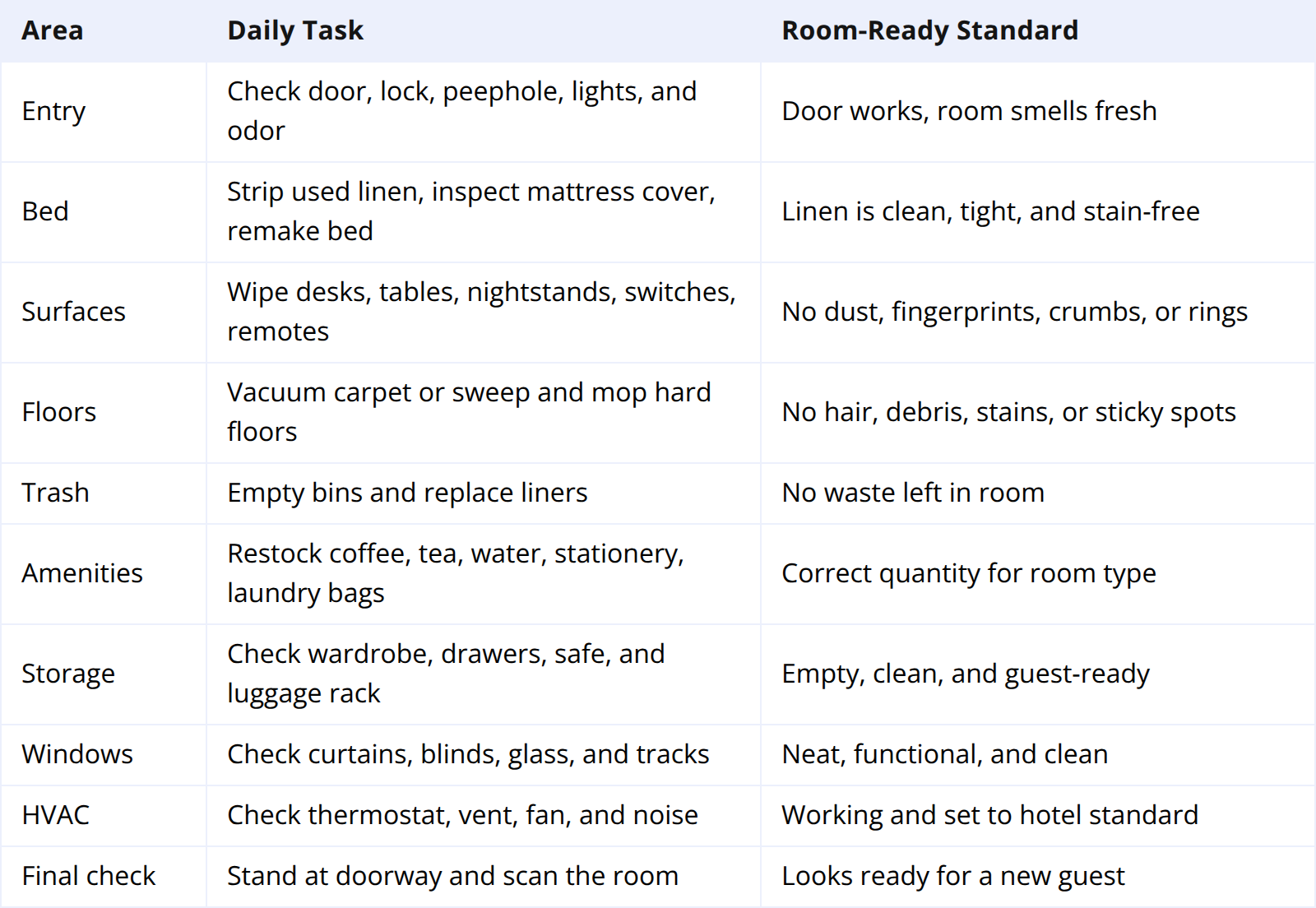
Departure rooms need the full version. Stayover rooms may need lighter service, but staff should still confirm trash, towels, surfaces, bathroom condition, and guest-requested items.
Daily Bathroom Cleaning Checklist
Bathrooms drive reviews because guests inspect them closely. Hair in the shower or water spots on glass can make the whole room feel dirty.
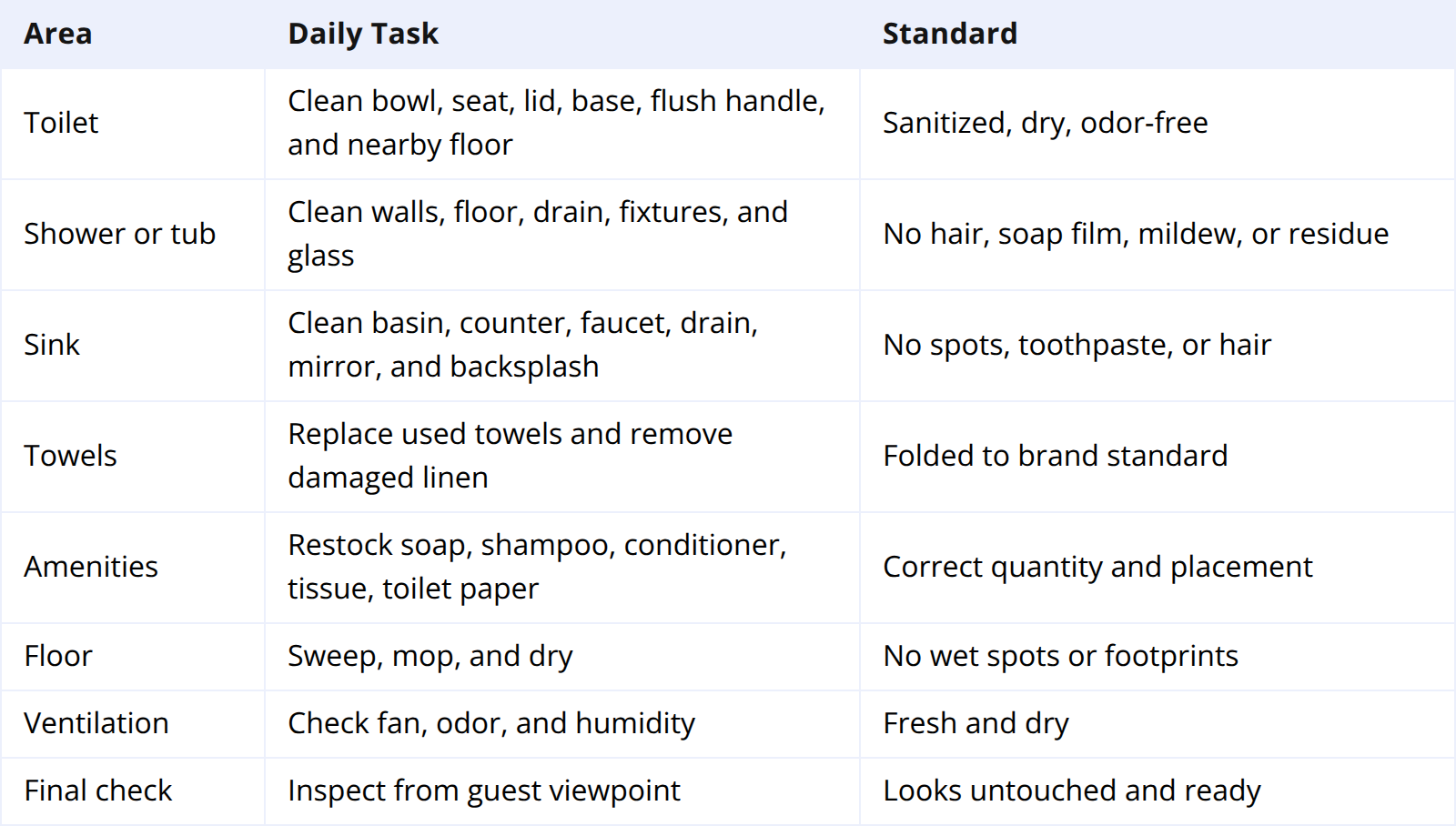
If a bathroom needs extra time because of grout or hard-water buildup, flag it for weekly or deep cleaning.
Public Area Daily Checklist
Public areas shape the first impression before guests reach the room. Assign ownership clearly, especially in small hotels where teams share tasks.
Daily public area checks should cover lobby floors, entrance glass, reception counters, elevators, guest restrooms, corridors, stairs, trash bins, seating areas, breakfast areas, outdoor entry zones, and visible signage.
High-touch points need special attention: elevator buttons, door handles, handrails, payment terminals, luggage carts, lobby tables, restroom fixtures, and coffee stations.
The best rhythm is simple: morning reset before arrivals, midday touch-up, and evening close-down.
Weekly Housekeeping Checklist
Weekly housekeeping tasks prevent slow decline. Guests may not notice when they are done, but they notice when they are skipped.
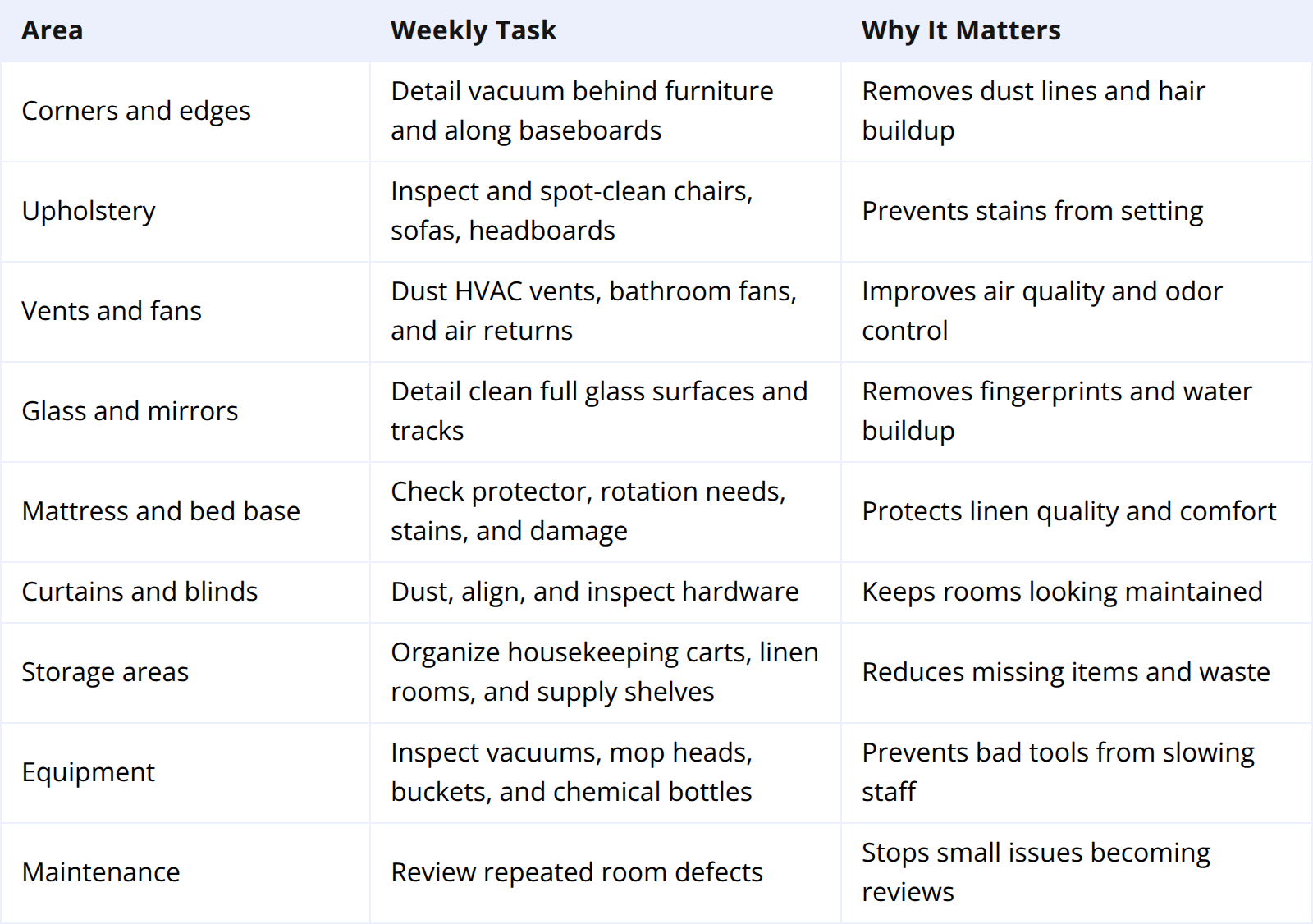
Schedule weekly tasks by room or zone. If occupancy is high, rotate rooms so every space receives deeper attention over the month.
Housekeeping Inspection Checklist for Supervisors
A supervisor checklist should verify standards, not repeat every cleaning step. The goal is to catch issues before guests do.
Inspect a sample of clean rooms daily, plus VIP, complaint-recovery, early-arrival, and long-stay departure rooms. Check bed presentation, bathroom detail, floors, odor, amenities, maintenance flags, lost-and-found items, and room status.
The best inspection habit is looking from the guest's first viewpoint: entrance, bed, bathroom mirror, shower, desk, window, and bedside table. This catches details staff miss when cleaning in task order.
If the same issue appears repeatedly, the checklist is not the only problem. It may be training, unrealistic room-cleaning time, missing supplies, or unclear accountability.
How to Use the Checklist Without Slowing the Team
A checklist should make housekeeping faster, not heavier. Keep it short enough for daily use and specific enough to prevent interpretation.
The cleanest system connects tasks to room status. When a guest checks out, the room moves to dirty. When cleaning starts, it changes to in progress. After inspection, it becomes clean or ready. If maintenance is found, the room is flagged before the front desk assigns it.
Smart Order helps hotels connect reservations, room status, OTA bookings, direct bookings, payments, and reporting in one dashboard. When a guest checks out, the room can move into the housekeeping workflow; when it is ready, the front desk sees availability without calling the cleaner.
Keep Housekeeping Connected to Room Status
Smart Order connects reservations, housekeeping status, OTA channels, direct bookings, and reporting so hotel teams can keep rooms ready without manual handoffs.
Common Housekeeping Checklist Mistakes
The first mistake is making the checklist too long for daily use. If staff cannot complete it during a real turnover window, they will skip steps.
The second mistake is using one checklist for every room type. Suites, family rooms, pet-friendly rooms, accessible rooms, and kitchenettes need extra checks.
The third mistake is separating housekeeping from maintenance. A cleaner may be the first person to notice a dripping tap, loose handle, stained curtain, or noisy air conditioner.
The fourth mistake is leaving the checklist on paper only. Paper can work for small teams, but it becomes fragile when occupancy rises or front desk needs real-time room status.
FAQ About Hotel Housekeeping Checklists
What is included in a housekeeping checklist?
A housekeeping checklist usually includes guest room cleaning, bathroom sanitation, linen replacement, trash removal, amenity restocking, floor care, odor checks, safety checks, and final inspection.
What should be on a daily housekeeping checklist?
Daily housekeeping should cover beds, bathrooms, trash, floors, surfaces, towels, amenities, high-touch points, odors, guest requests, and room status updates.
What should be cleaned weekly in hotel housekeeping?
Weekly tasks include baseboards, vents, upholstery, curtains, mattress protectors, storage areas, equipment, glass tracks, and recurring maintenance issues.
How do hotels inspect housekeeping quality?
Hotels inspect rooms by checking bed presentation, bathroom detail, floors, odors, amenities, maintenance flags, and whether room status is correctly updated before guest arrival.
Should hotels use a digital housekeeping checklist?
A digital checklist is useful when the hotel needs real-time room status, maintenance alerts, team accountability, and faster handoff between housekeeping and front desk.
Final Takeaway
A complete housekeeping checklist keeps hotel standards visible. It turns "clean the room" into a repeatable process that protects reviews, staff efficiency, and guest trust.
Use daily checklists for room readiness, weekly checklists for deeper quality control, and supervisor inspections for accountability. Then connect the checklist to room status so housekeeping, maintenance, and front desk work from the same information.