Hotel managers handle a packed schedule every day. They check revenue numbers, talk to front desk teams, work with online booking sites, and fix unexpected problems. In this busy setting, clear and quick communication is key to getting things done right. But the hotel business uses lots of shortcuts and special words that can trip up even experienced managers if they’re not careful. A small mistake with a term like GOPPAR or misunderstanding an OTB number can lead to bad pricing choices, empty rooms, or unhappy guests.
This guide isn’t just another boring list of hotel words. It’s a useful handbook made for managers. It turns confusing shortcuts into clear ideas you can actually use. Whether you’re new to running a hotel or have done it for years, you’ll find simple explanations, real-life examples, and tips. These will help you and your team work smoother, make more money, and steer clear of expensive errors. Let’s get started.
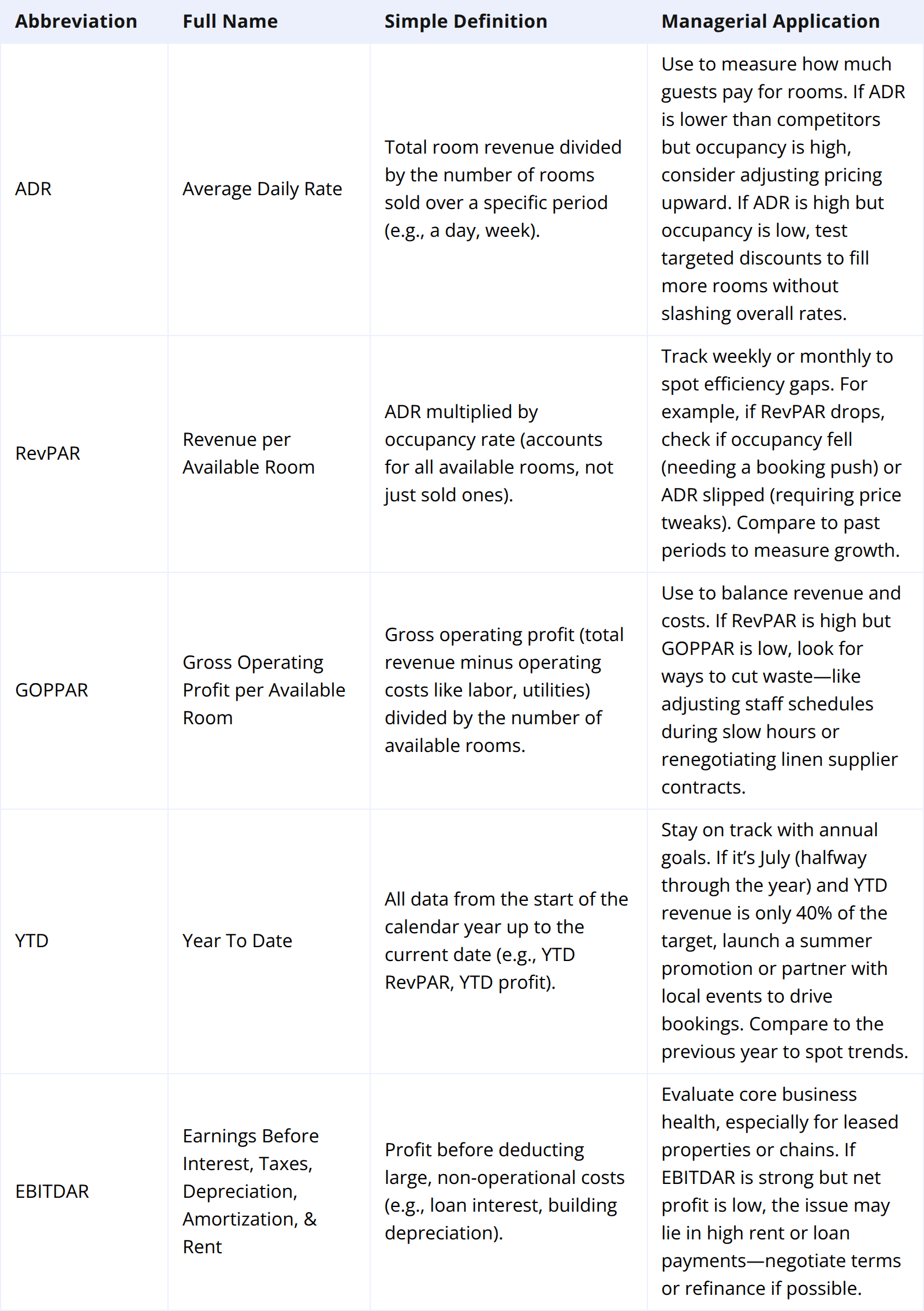
Revenue & Finance: The Numbers That Drive Decisions
For hotel managers, revenue and finance data aren’t just spreadsheets—they’re roadmaps for setting prices, controlling costs, and hitting business goals. These abbreviations are the foundation of every financial conversation you’ll have, and understanding them is key to making data-driven choices.
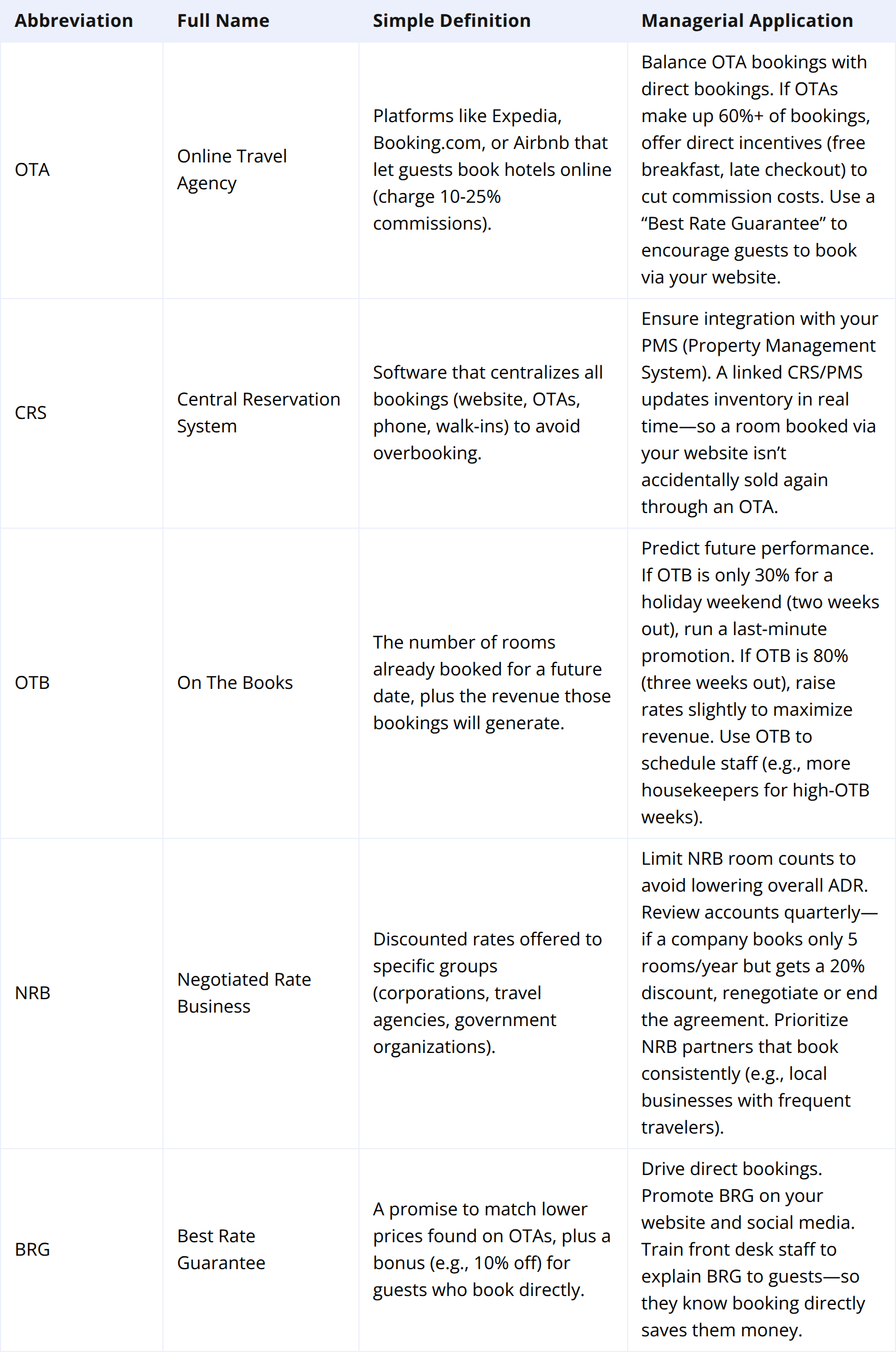
Reservations & Distribution: Getting Guests in the Door
Even the best hotels struggle if they can’t fill rooms. These abbreviations cover the tools and terms you’ll use to manage bookings, work with travel partners, and keep your rooms occupied—without overspending on commissions.
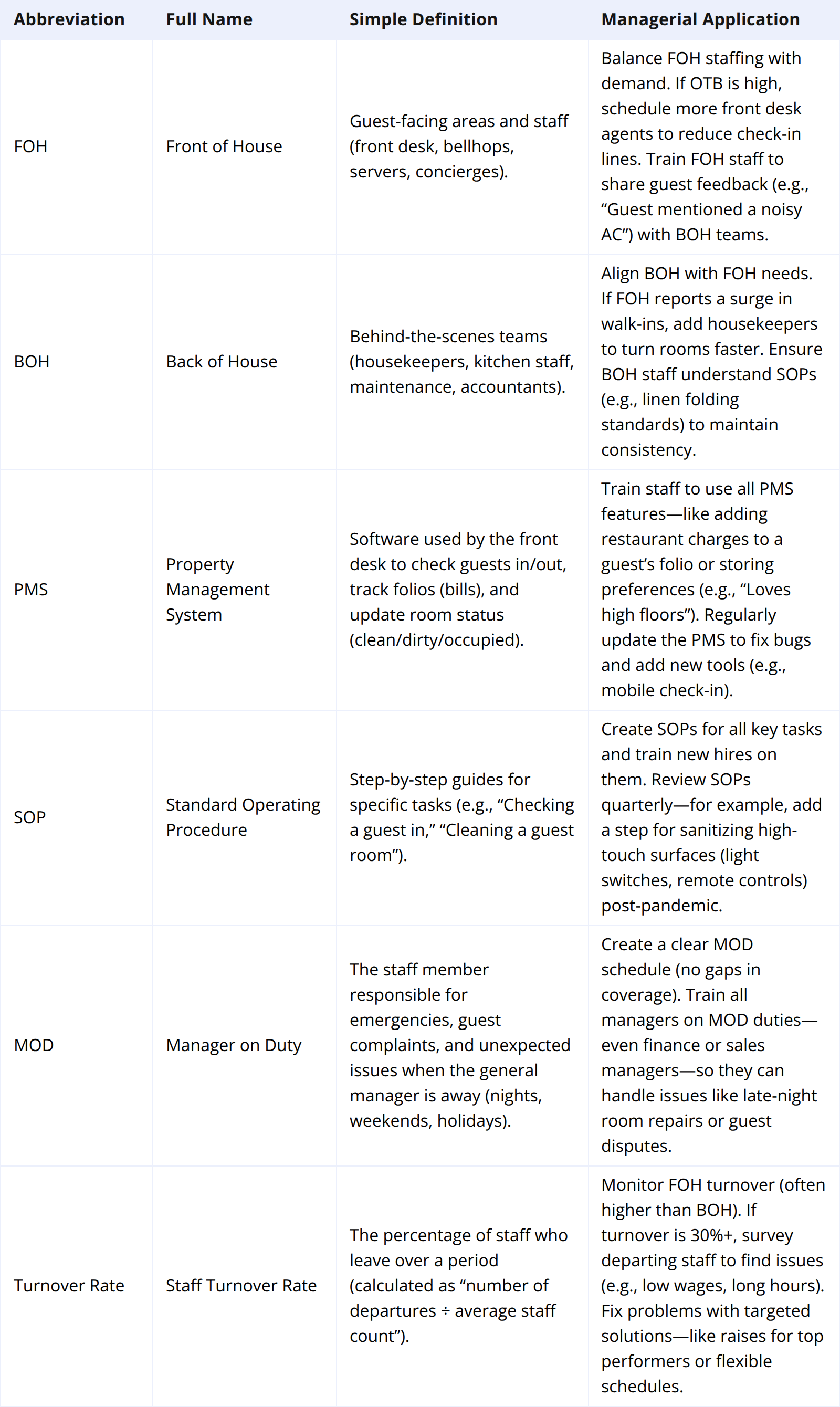
Operations & Staff: Keeping the Hotel Running Smoothly
A hotel’s success depends on its team. These abbreviations will help you communicate with staff, set standards, and solve day-to-day problems—from room clean to guest complaints.
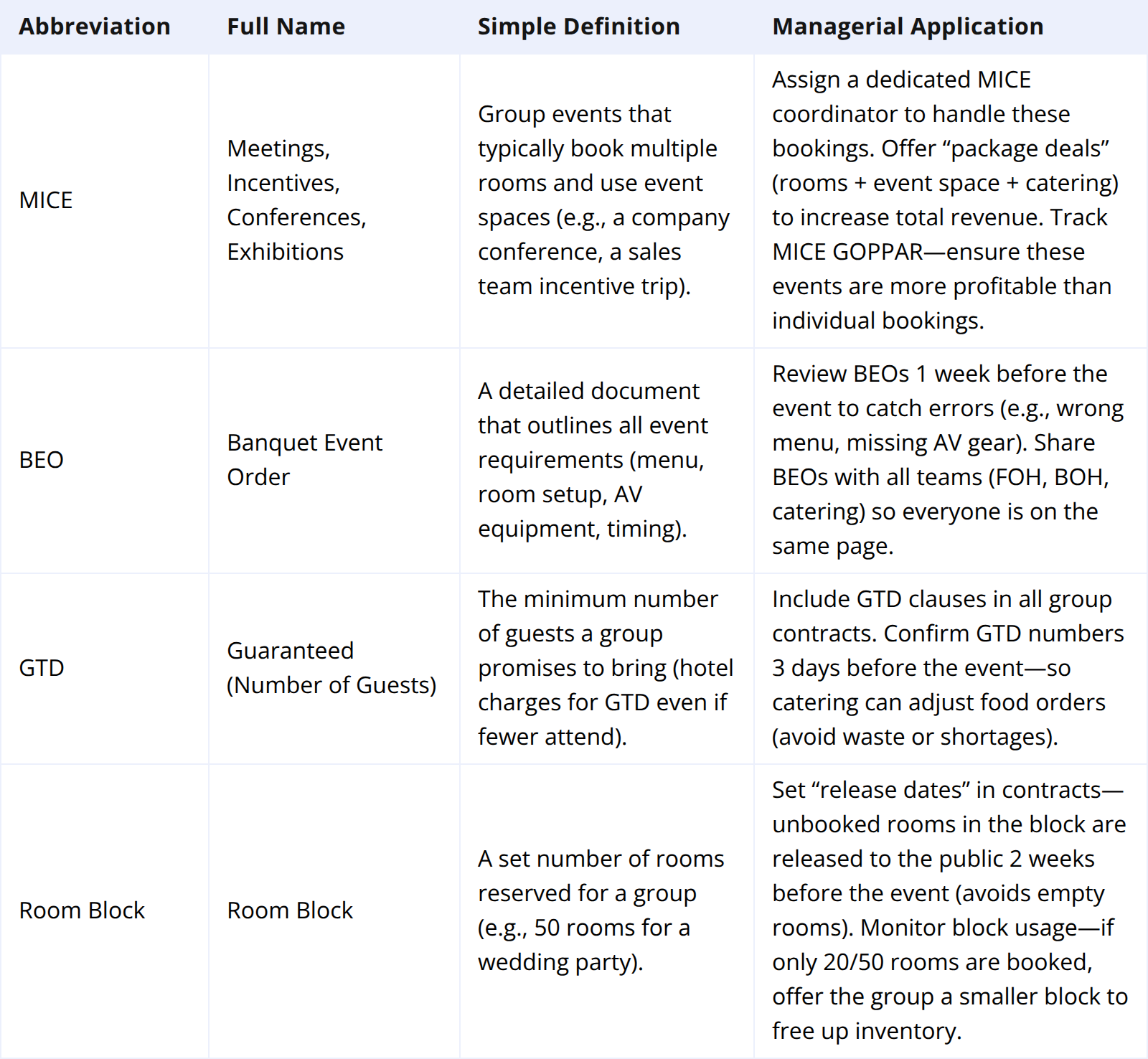
Events & Group Business: Boosting High-Revenue Bookings
Group bookings (like weddings, conferences, or corporate retreats) can drive significant revenue. These abbreviations will help you manage these events smoothly and protect your bottom line.
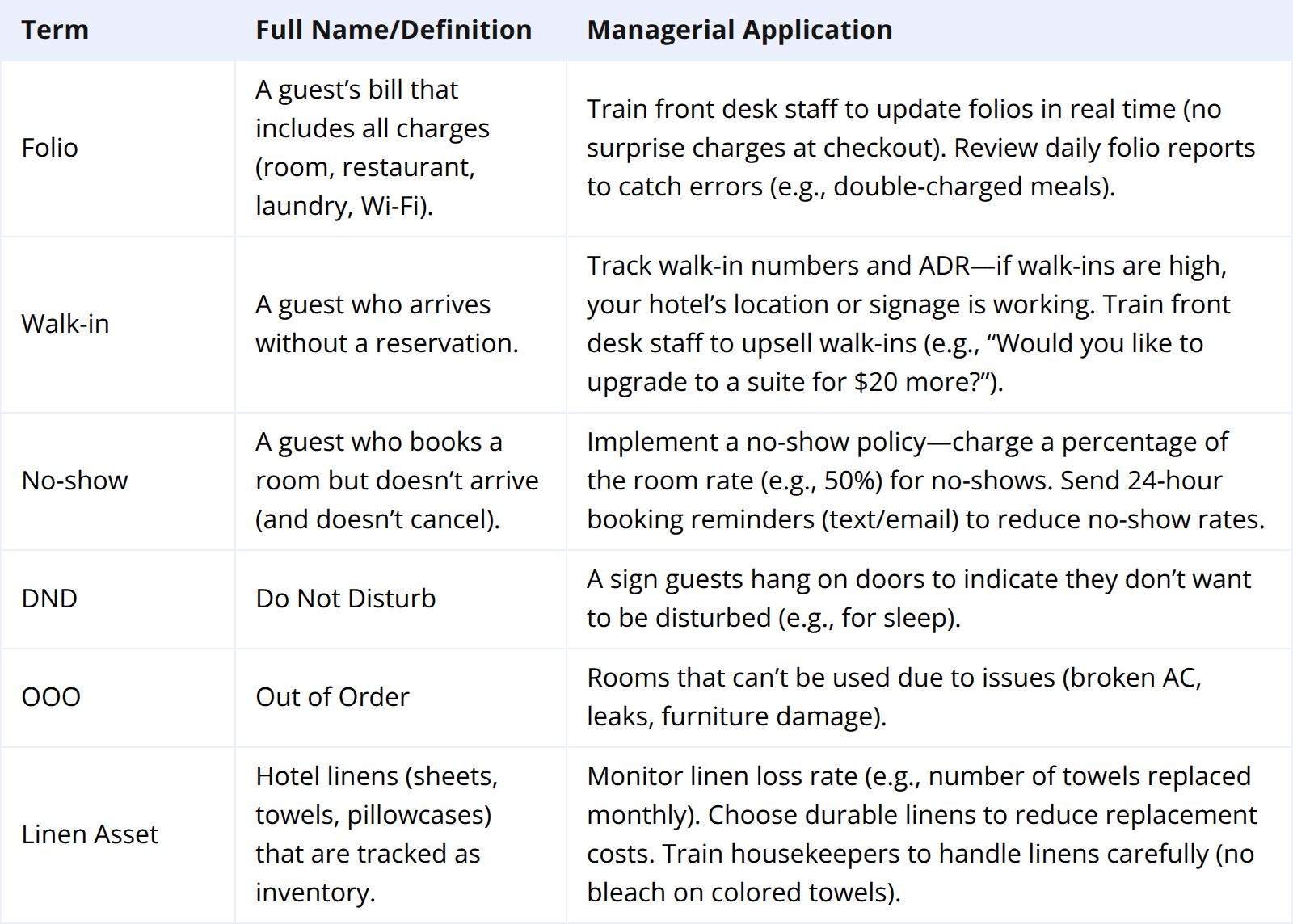
Extended Terminology: Front Office & Housekeeping
The front office and housekeeping teams are critical to guest satisfaction. These terms will help you support their work and resolve issues fast.
Practical Tips for Using These Abbreviations
Knowing what these shortcuts mean is good. Using them to help your hotel run better is what matters. Here’s how:
- Get your team on the same page: Make a quick one-page list of the key terms. Go over it together at your next team meeting. Ask everyone to start using these words in their daily updates (like saying, “Our OTB for next week is 60%”). This helps everyone understand each other better. If the front desk and housekeeping both know what OTB means, they can team up better when things get busy.
- Catch problems sooner: Pick a time each week to look at your key numbers like ADR, RevPAR, and GOPPAR. If you see RevPAR is down but ADR is up, you know right away that not enough rooms are booked. Then you can try a weekend deal (like “15% Off This Weekend!”) to fill those empty rooms. This helps you fix issues fast. If GOPPAR is down but RevPAR is up, you’re spending too much—so you can cut unnecessary costs (like unused office supplies or extra staff on slow days).
- Keep the dictionary handy: Save this guide to your phone or print a copy for your desk. When you’re on a call with an OTA partner and they mention “NRB rates,” you won’t have to pause to ask what they mean. Over time, these terms will become second nature—but it’s okay to reference the dictionary until then.
Conclusion
Hotel abbreviations don’t need to be confusing. Think of them as handy tools. They help you talk faster, make better choices, and lead your team well. Whether you’re checking a RevPAR report, talking with an OTA, or showing a new staff member the ropes, this guide turns jargon into clear steps.
Here’s the key: great managers don’t just know these terms—they use them to fix problems. See a low ADR? Tweak your prices. OTB numbers dropping? Launch a promotion. Team mixed up on SOPs? Train them. Every shortcut here has one job: helping your hotel succeed.