Running a hotel on Excel feels manageable at first. You set up a calendar, track reservations in rows, and build formulas to calculate occupancy. For a property with five rooms and one booking source, it works.
Then you get a second OTA channel. Then a third room type. Then a peak-season booking that overlaps with a direct reservation nobody updated the sheet for.
At some point, most hoteliers hit a wall. The spreadsheet that once felt like control starts to feel like a liability.
This article breaks down why that happens, what a hotel PMS application actually replaces, and when the switch makes sense for your operation.
Why So Many Hotels Still Use Excel
Excel is free, familiar, and flexible. You don't need training to start a spreadsheet, and you can customize it exactly the way you think.
Small properties often start here out of necessity. A boutique hotel with ten rooms doesn't always have the budget or the time to evaluate software. A vacation rental owner managing a few units just wants a simple way to track who's coming when.
The spreadsheet works. Until it doesn't.
The Hidden Problems with Managing a Hotel on Spreadsheets
The issue with Excel isn't that it's bad software. The issue is that hotel operations have a rhythm that spreadsheets can't keep up with.
Overbooking Is a Matter of Time
If you're taking reservations from Booking.com, Airbnb, and your own website, all of those sources need to reflect the same availability at the same time.
With Excel, that means manually updating your sheet every time a booking comes in — across every channel. One booking arrives while you're handling a check-in. You update one platform but forget the others. A second guest books the same room.
Now you have two guests arriving on the same night.
Overbooking from unsynced availability is one of the most common operational failures in independent hotels. It's not a question of being careless. It's a structural problem with manual systems.
Rate Updates Take Too Long
Dynamic pricing is standard practice. You adjust rates for weekends, holidays, and last-minute availability.
With a spreadsheet, that means manually updating rates on every OTA platform and your own website separately. Depending on how many channels you use, a single rate update can take 20 to 40 minutes. Multiply that by how often you adjust pricing, and you've lost hours of management time every week.
You're Always Working from Outdated Data
A spreadsheet reflects what someone entered. It doesn't update when a guest cancels through an OTA. It doesn't automatically show your occupancy rate for next month. It doesn't tell you which booking channel is generating the most revenue without manual work.
Getting any of that information means pulling data from multiple places, cross-referencing, and hoping nothing was missed.
What a Hotel PMS Application Actually Does Differently
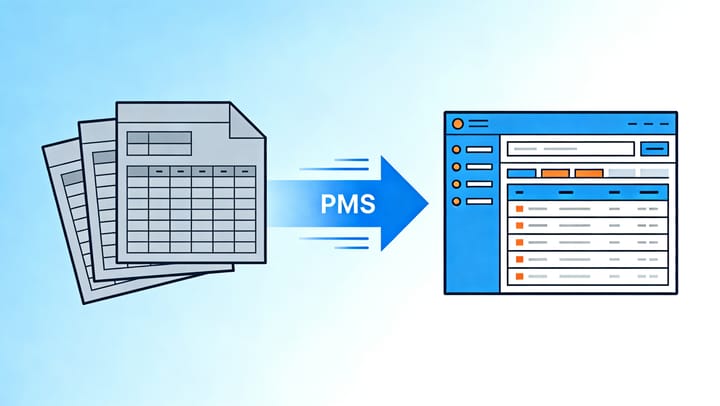
A Property Management System (PMS) isn't just a digital replacement for Excel. It changes how data flows through your operation entirely.
Real-Time Availability Across All Channels
When a guest books through Booking.com, your PMS updates availability instantly across every connected OTA and your direct booking website. No manual step. The room is blocked in one action, everywhere at once.
This is what prevents overbooking — not careful updating, but automatic sync.
Smart Order's channel manager connects directly with major OTAs including Booking.com, Agoda, Airbnb, and Trip.com. When a reservation comes in from any platform, availability adjusts in real time so no second guest can book the same room.
Centralized Reservations and Reporting
Instead of switching between your Excel sheet, each OTA extranet, and a separate finance file, everything sits in one dashboard.
You open your PMS and you see: which rooms are occupied, which are arriving today, which have outstanding payments, and how your occupancy rate compares to last week. You don't pull that data together — it's already there.
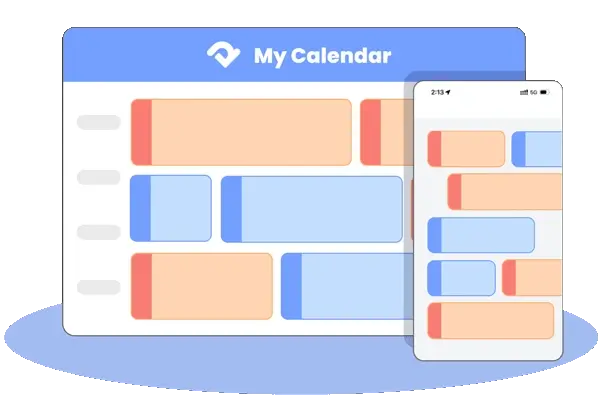
With Smart Order, your reservation calendar shows all bookings across every source in a single view. You can see how a peak weekend is filling up, which rooms are still available, and what your projected revenue looks like — without opening a single spreadsheet.
Payment Collection Without the Back-and-Forth
Manual reservation management usually means chasing payments. You send an email, wait for a response, follow up again.
A PMS with built-in payment tools lets you send a payment link directly to the guest. They pay the deposit or full balance through a secure link — the booking status updates automatically in your system.
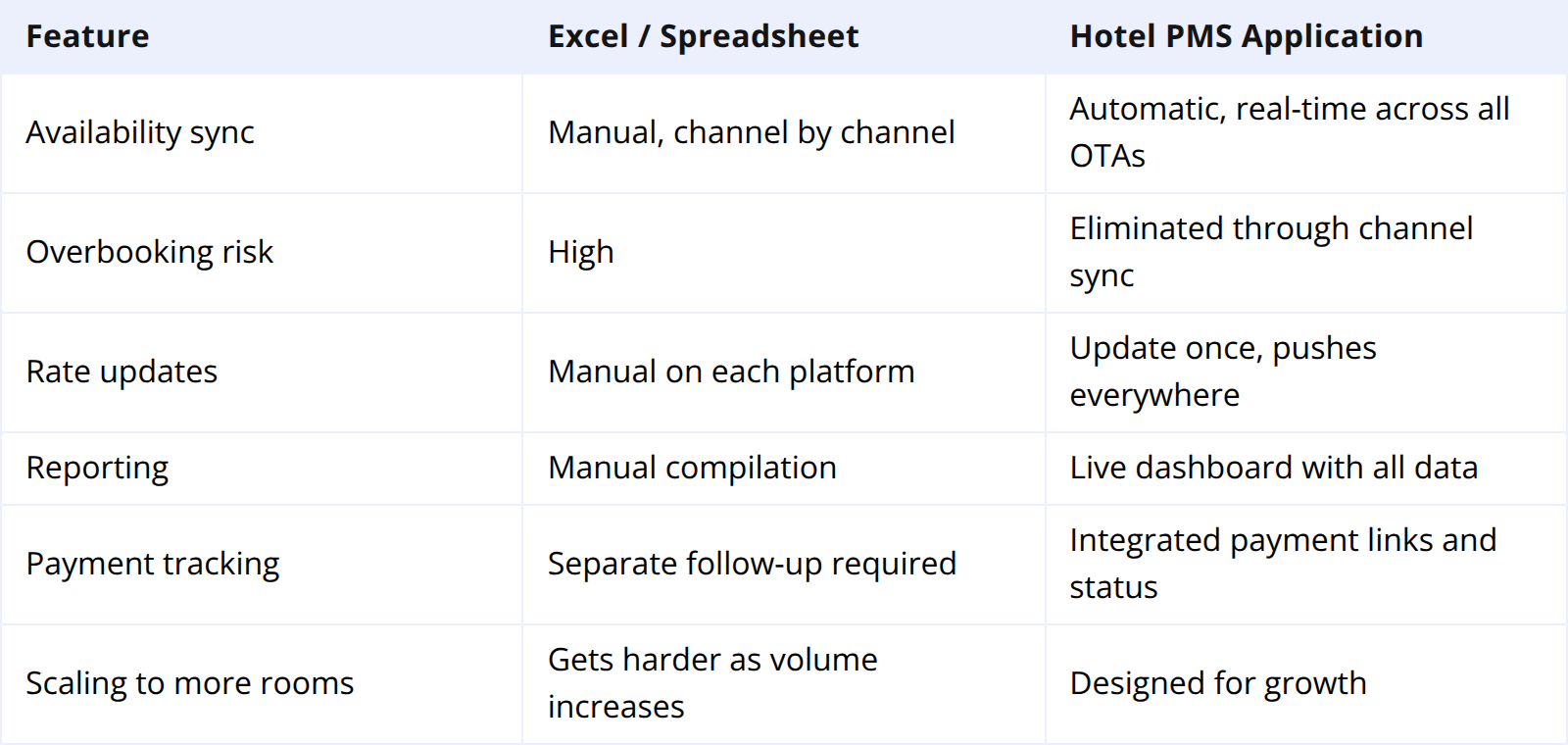
Side-by-Side: Hotel PMS vs Excel Sheet
Signs Your Hotel Has Outgrown Spreadsheets
Not every property needs to switch immediately. But these are signals that your current setup is costing you more than you realize:
- You've had at least one overbooking in the past six months
- Rate updates take more than 15 minutes per session
- You don't know your current occupancy rate without calculating it manually
- You're spending time reconciling OTA reports against your own records
- You're managing more than two active booking channels
If three or more of these apply, a spreadsheet is no longer saving you time. It's creating work.
How to Make the Switch Without Disruption
The most common reason hotels delay switching is fear of disruption. What happens to existing reservations? How long does setup take?
A cloud-based PMS can usually be configured in a few hours. You import your existing reservations, connect your OTA channels, and the system takes over from there.
The channel connections are the most important step. Once your PMS is linked to your OTAs, all future reservations flow in automatically. You don't need to manually update availability again.
The first week requires attention — confirming the sync is accurate, checking that rates pushed correctly, verifying existing bookings transferred cleanly. After that, the manual workload drops significantly.
FAQ
Can a small hotel use a PMS application?
Yes. Many PMS platforms are designed specifically for small and independent properties. Smart Order offers plans that scale with your operation, including options for properties with just a few rooms.
Is a hotel PMS application difficult to set up?
Cloud-based PMS systems are built for fast onboarding. Most properties can complete the initial setup and OTA connections within a day. No technical background is required.
What happens to overbooking risk when using a PMS?
Overbooking happens when availability isn't synced across channels. A PMS with a channel manager updates all connected OTAs simultaneously when a booking is confirmed — closing the window where a second reservation can come in for the same room.
Does a PMS replace my need to log into OTA extranets?
For most day-to-day operations, yes. Reservations, rates, and availability are managed through the PMS. You may still access OTA extranets for promotions or specific policy changes, but you won't need to log in for every booking.
How much does a hotel PMS application cost?
Pricing varies by platform and property size. Smart Order offers a free plan for basic operations, with paid tiers starting at $5.00 per room per month for properties that need full channel management and reporting.
Managing more reservations than your spreadsheet can handle? Smart Order's cloud PMS connects your reservations, OTA channels, and reporting in one system. Visit www.smartorder.ai to learn more.