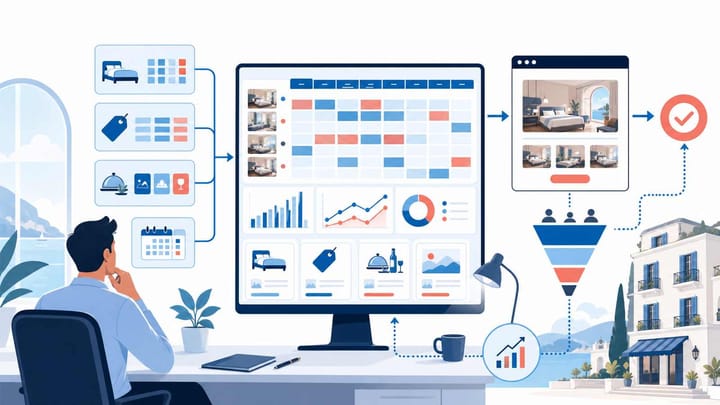
1. A connected booking engine can use approved PMS room types, rates, availability, and supported rules, while confirmed website reservations flow back into the operating record.
2. PMS data explains what booked and what produced revenue; booking engine and web analytics explain what guests searched, viewed, and abandoned.
3. Owners should turn each signal into one controlled change to rates, packages, inventory, or landing pages, then compare results over a meaningful period.
4. Clean mappings, consistent booking IDs, and test reservations must come before conversion analysis.
Hotel website booking conversion is easier to improve when PMS data and booking engine data are reviewed together. The property management system shows the commercial result: room type, rate plan, booking source, stay dates, revenue, cancellation, and sometimes add-ons. The booking engine shows how direct shoppers moved toward that result.
Neither source is enough alone. A PMS cannot usually explain an abandoned date search. Website analytics cannot confirm whether a reservation later cancelled or produced the expected revenue. The useful view joins guest intent with the reservation outcome.
How PMS Data Sets Up the Booking Engine
A connected booking engine can be configured from data maintained in or uploaded from the PMS. The exact scope depends on the integration, but the core flow normally covers room types, occupancy, sellable availability, rates, rate plans, taxes, policies, and supported restrictions.
The PMS may contain internal room names or rate codes that confuse guests. The owner must decide which products become public and how photos, inclusions, and cancellation terms appear.
When a direct reservation is confirmed, it should return to the PMS with the correct room type, rate plan, source, dates, value, guest details, and payment status. Inventory then falls in the shared source used by connected sales channels. That round trip makes conversion data operationally trustworthy.
Before measuring performance, complete mobile and desktop test reservations. Verify the total, confirmation, PMS record, inventory reduction, source, cancellation, and inventory return. Bad mapping can assign a successful booking to the wrong PMS product.
PMS Data Signals and Website Conversion Actions
The owner does not need another dashboard full of ratios. Each signal should lead to a specific decision, and each decision needs a validation metric. The matrix below separates evidence from action.
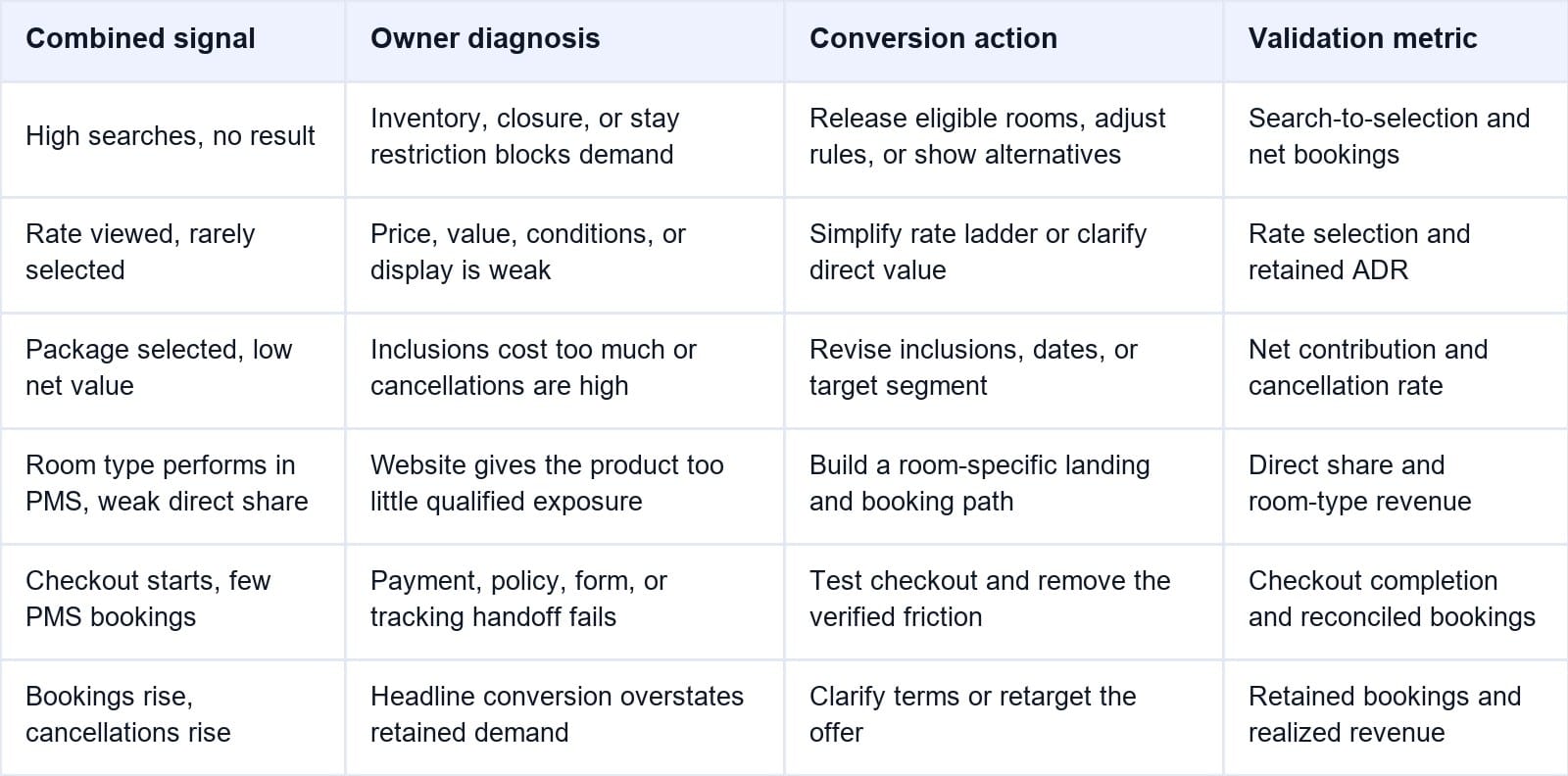
Start with one row at a time. Changing rates, packages, room-page copy, and checkout fields in the same week makes it difficult to identify what helped.
When PMS signals stay trapped in monthly reports, the booking page repeats yesterday's assumptions. Smart Order connects the hotel PMS, booking engine, and hotel reporting software so a direct reservation updates the operating record, the owner sees the room and rate that converted, and the next website offer can be adjusted from confirmed results.
Turn Reservation Data Into Better Direct Offers
Keep direct rates, availability, booking records, and performance reporting in one connected hotel workflow.
Use Rate and Rate-Plan Results to Refine the Offer
PMS production reports show which rate plans generate bookings, room nights, average daily rate, length of stay, and net revenue. Review these results by stay date and room type, not only by booking date. A package may look weak because it was displayed for dates when its target room type was nearly sold out.
Compare PMS results with booking engine searches. If many shoppers see a rate but few select it, the problem may be price, value, restrictions, or presentation. If a plan is frequently selected but later cancelled, the headline conversion number is hiding a weaker net outcome.
Keep the rate ladder understandable. A refundable room-only rate, a non-refundable option, and one relevant package often create a clearer choice than many overlapping plans. Use PMS data to remove offers with no production, but first confirm they received enough qualified views.
Use Availability Data to Remove Dead Ends
Availability affects conversion before page design does. A campaign cannot sell a room that the booking engine does not expose. Review dates with high website search demand but no available result, then compare them with PMS inventory, out-of-order rooms, closures, minimum stays, and room-type allocation.
A no-result search does not always mean the hotel is full. Another suitable room may remain open, a minimum stay may reject the search, or inventory may be held for another channel or group.
Check capacity and commitments before opening inventory. Then release a room, relax a restriction, show alternate dates, or direct the visitor to another room. Measure confirmed net bookings, not only visible results.
Build Packages From Stay Patterns, Not Guesswork
Package ideas should begin with a guest need visible in the PMS. Longer weekend stays may support breakfast and late checkout. Frequent one-night business stays may respond better to parking or an early breakfast. Low midweek pickup may justify a targeted value-add without discounting every date.
The PMS reveals booking window, length of stay, room preference, source, cancellations, and realized revenue. The booking engine adds offer views, selections, checkout starts, and add-on attachment. Together, they show whether attention becomes a valuable stay.
Judge packages on net contribution. A package with a higher booking rate can still underperform if the included service costs too much, displaces a higher-rate room, or creates frequent cancellations. Record the inclusions and costs consistently so the owner can compare like with like.
Match Landing Pages to PMS Demand
A landing page should promise an offer the booking engine can actually return for the visitor's dates. Use PMS room-type demand and stay patterns to choose which accommodation, package, or use case deserves a dedicated page. Then pass the selected dates, room, or promotion into the booking path where the engine supports it.
If family rooms produce strong three-night stays but receive little direct traffic, create a family-stay page whose booking action opens matching inventory. When unavailable, show a credible alternative instead of an empty result.
Do not claim that PMS data identifies the best headline or page layout. That requires website evidence such as landing-page sessions, booking-button clicks, device, campaign source, and controlled tests. PMS data tells the owner whether traffic eventually became a profitable, retained reservation.
Measure One Funnel Across Two Systems
Use a shared reservation or transaction ID where possible. It connects the website purchase event with the booking engine confirmation and final PMS record without relying only on names or email addresses.
A practical measurement sequence is:
- Track landing-page sessions, availability searches, room or rate selections, checkout starts, purchases, and refunds with the booking engine and web analytics.
- Reconcile purchases to PMS reservations, source, room type, rate plan, booking value, payment status, modifications, cancellations, and realized stay revenue.
- Segment results by device, traffic source, stay date, room type, rate plan, booking window, and length of stay, but only when the sample is large enough to guide a decision.
- Change one material variable, record the start date, and compare at least one suitable booking cycle rather than reacting to a single day.
- Keep the change only if confirmed bookings, net revenue, or contribution improves without creating an operational problem.
Google Analytics ecommerce events can measure views, checkout starts, purchases, and refunds. The setup must preserve the website-to-engine handoff; cross-domain or redirect gaps can otherwise remove real customers from the funnel.
A 30-Day Owner Review Rhythm
In week one, validate tracking and reconcile direct bookings. In week two, identify the largest qualified gap: unavailable search demand, an unselected rate, checkout abandonment, or a valuable room with weak direct exposure.
Make one focused change in week three. In week four, compare funnel behavior and PMS outcomes with the prior period, accounting for weekday mix, events, promotions, and traffic quality.
The reporting workflow should end with an owner decision, not a screenshot. Smart Order's connected booking and reporting records help the hotel trace a direct offer to the room, rate, and revenue that entered the PMS, so the team can keep, revise, or stop the change with a clear operational reason.
Build a Direct Booking Feedback Loop
See direct reservations alongside PMS room, rate, and revenue data, then refine the next offer from real booking outcomes.
Frequently Asked Questions
Can a booking engine be set up from PMS data?
Yes, when the systems support the required integration. Room types, rates, availability, rate plans, and supported rules can flow from the PMS or connected distribution layer. Public descriptions, images, merchandising, and some policies may still require booking-engine or website setup.
What is the difference between website and booking engine conversion?
Website conversion usually compares website sessions with completed reservations. Booking engine conversion often compares people who entered or searched the booking flow with confirmed bookings. Define the denominator before comparing reports.
Which PMS data is most useful for direct booking optimization?
Start with room type, rate plan, source, stay dates, booking window, length of stay, booking value, cancellations, and realized revenue. These fields help owners judge the quality of direct reservations, not just their count.
How often should a hotel change rates or packages from conversion data?
Review signals weekly, but change only when the sample and business context support a decision. Record each change and assess it across a comparable booking cycle. High-demand dates may need faster inventory or rate action than evergreen landing pages.
Turn Conversion Reporting Into Revenue Decisions
Hotel website booking conversion improves when the booking engine and PMS form a feedback loop. The engine publishes the approved room, rate, package, and availability choices; the PMS records what the guest booked and what the hotel ultimately earned.
The owner then has a disciplined process: find the largest gap, select one action, verify the integration, measure the full funnel, and judge the result on retained revenue. That is more useful than chasing a generic conversion benchmark or redesigning the website without knowing which commercial problem needs to be solved.