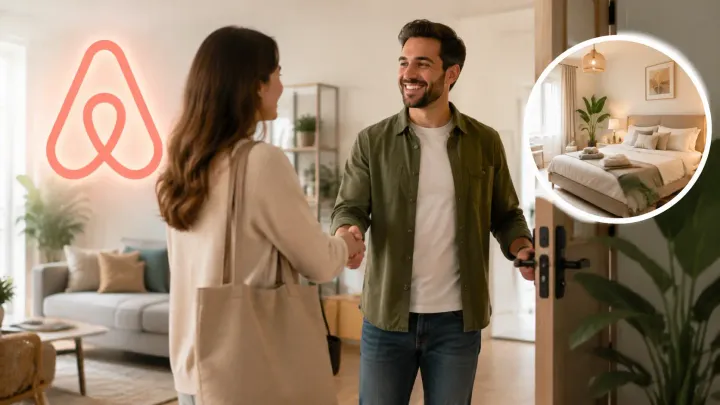
1. An Airbnb co-host helps a listing owner manage guest messages, check-ins, cleaning, pricing, calendar updates, and other hosting tasks.
2. You can become an Airbnb co-host by building hosting experience, defining your services, creating a strong profile, joining the Co-Host Network when eligible, and finding hosts who need support.
3. Co-hosting works best when responsibilities, permissions, fees, response times, and software workflows are agreed before the first guest arrives.
An Airbnb co-host is someone who helps a listing owner manage part or all of the hosting work. That can mean answering guest messages, coordinating cleaners, updating the calendar, handling check-in instructions, managing reviews, or helping improve the listing.
For many hosts, co-hosting is the difference between running one listing comfortably and scaling without losing control. For someone who wants to work in short-term rentals without owning property, it can be a practical entry point.
This guide explains how to become a co-host on Airbnb, what co-hosts do, how to get your first clients, and what to set up before you manage someone else's listing.
What Is an Airbnb Co-Host?
An Airbnb co-host is a person invited by a listing owner to help manage a home, service, or experience listing. Airbnb says co-hosts can help with tasks such as managing the listing, responding to inquiries, or messaging booked guests.
The listing owner controls what each co-host can access. Airbnb explains that permissions let owners decide what the co-host can manage. One co-host may answer messages, while another handles most day-to-day operations.
Co-hosts are different from hosting teams. Airbnb describes co-hosts as more casual helpers such as friends, family members, or trusted people hired by the owner. Hosting teams are a separate structure, and Airbnb notes that creating new hosting teams has been disabled.
For most people searching "how to become a co-host on Airbnb," the relevant path is co-hosting.
What Airbnb Co-Hosts Usually Do
Co-host responsibilities vary by agreement. Some co-hosts provide light support. Others operate almost like a local property manager.
Responsibilities include:
- Responding to guest inquiries and booking questions
- Sending check-in, checkout, and house-rule instructions
- Updating calendar availability and pricing
- Coordinating cleaners and maintenance
- Checking that the property is guest-ready
- Handling guest issues during the stay
- Writing or responding to reviews
- Helping improve photos, descriptions, amenities, and guidebooks
The most valuable co-hosts prevent avoidable guest issues, keep calendars accurate, and protect the host's review score.
If you want to become an Airbnb co-host, think in terms of outcomes: fewer missed messages, cleaner turnovers, fewer calendar mistakes, stronger reviews, and better occupancy.
How to Become a Co-Host on Airbnb
There is no single path, but most successful co-hosts follow a similar progression.
1. Learn the Airbnb hosting workflow
Before managing someone else's listing, understand the full guest journey: inquiry, booking, pre-arrival, check-in, stay support, checkout, cleaning, review, and payout reconciliation.
You do not need to own property, but you do need to understand hosting. If you have hosted before, use that experience. If not, help a local host with guest messaging, cleaning coordination, or listing optimization.
2. Decide which services you offer
Do not say you "handle everything" unless you can actually do it. Break your offer into specific services.
You might offer guest messaging only, full turnover coordination, listing setup, pricing support, local emergency response, or full-service co-hosting. Clear service boundaries make it easier for hosts to trust you.
3. Build proof
Hosts want evidence that you can protect their property and guest experience. Proof can include Airbnb host reviews, owner references, cleaning coordination experience, hospitality work, local market knowledge, or case studies.
If you are new, start small. Manage a friend's listing, support one owner during peak season, or handle message templates and guidebook setup.
4. Create a co-host profile
Airbnb's Resource Center says your co-host profile is a way to market yourself. A strong profile should explain your service area, experience, languages, response style, and the types of listings you support.
Avoid generic claims. "I help hosts respond faster, coordinate turnovers, and reduce check-in confusion for city apartments in Austin" is stronger than "I provide excellent hosting support."
5. Join the Co-Host Network when eligible
Airbnb's Co-Host Network helps hosts find local co-hosts. Airbnb notes that network co-hosts typically have strong ratings, low cancellation rates, and established hosting experience.
Airbnb also lists requirements for staying visible in the Co-Host Network. For example, co-hosts need review ratings of 4.7 or higher to appear in network search results. Because requirements may change, check Airbnb's current Help Center before applying.
6. Find hosts who need help
The Co-Host Network is one route, but not the only one. You can also find hosts through local real estate groups, short-term rental communities, cleaning companies, investor meetups, and referrals.
Focus on hosts with a clear pain point: slow response times, too many turnovers, poor reviews, no local support, or multiple listings across Airbnb and other channels.
What to Agree Before You Start
Co-hosting can go wrong when expectations are vague. Before you manage a listing, write down the operating rules.
Agree on:
- Which tasks you own
- What Airbnb permissions you receive
- Your fee structure
- Expected response time
- Who handles emergencies
- Who pays cleaners and vendors
- How refunds and guest disputes are handled
- How either side can end the arrangement
Many co-hosts charge a percentage of booking revenue, a fixed monthly fee, or a hybrid model. Guest messaging alone should not be priced the same as full local management.
Clarify liability too. If a guest damages the property, a cleaner misses a turnover, or a refund is requested, everyone needs to know who decides and who pays.
Tools That Help Airbnb Co-Hosts Scale
Manual co-hosting works for one or two listings. It becomes harder when you manage several properties, especially if they also appear on Booking.com, Vrbo, Expedia, Agoda, or a direct booking website.
At that point, you need systems for calendars, guest messages, cleaning tasks, rates, payments, and reporting.
Smart Order helps hosts and co-hosts manage reservations, OTA channels, direct bookings, and reporting from one dashboard. For hotel-style Airbnbs, serviced apartments, or multi-property operators, this reduces disconnected workflows.
Manage Multiple Listings Without Losing Track
Smart Order connects reservations, OTA channels, direct bookings, and reporting so hosts and co-hosts can manage more properties with less manual work.
Common Mistakes New Co-Hosts Make
The first mistake is taking on too much too quickly. If you cannot respond quickly, coordinate cleaners, or handle guest issues at inconvenient hours, avoid selling full-service management.
The second mistake is ignoring permissions. Limited access is fine for a limited role. It is a problem if you are responsible for outcomes but cannot manage the tools.
The third mistake is skipping documentation. Every listing should have check-in instructions, cleaning standards, emergency contacts, house rules, vendor contacts, and a guest messaging workflow.
The fourth mistake is underpricing. Co-hosting can involve nights, weekends, urgent guest issues, cleaner coordination, and review protection.
FAQ About Airbnb Co-Hosting
What is an Airbnb co-host?
An Airbnb co-host is someone invited by a listing owner to help manage a listing. Co-hosts may handle messaging, calendars, check-in support, cleaning coordination, reviews, and other tasks depending on their permissions.
Do I need to own property to become an Airbnb co-host?
No. You need hosting knowledge, reliability, local availability if the role requires it, and proof that you can help owners manage guests and operations.
How do I get Airbnb co-host jobs?
You can get Airbnb co-host jobs through Airbnb's Co-Host Network, local host communities, referrals, real estate investor groups, cleaning companies, and direct outreach to hosts who need operational help.
How much do Airbnb co-hosts make?
Co-host earnings vary by market and responsibility. Some charge a fixed monthly fee, while others charge a percentage of booking revenue. Full-service co-hosting usually earns more than messaging support.
What should be in an Airbnb co-host agreement?
An Airbnb co-host agreement should cover responsibilities, permissions, fees, response times, emergency handling, vendor payments, refund authority, guest dispute handling, confidentiality, and termination terms.
Final Takeaway
Becoming an Airbnb co-host is not just about helping someone answer messages. It is about taking responsibility for part of the guest experience and the owner's revenue.
Start with a clear service offer, build proof, understand Airbnb permissions, document your workflow, and use software once the operation grows beyond manual tracking. Strong co-hosts make hosting more reliable, not just less busy.