1. A rate plan is the pricing and booking-condition layer attached to a room type: flexible, non-refundable, advance purchase, breakfast included, corporate, or long-stay.
2. A hotel channel manager distributes those rate plans to OTAs and keeps prices, restrictions, availability, and reservations synchronized.
3. Most hotels only need 3 to 5 public rate plans per room type. Too many options create guest confusion and OTA mapping complexity.
4. The safest setup is BAR-derived pricing: update the base rate once, and every connected rate plan adjusts automatically.
What Is a Rate Plan in a Hotel Channel Manager?
A rate plan is a sellable pricing rule attached to a room type. It defines how much the guest pays, when they pay, what is included, and what cancellation rules apply.
A hotel channel manager is the system that sends those rate plans to OTAs such as Booking.com, Agoda, Expedia, Airbnb, and your direct booking engine. When the setup is correct, the same Standard Room can appear under several bookable options: flexible rate, non-refundable rate, advance purchase rate, and breakfast-included rate.
The channel manager does not create extra rooms. It creates controlled ways to sell the same physical inventory to different guest segments. One room type can support multiple rate plans, but the available room count remains the same. If a Standard Room sells under the non-refundable plan on Booking.com, the Standard Room inventory should close across every connected rate plan and channel.
That distinction matters. Hotels do not need more rooms to build a stronger pricing strategy. They need a clean room type and rate plan structure that the channel manager can distribute without conflicts.
How Rate Plans Work Across OTAs
The workflow usually starts inside the PMS or channel manager dashboard.
First, the hotel defines room types: Standard, Deluxe, Suite, Family Room, and so on. Then the hotel creates rate plans that sit on top of those room types. A flexible BAR rate might be available for every room type. A corporate rate may only apply to Standard and Deluxe rooms. A breakfast-included plan may exclude rooms where breakfast is not operationally practical.
Once the plans are mapped, the channel manager pushes each active room type and rate plan combination to connected OTAs.
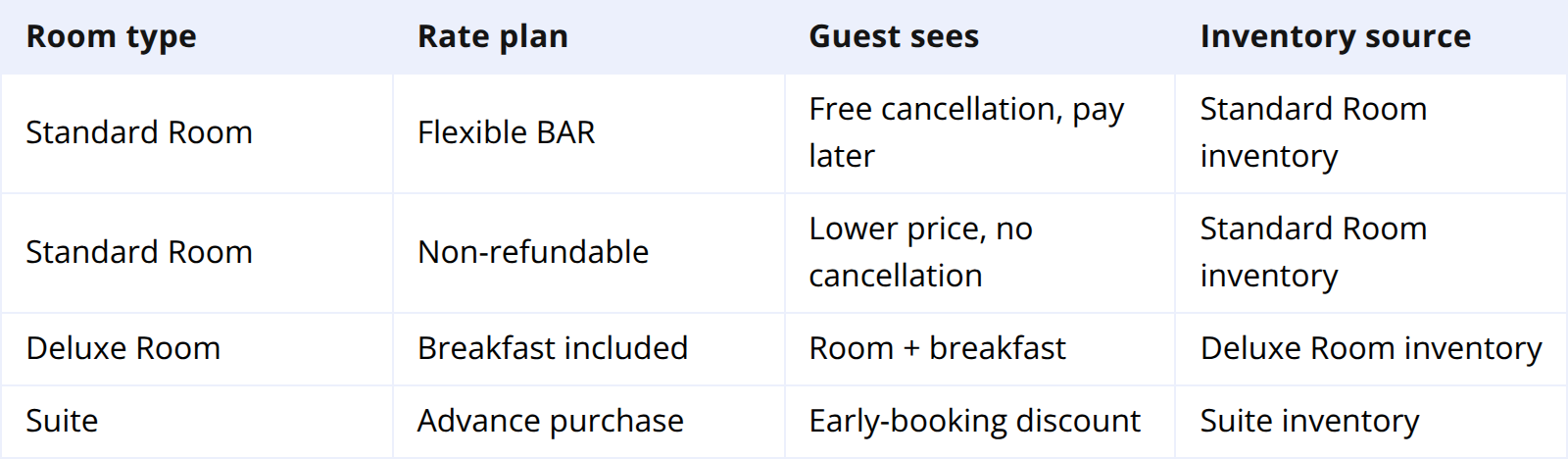
The guest sees these as separate booking choices. The hotel sees them as one inventory system with different commercial rules. This is why mapping matters: if the same rate plan is configured differently on each OTA, the hotel can end up with rate parity issues, wrong cancellation rules, or duplicate products.
The Core Rate Plans Most Hotels Need
Most hotels should start with a small, useful set. The goal is not to create every possible offer. The goal is to cover the main booking behaviors without making the guest choose between ten nearly identical prices.
Flexible BAR
BAR means Best Available Rate. It is usually the main flexible rate, with standard cancellation terms and no heavy restrictions. BAR is the anchor for the rest of the rate structure.
If demand rises, the BAR moves up. If demand softens, the BAR can move down. Other rate plans should derive from BAR as percentages or fixed offsets, so the whole structure stays aligned.
Non-Refundable
A non-refundable rate gives the guest a discount in exchange for commitment. The hotel receives more certain revenue, and the guest receives a lower price. Many hotels price this 8% to 12% below BAR.
This plan works best when shown beside the flexible rate. The guest can clearly see the tradeoff: pay more for flexibility or save money by committing.
Advance Purchase
Advance purchase rates reward early bookers. They are useful for building base demand before the arrival date, especially in shoulder seasons or predictable event periods.
The risk is selling too cheaply before demand fully forms. Use stay-date rules, booking windows, and room limits so advance purchase does not consume too much high-demand inventory.
Breakfast or Package Rate
A breakfast-included rate can lift perceived value without discounting the room. It is especially useful for leisure guests, families, and direct booking offers.
Hotels should be careful not to create too many meal-plan variations on OTAs. Bed-and-breakfast is often enough for city hotels. Half-board and full-board make more sense for resorts.
Corporate or Closed Rate
Corporate, member, or closed-user-group rates are usually not shown to every public guest. They serve specific negotiated segments and may have different cancellation or payment terms.
These can exist inside the system without cluttering the public OTA display.
How Many Rate Plans Do You Need?
For most independent hotels, the practical answer is 3 to 5 public rate plans per room type.
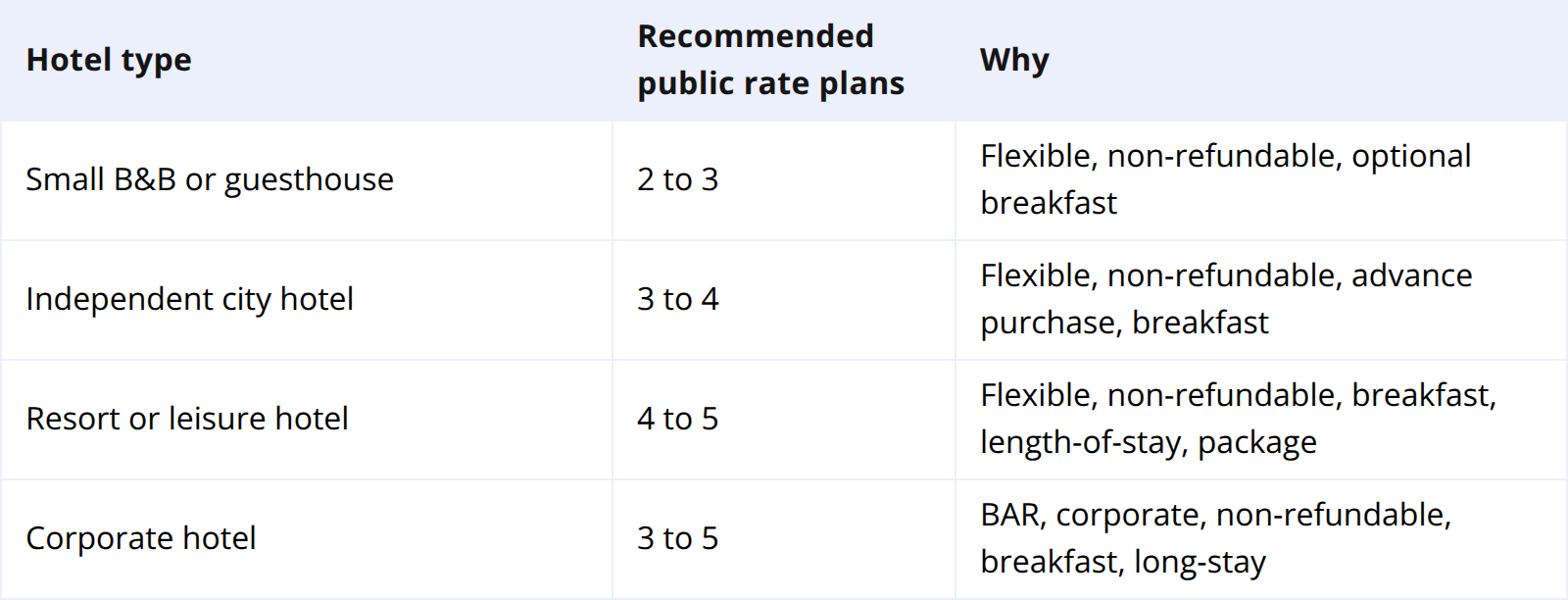
More is not always better. If a guest sees six prices for the same room with tiny differences, the booking decision slows down. On OTAs, too many plans can also make your listing feel messy.
Internally, a hotel may run more than five plans for corporate contracts, seasonal campaigns, mobile-only discounts, member rates, and package testing. That is fine. The key is to avoid showing every internal plan publicly at the same time.
Start with two: flexible BAR and non-refundable. Add advance purchase once those are working. Add breakfast or package rates where there is real guest demand. Add closed rates only for segments that need them.
BAR-Derived Pricing: The Cleanest Setup
The cleanest rate plan structure uses BAR as the anchor.
Example:
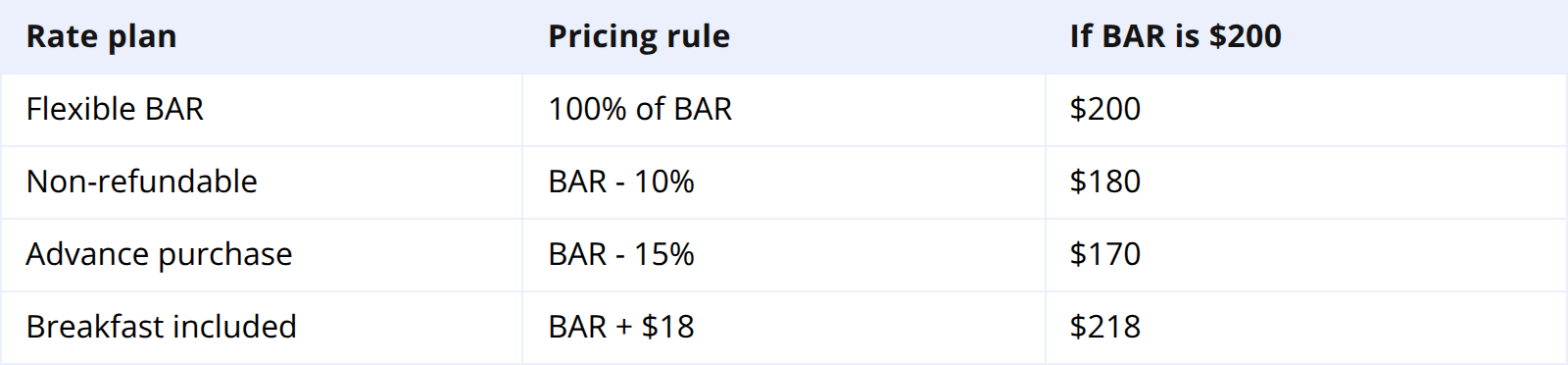
This setup is easier to maintain because one BAR update controls the rest of the structure. If BAR rises from $200 to $240 for a high-demand weekend, the non-refundable and advance purchase rates move with it.
Fixed standalone prices create problems. If the flexible rate changes but the non-refundable rate does not, the discount gap becomes too small or too large. Staff then need to update each OTA or rate plan manually. In a multi-channel setup, that is where stale rates appear.
A hotel channel manager should let teams update rates and restrictions from one place, then publish the structure everywhere.
Common Rate Plan Mapping Mistakes
The first mistake is creating rate plans separately inside each OTA extranet. Booking.com may have one cancellation rule, Agoda another, and Expedia a third. Guests then book what looks like the same offer but receive different conditions.
The second mistake is mapping too many room and rate combinations. A hotel with 6 room types and 8 public rate plans creates 48 sellable products per OTA. Across five OTAs, that is 240 combinations to maintain. One small mapping error can create a wrong price or missing restriction.
The third mistake is forgetting restrictions. A rate plan is not only price. Minimum length of stay, maximum length of stay, closed-to-arrival, closed-to-departure, payment timing, and cancellation policy all need to sync correctly.
The fourth mistake is not testing after setup. Before going live, search each OTA as a guest. Confirm the room name, price, cancellation policy, meal inclusion, taxes, and availability match what you intended.
How Smart Order Handles Rate Plans
Rate plan control matters most when demand changes quickly. If a local event fills Friday and Saturday, the manager should not have to update five OTA extranets one by one. The rate plan should change once, then publish everywhere.
Smart Order connects PMS inventory, channel manager sync, and direct booking availability in one system. When a hotel adjusts BAR, changes a non-refundable discount, or closes an advance purchase plan for a peak date, the update moves through connected OTA channels and the direct booking engine. When a reservation arrives, availability closes across every connected channel and the booking appears in the PMS dashboard.
Manage Rate Plans From One Dashboard
Smart Order connects PMS inventory, rate plans, OTA channels, and direct bookings so hotels can update pricing once and keep every channel aligned.
FAQ
What is a hotel rate plan?
A hotel rate plan is a pricing and booking-condition package attached to a room type. It includes the rate, cancellation policy, payment timing, restrictions, and any inclusions such as breakfast.
What does a channel manager do with rate plans?
A channel manager distributes rate plans to OTAs and keeps rates, restrictions, availability, and reservations synchronized. It helps hotels avoid manual updates in each OTA extranet.
How many rate plans should a hotel have?
Most hotels need 3 to 5 public rate plans per room type. Smaller properties can start with flexible and non-refundable rates, then add advance purchase or breakfast rates later.
Should every room type have every rate plan?
No. Apply rate plans only where they make operational and commercial sense. A corporate rate may apply to Standard rooms but not Suites. A breakfast package may be unnecessary for long-stay serviced apartments.
What is the best rate plan setup for a small hotel?
Start with flexible BAR and non-refundable. Add advance purchase if you need earlier booking pace. Add breakfast included if guests value bundled meals. Keep the public display simple.
Why should rate plans derive from BAR?
BAR-derived pricing lets hotels update one base rate while related plans adjust automatically. This reduces manual work, prevents stale OTA prices, and keeps discount gaps consistent.