1. A small hotel PMS is built around nightly stays, live room inventory, arrivals, departures, and rapid room turnover.
2. General property management software is usually built around tenants, leases, rent collection, maintenance requests, and owner accounting.
3. If you accept short-stay bookings or sell rooms through online travel agencies, choose hotel-specific software even when your property is small.
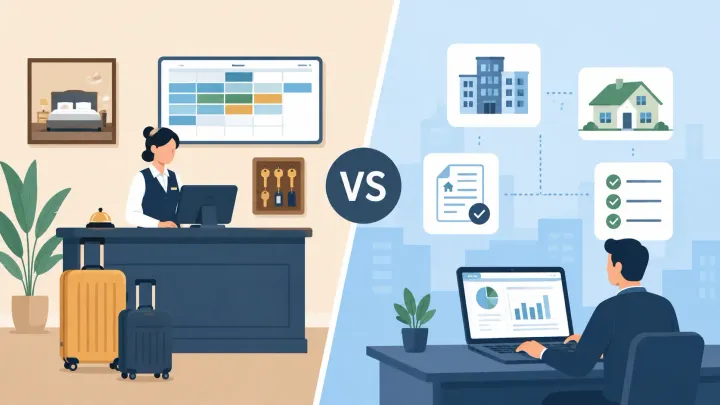
“Property management software” can describe two different product categories. One runs a hotel one night at a time. The other manages residential or commercial units over months or years. Both may store occupant details, payments, and maintenance, but the similarities disappear when a walk-in needs a room or an online travel agency (OTA) sells your final unit.
The right choice depends less on property size than on how inventory turns over.
The Category Difference in One Sentence
A hotel property management system (PMS) manages stays and sellable room nights. General property management software manages leases, tenants, and physical units.
That distinction shapes the workflow. A 12-room hotel may process several arrivals, departures, room cleans, and booking updates in one day. A 12-unit apartment building may process none of those events for months.
General property platforms emphasize rental applications, screening, leases, recurring rent, work orders, and owner statements. Buildium’s feature overview, for example, centers on leasing, rent collection, accounting, resident services, and maintenance.
A hotel PMS centers on reservations, room types, rate plans, guest folios, check-in and checkout, housekeeping status, and hotel distribution. Industry descriptions from Oracle likewise identify reservations, front desk operations, channel management, housekeeping, rates, and occupancy as core hotel PMS functions.
Hotel PMS vs. General Property Software at a Glance
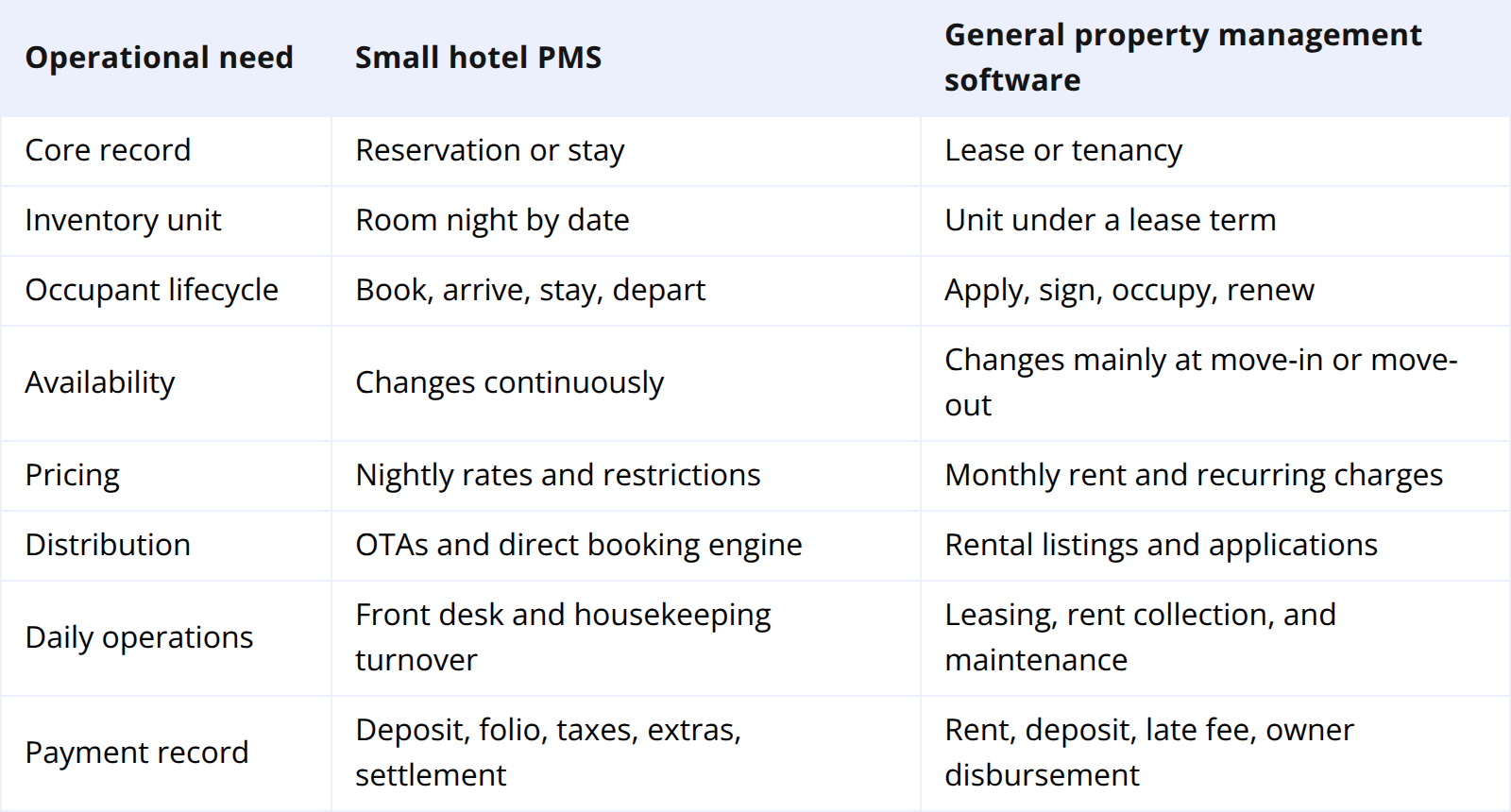
Feature checklists can mislead because both products may offer calendars, payments, reports, and maintenance. Ask whether those features follow a hotel stay or a lease.
Four Workflows That Expose the Difference
Reservations Are Not Leases
A hotel reservation has arrival and departure dates, room type, guest count, rate plan, booking source, and payment status. Staff may shorten the stay, move the guest, split the folio, or mark a no-show.
A lease tracks a tenant, contract dates, recurring rent, deposit, and renewal. That is useful for apartments, but not for the booking changes a hotel front desk makes throughout a shift.
For an early arrival, the receptionist must see whether the room is vacant and clean, move the guest if needed, collect a balance, and check them in. A tenant database does not necessarily understand the stay state behind that decision.
Room Status Must Change During the Day
Hotel availability and room status are related but different. A room can be reserved for tonight while still marked dirty after the previous guest’s departure. It can also be vacant but out of order because of maintenance.
A hotel PMS should show states such as occupied, due out, vacant dirty, vacant clean, and out of order. Housekeeping updates the room; the front desk sees the change before assigning an arrival. This is an operational handoff, not just a maintenance ticket.
General property software may handle work orders well, but that does not make it suitable for coordinating ten room turns between checkout and the arrival window.
OTA Inventory Requires Live Distribution
Hotels sell the same inventory through OTAs and their own website. When one channel confirms a booking, availability must fall across the others before another guest takes the same room.
Booking.com’s Connectivity APIs are specifically designed for connected systems to exchange reservations, rates, availability, room information, and restrictions. General rental listing syndication usually publishes long-term vacancies and collects applications; it does not perform this nightly inventory exchange.
Without this exchange, staff update extranets manually, creating stale inventory and overbooking risk. A separate hotel channel manager can provide the connection, but its inventory must stay aligned with the PMS.
The Front Desk Works by Exception
A front desk resolves exceptions in real time: a walk-in arrives, a card fails, a guest requests a room move, or a late checkout blocks the next assignment.
Hotel software presents arrivals, departures, in-house guests, balances, and room status together. Staff can act without translating each event into a generic contact, task, invoice, or lease.
A low subscription price does not help if staff maintain a second calendar, update OTAs manually, and message housekeeping elsewhere.
See a Hotel Workflow in One Live System
When an OTA or direct booking enters Smart Order, room inventory updates across connected channels, the reservation appears on the front desk calendar, and staff can coordinate the next arrival from the same record.
When General Property Management Software Can Fit
General property management software fits long-term rentals where occupants sign leases and pay recurring rent.
For mixed-use operations, the hotel PMS should own reservations, room-night inventory, folios, and OTA connections. The property platform should own leases, tenants, rent collection, and owner accounting. Their financial totals can meet in accounting without forcing unlike records into one system.
A tiny walk-in-only inn might use generic software plus a calendar. Once it accepts advance bookings, varies nightly prices, or lists on an OTA, hotel-specific workflows outweigh the savings.
A Five-Minute Category Test
Before comparing brands or prices, ask vendors to demonstrate one operating day:
- An OTA booking takes the last room of a type. Show where it appears and how inventory changes on every channel.
- A guest checks out late. Show the housekeeping handoff and how the front desk knows when the room is ready.
- The next guest arrives early, changes rooms, pays, and requests an invoice. Show each action without duplicate records.
- A website booking enters the same calendar and blocks the same inventory through the direct booking engine.
- At shift end, show arrivals, departures, occupancy, revenue, and unresolved balances.
If a vendor only demonstrates tenants, leases, recurring rent, and maintenance tickets, it is general property software. If it completes this room-night scenario, it belongs in the hotel PMS category.
Then ask whether channel management, booking engine, payments, onboarding, and support are included. Category fit comes first; total stack cost comes second.
The Decision for a Small Hotel
Choose a small hotel PMS for short stays, daily arrivals and departures, changing room status, nightly rates, or OTA inventory. These needs do not become less hotel-specific because you operate 8 rooms instead of 80.
Choose general property software for tenant acquisition, leasing, recurring rent, long-term maintenance, and owner reporting. For mixed operations, let each system own the appropriate records and connect their financial outputs.
The practical rule is simple: buy for your operating clock. Hotels run by the night and by the shift. Long-term rentals run by the lease and by the month.
FAQ
Is a hotel PMS the same as property management software?
A hotel PMS is one type of property management software. It is built around reservations, room nights, check-in, checkout, housekeeping, folios, and distribution. General property software focuses on tenants, leases, rent, maintenance, and owner accounting.
Can a small hotel use landlord software?
It can store contacts, payments, and maintenance, but it may not understand nightly availability, room moves, arrival lists, housekeeping turnover, folios, or OTA sync.
Does every small hotel need OTA integration?
No. A walk-in-only property may not need it. Once a hotel sells on multiple online channels, synchronized rates and availability matter because each channel sells from the same inventory.
What is the minimum software a small hotel PMS should include?
Look for a reservation calendar, room and rate management, check-in and checkout, folios or payment tracking, room status, permissions, and reports. Add channel management for OTAs and a booking engine for website reservations.
What if a property has hotel rooms and long-term apartments?
Use a hotel PMS for short stays and a general platform for leases unless one vendor proves both workflows. Keep a system of record for each, then consolidate revenue and expenses in accounting.