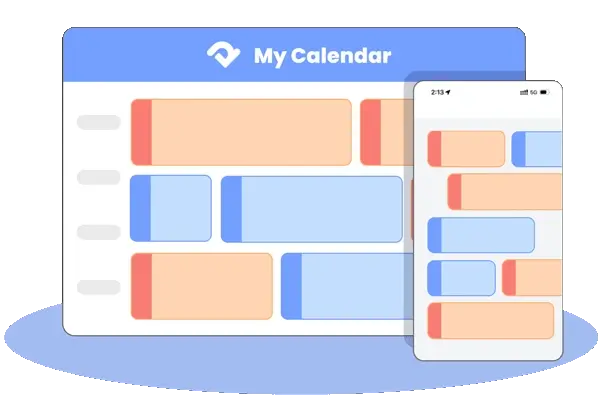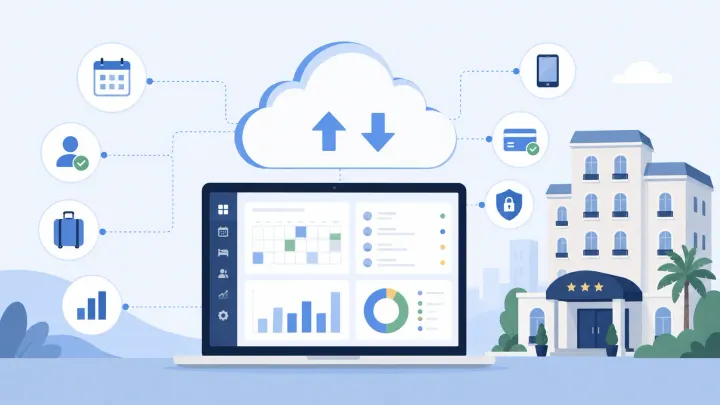
1. Cloud PMS runs on any device with no server hardware — on-premise requires IT infrastructure that most hotels cannot sustain
2. Subscription pricing converts a large capital expense into a predictable monthly cost
3. Automatic software updates mean your PMS improves continuously without a manual upgrade cycle
4. For limited-service and independent hotels, cloud PMS reduces weekly admin time by 2–10 hours
5. The right system bundles PMS, channel manager, and booking engine — not three separate subscriptions
What On-Premise PMS Actually Costs Hotels
Most hotels that are still running on-premise PMS are not doing so by preference — they are doing it because switching felt expensive and disruptive at the time they last evaluated it. That calculus has changed.
An on-premise PMS requires a server room, hardware refresh cycles every four to five years, annual maintenance contracts, and either in-house IT staff or paid support to manage updates and troubleshoot failures. For a chain with an existing IT department, that infrastructure is already sunk. For an independent hotel with 20 to 80 rooms and a front desk team that handles everything, it is an ongoing operational burden with no operational benefit.
The five-year total cost of ownership for a 50-room hotel running on-premise software typically runs $35,000–$50,000 in licenses, hardware, and maintenance. A comparable cloud PMS over the same period runs $18,000–$30,000 — including hosting, support, and automatic updates. The financial argument for switching is not ambiguous for properties of this size.
The Six Reasons Hotels Are Moving to Cloud PMS
No Hardware Dependency
A cloud PMS runs entirely in the browser. There is no server to power, cool, back up, or replace. Your front desk accesses the same dashboard from a tablet, a laptop, or a phone. A manager can check occupancy, approve a cancellation, or update room status from anywhere with an internet connection — without needing someone physically present at a terminal.
For limited-service hotels and independent operators, the elimination of on-site hardware is not a minor convenience. It removes an entire category of operational risk: hardware failure at check-in time no longer means a system outage. Cloud providers maintain redundant infrastructure with uptime guarantees that no independent hotel's on-site server room can match.
Automatic Updates Without Disruption
On-premise PMS software requires manual upgrade cycles. New features, security patches, and compliance updates arrive as installations that need to be scheduled, tested, and applied — often requiring vendor support time and a period where the system is offline or degraded. Hotels in competitive markets cannot afford version lag, where the platform they are running is 18 months behind current capabilities.
Cloud PMS updates roll out automatically, typically overnight or in the background during low-traffic periods. The next morning, your team logs in to a system that is current — with no downtime, no scheduling, and no installation cost. Over a three-year contract, the compounded value of continuous improvement is significant compared to a static on-premise installation.
Real-Time OTA Channel Sync
On-premise systems typically connect to OTA channels through middleware that operates on a sync schedule. Availability updates push every 15 or 30 minutes, not instantly. During high-demand periods — a popular weekend, a local event, last-minute availability — that gap is enough for two channels to take a booking on the same room simultaneously.
Cloud PMS architecture eliminates that lag. When a booking is confirmed on Booking.com, the PMS updates room availability across every connected channel in real time. Agoda, Airbnb, and your direct booking engine all reflect the same state. For a hotel with 30 or 40 rooms, avoiding a single overbooking per month more than justifies the switch.
Access from Any Device, Anywhere
The flexibility to manage a property remotely changes what lean hotel operations look like in practice. A manager who needs to be off-site for the afternoon can check the dashboard from their phone. A front desk agent calling in sick does not create a coverage crisis if another team member can log in from home and handle remote check-in. A multi-property operator can view all properties from a single account without being present at any of them.
This matters more for independent hotels than it does for chains with dedicated managers at every location. Cloud access is the mechanism that makes small-team operations viable at a level of responsiveness that guests now expect.
Subscription Pricing That Scales With Your Property
On-premise software is a capital expense — you pay upfront for a license and then pay maintenance fees regardless of whether business is good or bad. Cloud PMS is an operating expense: a monthly subscription that can typically be paused during off-seasons and scales with your actual room count rather than requiring a renegotiated license.
For hotels in seasonal markets, the ability to reduce subscription costs during closed or low-occupancy periods directly improves cash flow. Per-room pricing models at $5–$15 per room per month make the cost transparent and proportional — a 15-room property pays less than a 50-room property for the same platform, without needing to buy an enterprise tier.
Security and Compliance Without an IT Team
Keeping on-premise software secure requires patching operating systems, updating SSL certificates, managing access controls, and staying current with PCI-DSS requirements for payment processing. For hotels without dedicated IT resources, that compliance burden often falls to whoever set the system up originally — and updates get deferred until something breaks.
Cloud providers handle security infrastructure as core product responsibility. Encryption, automated backups, compliance certifications, and incident response are maintained by the vendor's security team across all customers simultaneously. A hotel switching to cloud PMS does not need to hire a security engineer — that capability comes with the subscription.
Switch to a cloud PMS built for independent hotels
Smart Order's cloud PMS gives your team remote access, real-time OTA sync, and automatic updates — from $5 per room per month, no hardware required.
Benefits for Limited-Service Hotels Specifically
Limited-service hotels — properties without full F&B, conference facilities, or concierge programs — have a narrower operational footprint and a leaner team. The cloud PMS features that matter most for this segment are different from what a full-service resort would prioritize.
Reservation management, real-time channel sync, housekeeping status tracking, and a direct booking engine cover the full operational scope of most limited-service properties. These functions run without the multi-outlet POS modules, event booking tools, or loyalty integrations that inflate enterprise PMS costs and complexity.
The practical outcome is that a limited-service hotel on a well-chosen cloud PMS typically reclaims 2–4 hours of front desk time per day through automation — check-in workflows, rate updates across channels, and housekeeping assignment — while paying a fraction of what an enterprise system would cost. For a property with two or three front desk staff, that time recovery is meaningful.
How to Choose a Cloud PMS: Six Criteria That Matter
The market for cloud hotel PMS has dozens of options at different price points. Most make similar feature claims. These six criteria separate systems that simplify hotel operations from those that add a different kind of complexity.
1. Channel manager included, not sold separately.
A PMS without an integrated channel manager requires a second subscription and a data connection you do not control end to end. Every OTA sync failure becomes a support ticket with two vendors each pointing at the other. The only clean setup is a channel manager built into the same platform as the PMS.
2. Direct booking engine in the base plan.
A direct booking engine connected to your PMS ensures your website always shows live pricing and availability without any manual update. Commission-free direct bookings have higher margin than OTA bookings — this feature should not be an add-on at a higher tier.
3. Transparent 12-month total cost.
Ask vendors for a full first-year breakdown before comparing monthly prices. Setup fees, training costs, integration fees, and payment processing charges frequently double the sticker price. The system with the lowest monthly fee can easily be the most expensive when all costs are included.
4. Mobile access as a core feature, not an add-on.
Remote management is only useful if the mobile interface is functional enough to handle real tasks — not just a read-only dashboard. Test the mobile experience in the trial with actual workflows before committing.
5. Free trial with real OTA connections.
A pre-loaded demo environment does not reveal how a system handles your actual room inventory, your OTA channels, and your team's workflow. Require a trial that lets you run live operations — a real check-in, a real channel sync, a real rate update — before signing a contract.
6. Support that fits your team's profile.
A front desk team running a 25-room property does not need a dedicated account manager — but they do need responsive support when something goes wrong at check-in. Look for documented support response times, not just a support email address.
Smart Order covers all six of these on the Essential plan at $5 per room per month: integrated channel manager and booking engine, transparent subscription pricing with no per-transaction fees, full mobile access, and a free trial with live OTA connections.
Start free — see your OTA channels syncing in real time
Smart Order's cloud PMS includes channel manager, booking engine, and real-time reporting in one plan. Free plan available, paid tiers from $5/room/month.
FAQ
What is a cloud-based hotel PMS?
A cloud-based hotel PMS is property management software that runs in the browser over the internet, with no local server installation required. It handles reservations, check-in and check-out, housekeeping, billing, and OTA channel sync from any device with an internet connection. Unlike on-premise systems, cloud PMS updates automatically, scales with room count, and is maintained by the vendor — not by the hotel's own IT resources.
Why are hotels switching from on-premise to cloud PMS?
The main drivers are cost, flexibility, and operational simplicity. On-premise systems require server hardware, manual software updates, and IT maintenance that independent hotels cannot sustain cost-effectively. Cloud PMS converts those capital costs to a predictable monthly subscription, eliminates hardware dependencies, and provides remote access and automatic updates that on-premise installations cannot match.
Is cloud PMS more secure than on-premise?
For most independent hotels, yes. Cloud providers maintain enterprise-grade security infrastructure — encryption, automated backups, PCI-DSS compliance, and continuous security patching — as part of their core product. On-premise systems require hotels to manage that security themselves, which creates compliance risk when updates are deferred or IT resources are limited.
How much does cloud hotel PMS cost?
Cloud hotel PMS typically costs $5–$15 per room per month for independent properties. A 30-room hotel on a $5/room plan pays $150/month. Total first-year cost, including setup, training, and any integration fees, varies by vendor. Always request a full 12-month cost breakdown — not just the monthly subscription rate — before comparing options.
What should a cloud PMS include for a small hotel?
At minimum: reservation management, integrated channel manager for OTA sync, direct booking engine, housekeeping status tracking, and real-time reporting. Payment processing, mobile check-in, and multi-property dashboards may be needed depending on your setup. The key is that channel manager and booking engine should be included in the base plan — not sold as separate modules that increase the total cost.