1. Accessible hotel rooms provide specific features for guests with disabilities; not every accessible room offers the same facilities.
2. Hearing accessibility and mobility accessibility are different. Confirm the actual bathroom, circulation space and communication equipment before promising a room.
3. Describe features accurately, protect confirmed room allocations and brief the team before arrival.
4. Dimensions and legal duties depend on the property's location and circumstances. The US examples below are not a worldwide compliance checklist.
An accessible label on a booking site is not enough. Guests need to know whether they can enter the room, use the bathroom and receive important alerts. For hotel owners, that means connecting accurate descriptions with a room the team can actually deliver.
Focusing on accessible hotel rooms is an opportunity to provide a more inclusive stay and strengthen your brand. The practical starting point is to explain your facilities clearly, then check that reservations and daily operations support those promises.
What Are Accessible Hotel Rooms?
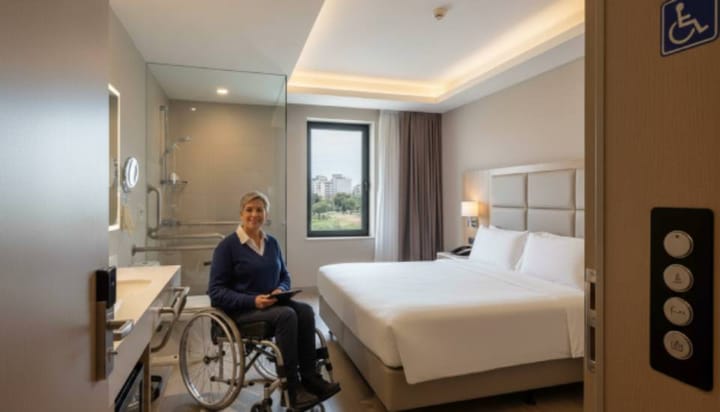
People often think an accessible hotel room is just a bigger room with a few grab bars. It is much more. These rooms are designed or adapted to reduce barriers for guests with mobility, hearing, visual or other access needs.
Universal Design aims to make environments usable by as many people as possible. Describe the features each room actually provides:
- Mobility accessible: Space and fixtures for guests using wheelchairs, scooters, walkers or other mobility aids. Relevant details include step-free routes, clear door openings, space beside the bed and the bathroom layout.
- Hearing or communication accessible: Features for guests who are deaf or hard of hearing, such as visual emergency alarms, incoming-call and door-knock alerts, suitable telephone equipment and captioned television. Describe what is installed and what can be supplied.
- Support for guests who are blind or have low vision: Uncluttered routes, suitable lighting, high-contrast information and tactile signage where appropriate. Staff should also be ready to describe the room and its controls.
A hearing accessible room is not automatically wheelchair accessible. A room may provide both sets of features, but staff must confirm that combination rather than infer it from the word accessible. Likewise, mobility accessibility does not always mean a roll-in shower; specify the actual bathing facility.
Why Is It Important to Have an Accessible Room at Your Hotel?
Accessibility helps guests use the property with greater independence and dignity. It also involves legal duties. In the United States, covered lodging businesses must consider ADA requirements; the duties for existing buildings, alterations and new construction are not identical.
For properties elsewhere, check local equality, building and accessibility rules. The European Accessibility Act covers specified products and services, including e-commerce; it is not a single hotel-room construction code for every EU country. Obtain qualified local advice before making building changes or advertising compliance.
The World Health Organization estimates that 1.3 billion people, or 16% of the global population, experience significant disability. Clear descriptions help guests assess suitability before paying.
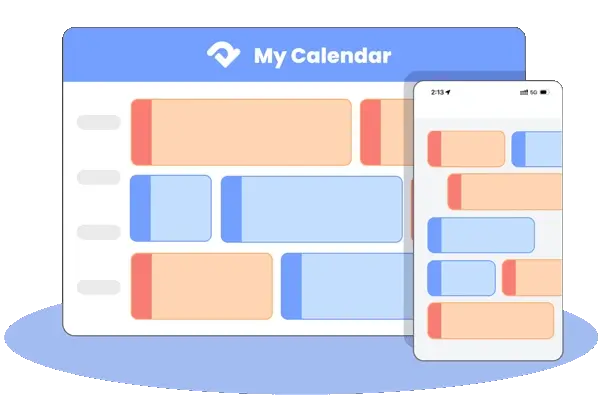
A confirmed stay and a confirmed accessibility feature are not the same thing. When a website reservation enters Smart Order through its booking engine, it appears in the PMS and updates availability. Your team can check the stay in the calendar, then verify the actual room's facilities before confirming the arrangement with the guest. Reservation software does not replace that physical check.
Keep the Reservation Visible Before Arrival
Bring website bookings into the Smart Order PMS calendar so your team can review arrivals and availability alongside its room-preparation checks.
Essential Elements of Accessible Hotel Rooms
Review mobility, bathing, communication and everyday safety together. The dimensions below are selected examples from the US 2010 ADA Standards and US Access Board guidance, not a complete design specification or proof of compliance.
1. Mobility Features: Step-Free and Spacious Design
Clear pathways and entrances. Provide a usable route to the room and keep furniture arranged to leave clear paths to the bed, desk and bathroom. Under the relevant US standards, a typical doorway requires at least 32 inches of clear opening, measured with a hinged door open 90 degrees. This is not the door leaf's nominal width; deeper openings and other conditions need separate checks.
For circular turning space, the US minimum is a 60-inch diameter, not a 60-inch radius. A compliant T-shaped turning space is another permitted arrangement. Door maneuvering space and clearance beside individual fixtures still need assessment.
Controls and utilities. Make switches, sockets, thermostats, curtains and storage usable from the required approach. Do not apply one height range to every fitting: reach limits depend on obstructions, and door hardware has its own requirements. Ask the designer or inspector to check the relevant equipment and installation.
Flooring and furniture. Use firm, stable surfaces and avoid loose rugs that obstruct wheels or walkers. Tables need usable knee space; record bed height and available transfer space rather than assuming one bed suits every guest. Leave out furniture that blocks movement.
2. Accessible Bathrooms: Safety, Dignity, and Independence
Bathing facilities. Identify whether the room has an accessible bathtub, transfer shower or roll-in shower. A roll-in shower can provide wheeled access and may include a seat, grab bars and a handheld shower head suited to its design. Confirm the installed layout and equipment so guests can judge whether they can use it independently.
Toilet and sink. As US examples, the relevant adult toilet seat height is 17–19 inches, measured to the top of the seat. The higher of the front rim or counter surface at an accessible lavatory is generally no more than 34 inches above the floor. Required clearances, grab bars, knee space and protection from exposed pipes also matter; height alone does not make the bathroom accessible.
Surfaces and safety. Keep floors slip resistant and lighting even. If call cords or assistance systems are installed, make sure they are reachable and working, with a clear staff response procedure. Do not list an emergency system that the room does not actually have.
3. Communication and Sensory Accessibility
Visual and audible alerts. Check the room's emergency alarms and its separate alerts for telephone calls and door knocks. In US rooms required to have communication features, these functions have specific requirements; they are not simply one flashing device for every purpose.
In-room communication. Explain the telephone's volume controls, available text-communication equipment and television captions. Do not assume a TTY is permanently on every nightstand. Confirm availability, compatibility and how staff supply any requested equipment.
Accessible information and signage. Use clear, high-contrast information and appropriate tactile or Braille signage. Offer room information in a usable format when needed, rather than claiming every document must be printed in Braille. Keep hallway lighting and routes consistent.
4. Overall Safety and Comfort Features
Maintain unobstructed furniture layouts, suitable lighting and usable temperature controls. Inspect any installed assistance equipment as part of room preparation. Include accessible routes and arrangements for emergencies in staff training, not just the bedroom fittings.
How to Make Your Hotel More Accessible
Making your hotel welcoming means looking beyond the room itself. The booking process, arrival route and staff response need to match the facilities you advertise.
Audit and Continuous Improvement
Do not just check the accessible rooms. Walk through your entire property regularly and use qualified specialists familiar with the applicable standards. A maintenance cart blocking a route or a faulty door-opener can make a normally usable space difficult to access.
Keep a dated record of each room's features and known limitations. Update it after renovations, furniture changes or equipment failures, then check the descriptions used by reservations staff and booking channels.
Employee Training Is Key
Train your entire team, from the front desk to housekeeping and maintenance, on disability etiquette and specific property features. Ask what arrangement the guest needs rather than assuming that a disability label describes their requirements.
Front-desk staff should describe rooms accurately. Housekeeping should keep required spaces clear and return equipment to its agreed position. Reservations staff should distinguish a confirmed room arrangement from an unconfirmed request.
For US properties subject to the ADA reservations rule, accessible rooms must be reservable in the same manner and during the same hours as other rooms. Describe features sufficiently for guests to assess suitability. Applicable room-holding and reservation-guarantee duties also need to be reflected in your procedures; a website filter alone does not satisfy them.
Confirm the Room and Prepare for Arrival
Use a short operating sequence before promising the accommodation:
- Record the required features. Ask about the relevant bathing, access or communication arrangement and confirm what the guest needs.
- Match the actual room. Check its feature record and current condition, including the route from the entrance.
- Protect the confirmed allocation. Use the reservation system's actual room-allocation controls and check availability across sales channels. A free-text request alone is not a protected room.
- Brief the team. Tell front desk, housekeeping and maintenance what must be ready and who is responsible for checking it.
- Recheck before arrival. Confirm the room and equipment remain usable. Escalate any failure immediately rather than substituting a different room without discussing suitability.
The Power of Transparency
Create an accessibility page on your property website. Detail the actual entrance, routes, room facilities and any limitations. Keep your direct booking information consistent with what the team can deliver; do not rely on an accessible label alone.
Do not use generic images as evidence of your facilities. Take clear photographs of the actual bathroom, grab bars, entrances and space around the bed. Give guests a contact route for questions that the description does not answer.
Conclusion
Accessible hotel rooms work best when descriptions, physical features and daily preparation agree. Correct inaccurate listings, check the facilities you promise and train staff to preserve confirmed arrangements.
Accessible Hotel Rooms FAQ
How many accessible rooms does a hotel need?
There is no worldwide percentage. In the US, the applicable ADA scoping rules distinguish rooms with mobility features, roll-in showers and communication features. Requirements depend on room counts and the property's circumstances. Have a qualified adviser determine the rules for your building and location.
Can a guest without a disability book an accessible room?
Do not use a blanket worldwide rule. For covered US properties, the reservations rule includes holding accessible rooms for guests who need them until other rooms of that type are rented. Apply the relevant policy before releasing inventory, and never displace a guest from a confirmed accessible room.