1. A standalone channel manager is usually cheaper at first glance, but most hotels still need a hotel PMS, booking engine, reporting, and support on top.
2. An all-in-one hotel PMS often costs less once you compare the full stack, because channel management, reservations, direct bookings, and reports share one system.
3. The best choice depends on room count, OTA mix, staff workload, integration risk, and whether your team wants one vendor or several connected tools.
A channel manager and a hotel PMS solve different problems. The channel manager distributes rates and availability to OTAs. The PMS manages reservations, check-in, housekeeping, guest records, payments, and reporting.
That difference matters when you compare cost. A standalone channel manager can look inexpensive because it only prices distribution. An all-in-one hotel PMS looks more expensive at first because it includes more of the operating system. The fair comparison is not channel manager price versus PMS price. It is the total monthly cost of running the hotel without manual gaps.
This guide compares both setups for independent hotels, boutique properties, and small hotel groups.
What You Are Actually Comparing
A standalone channel manager connects your inventory to OTAs such as Booking.com, Expedia, Agoda, Airbnb, and Vrbo. It pushes rate and availability updates out and pulls reservations back in.
An all-in-one hotel PMS includes channel management, but becomes the system of record for the property. When a guest books on an OTA, the reservation enters the PMS, the room calendar updates, availability changes across channels, revenue is recorded, and staff can see the booking in the same dashboard used for daily operations.
With a standalone channel manager, you may still need:
- A hotel PMS for reservations and front desk work
- A direct booking engine for commission-free website bookings
- Payment collection or payment links
- Housekeeping task tools
- Reporting and revenue dashboards
- Integration setup and support
If those tools are billed separately, the cheaper first subscription can become the more expensive model.
Standalone Channel Manager: Cost Structure
Standalone channel managers usually price by room count, property count, connected channel volume, or custom contract. Some also charge setup, onboarding, or commission fees.
The upside is focus. If your hotel already has a PMS your team likes, a standalone channel manager can add OTA connectivity without replacing the front desk system.
The downside is fragmentation. If the channel manager and PMS do not sync cleanly, the front desk still reconciles reservations, failed updates, rate mismatches, and duplicate guest records.
The hidden costs show up as staff time, support tickets, manual exports, and vendor handoffs.
All-in-One Hotel PMS: Cost Structure
An all-in-one hotel PMS combines property management, channel manager, booking engine, payments, and reporting in one product.
This setup usually costs more than a bare channel manager, but less than a channel manager plus PMS plus booking engine. It also reduces integration work because rate, inventory, reservation, and revenue data live in the same system.
For example, when a guest books through Agoda, an all-in-one hotel PMS can update the calendar, reduce inventory, reflect revenue in reports, and keep other channels accurate.
Smart Order is built around this model. Its PMS, channel manager, direct booking engine, payment links, and reporting are connected in one dashboard, so hotels can manage OTA and direct bookings without a separate stack.
Compare the Full Hotel Software Stack
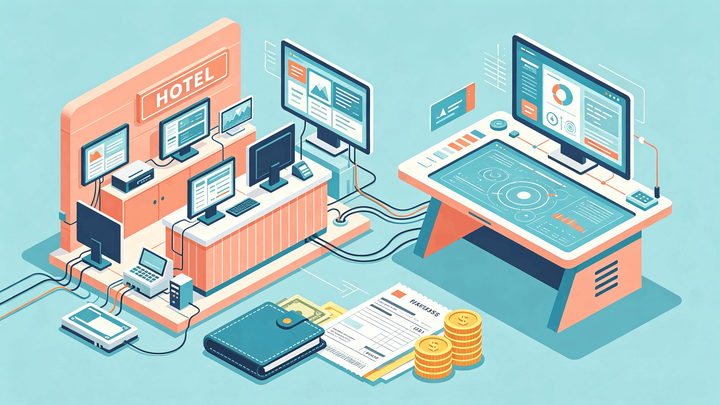
Smart Order combines PMS, channel manager, booking engine, payments, and reporting so hotels can manage reservations and OTA sync from one dashboard.
Cost Example: 20-Room Independent Hotel
Imagine a 20-room hotel that sells on Booking.com, Expedia, Agoda, Airbnb, and its own website.
With a standalone channel manager, the hotel might pay for distribution first, then add a PMS, booking engine, payment tools, and reporting. The combined bill can exceed the headline channel manager price.
With an all-in-one hotel PMS, the same hotel pays for a broader system. Channel management is part of the reservation workflow.
The more important cost difference is operational:
- Standalone stack: one update may pass through two or three systems before staff can trust it.
- All-in-one PMS: one booking updates inventory, calendar, revenue, and connected channels from the same source.
For a small team, saving five hours a week on OTA updates and reconciliation can outweigh a small subscription difference.
Where Standalone Tools Can Be Cheaper
A standalone channel manager can be the lower-cost choice when your hotel already has a strong PMS, does not need a new booking engine, and only wants better OTA distribution.
It can also fit larger properties with established IT processes. If your group already has a central PMS, revenue system, and reporting stack, replacing everything may create migration cost.
In that case, ask whether the channel manager has a direct PMS connection, how often data syncs, what happens when an update fails, and which vendor owns the fix.
Standalone becomes costly when the hotel buys it as if channel management alone solves the whole operating problem.
Where an All-in-One Hotel PMS Costs Less
An all-in-one hotel PMS usually wins when the property is still using spreadsheets, OTA extranets, a basic calendar, or several disconnected tools.
It also tends to be cheaper for hotels that need both distribution and daily operations. If you are buying a hotel PMS anyway, separate channel manager and booking engine fees often duplicate cost.
The all-in-one model is strongest for:
- Independent hotels with lean front desk teams
- Boutique hotels that sell across several OTAs
- Serviced apartments and small multi-property operators
- Properties that want direct bookings without another add-on
- Owners who need revenue, occupancy, and channel performance in one report
For these hotels, switching between disconnected systems is part of the bill. A lower subscription can still be expensive if staff spend hours checking channel accuracy.
Five Costs Hotels Forget to Count
Include these costs before deciding.
1. Integration Setup
Connecting a PMS, channel manager, booking engine, and payment tool takes time. Staff still map room types, rate plans, taxes, restrictions, and OTA connections.
2. Failed Sync Risk
If availability fails to update during a busy weekend, the cost can mean overbooking compensation, a poor review, and a front desk issue.
3. Reporting Gaps
Distribution data is not the same as business reporting. The hotel PMS must connect bookings to occupancy, ADR, RevPAR, payments, and cancellations.
4. Direct Booking Add-Ons
If the booking engine is separate, add the monthly fee and any direct booking commission before comparing.
5. Staff Training
Every additional system creates another login, workflow, and support path, especially for seasonal staff or high-turnover teams.
Decision Framework
Choose a standalone channel manager if you already have a PMS that works, your reporting process is stable, and your main problem is OTA connectivity.
Choose an all-in-one hotel PMS if you need one system for reservations, OTA sync, direct bookings, payments, and reporting.
The simplest test: when a guest books tonight on Expedia, can staff see the reservation, availability, payment status, and revenue impact in one place? If not, the cheaper channel manager may not be cheaper.
FAQ
Is a channel manager the same as a hotel PMS?
No. A channel manager manages OTA distribution. A hotel PMS manages reservations, check-in, housekeeping, payments, and reporting. Some hotel PMS platforms include a built-in channel manager.
Is a standalone channel manager cheaper than an all-in-one PMS?
Sometimes. It can be cheaper if you only need OTA sync and already have the rest of your software stack. If you also need PMS, booking engine, payments, and reports, an all-in-one hotel PMS often has a lower total cost.
What should be included in a hotel PMS and channel manager comparison?
Compare subscription, setup fees, OTA connection limits, booking engine cost, payment tools, reporting, support, training, and sync issue handling.
Do small hotels need both a PMS and channel manager?
Most small hotels selling on more than one OTA need both functions. The question is whether to buy them separately or use an all-in-one hotel PMS that includes channel management.
What is the safest choice for a small independent hotel?
For a lean independent hotel, an all-in-one hotel PMS is often safer because one system manages bookings, availability, OTA updates, direct reservations, and reports.
Final Takeaway
A standalone channel manager is only one part of the hotel software stack. The real cost depends on what else your property must buy, connect, train, and maintain around it.
If your PMS is already strong, a standalone channel manager may be enough. If your hotel needs one operating system across reservations, OTA channels, direct bookings, payments, and reporting, an all-in-one hotel PMS is usually the better cost comparison.