Airbnb suspends listings for seven main reasons:
low review ratings, a high cancellation rate, slow response times, inaccurate listing descriptions, cleanliness complaints, policy violations, and Community Standards breaches.
Suspensions are temporary and can be appealed within six months. Permanent removals are reserved for repeated or severe violations and are much harder to reverse.
This guide covers every cause, the appeal process step by step, and how to prevent it from happening again.
Suspended, Paused, or Removed: What Each Status Means
Before you can respond to a listing problem, you need to know which situation you’re actually in. Three different statuses are often confused with each other:
- Suspended — Airbnb has hidden your listing from search results due to a policy or performance concern. You’ll typically receive an email from Airbnb stating the specific reason. The listing is not deleted — it still exists in your account — but guests cannot find or book it.
- Paused (Snooze) — You chose to temporarily hide your own listing. No one acted on your account. This is a voluntary action and can be reversed at any time.
- Permanently removed — Airbnb’s response to severe or repeated violations. Unlike a suspension, removal is rarely overturned through appeal. Airbnb will specify clearly in their notification if the action is a removal rather than a suspension.
If you received a suspension email, the reason is almost always listed. If you received no email and your listing is just missing from search, start by checking your Hosting dashboard for warnings — and keep reading.
The 7 Reasons Airbnb Suspends a Listing
1. Your Review Rating Dropped Below Airbnb’s Threshold
Airbnb doesn’t publish an exact rating floor, but a sustained average below 4.7 consistently triggers an automated performance review. The Guest Favorites program requires a 4.9 or above — listings below 4.7 first see reduced search visibility before any formal suspension action is taken.
What makes this tricky: a cluster of low ratings in a short period can accelerate the process even if your overall average looks acceptable. Three 3-star reviews in six weeks creates a more urgent signal than a gradual average decline.
To address a rating problem:
- Review your recent stays and identify the specific complaints driving the scores
- Reach out to recent guests who didn’t leave a review and ask for honest feedback
- Respond to every negative review — not to dispute it, but to show future guests how you handle issues
2. Your Cancellation Rate Is Too High
Airbnb monitors host-initiated cancellations closely. While no public threshold is stated, a pattern of cancellations within a 6-month window is enough to trigger suspension action. Guest-initiated cancellations do not affect your rate — only cancellations you initiate as the host.
There’s a specific cause of high cancellation rates that most guides don’t address: forced cancellations from double-bookings.
If you list your property on Airbnb and Booking.com without a system connecting the two, a booking on Booking.com won’t automatically close your Airbnb calendar. When a second guest books the same dates on Airbnb, you have to cancel one of them. Airbnb records that as a host-initiated cancellation. Do this a few times across a few months, and your cancellation rate becomes a suspension risk — even though the underlying cause is a calendar sync gap, not a deliberate choice.
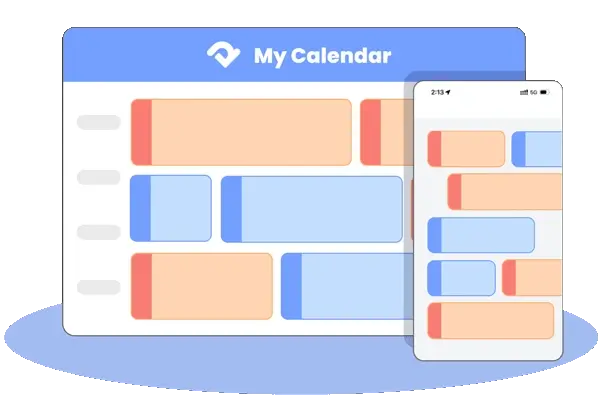
Smart Order channel manager connects your Airbnb, Booking.com, Agoda, and other OTA calendars so that every booking instantly closes availability everywhere. When a date books on one channel, it closes on every other channel in real time — no delay, no double-booking window, no forced cancellations.
The difference between guest-initiated and host-initiated cancellations matters here: only the cancellations you initiate as the host affect your rate. A guest cancelling their own reservation does not count against you.
3. Your Response Rate Fell Below Airbnb’s Minimum
Airbnb requires a 90% response rate and measures it against the first message of each new inquiry, with a 24-hour window to reply. Auto-replies acknowledge receipt but don’t fully count as a substantive response — Airbnb looks for a real answer within 24 hours.
If your response rate has fallen below 88%, you’ll usually receive a warning before any suspension. To rebuild it:
- Set up saved message templates in the Airbnb app for common inquiry types (availability questions, house rules, check-in instructions)
- Turn on push notifications for the Airbnb host app — missed notifications are the single biggest cause of late responses
- Use Airbnb desktop notifications when you’re working from a computer
A 100% response rate is achievable for any host. The system just needs to be set up once.
4. Your Listing Description Doesn’t Match the Property
When guests arrive and find the property doesn’t match what was advertised — missing amenities, fewer beds than listed, a pool shown in photos but unavailable — they file complaints. One complaint is investigated. Multiple guests reporting the same discrepancy leads to suspension.
Common mismatches that generate complaints:
- WiFi listed as an amenity but not reliably available
- Photos that show a different configuration than the current setup (renovations, furniture changes)
- Amenity tags that weren’t removed after a change (hot tub listed but no longer installed)
- Room count or sleeping capacity that doesn’t match the actual property
Audit your listing against the actual property every few months. The amenity checklist inside your Airbnb listing settings is the most important thing to keep accurate.
5. Repeated Guest Complaints About Cleanliness
Airbnb treats cleanliness complaints as a guest safety signal, not just a service quality issue. Multiple 1- or 2-star cleanliness sub-ratings trigger an automated review even if your overall rating remains reasonable.
A useful practice: photograph your property after each professional clean before the next guest arrives. If a guest later disputes the cleanliness standard, you have timestamped documentation. Airbnb Support accepts these as evidence in both complaint investigations and appeals.
If you work with an external cleaning team, a shared standardized checklist — covering linens, bathrooms, kitchen surfaces, and common areas — reduces inconsistency across turns.
6. Policy Violations
Certain actions trigger immediate suspension rather than a warning:
- Sharing contact information to move bookings off-platform. Airbnb’s Terms of Service prohibit exchanging contact details or payment information with guests before or outside of a confirmed booking. Even a mention of your personal phone number in a message can be flagged.
- Requesting payments outside the platform. Any attempt to collect payment directly from a guest — for a security deposit, extra cleaning, or otherwise — outside of Airbnb’s Resolution Center violates their payment policies.
- Discriminatory acceptance patterns. Consistently declining guests from specific demographics is monitored and enforced.
- Listing content violations. Certain claims, keywords, or offers in your listing description violate Airbnb’s Content Policy and trigger automated review.
Unlike performance-based suspensions, policy violation suspensions are more difficult to appeal because the act itself is the violation — not a pattern over time.
7. Community Standards Breaches
Community Standards violations are the most serious category and frequently lead to permanent removal rather than suspension:
- Unauthorized surveillance equipment. Cameras in private spaces (bedrooms, bathrooms, changing areas) violate Airbnb policy and law in most jurisdictions. Even cameras in common areas must be disclosed through the listing interface.
- Party house violations. Repeated noise complaints or documented unauthorized gatherings trigger escalating enforcement.
- Host misconduct during a stay. Verified complaints about a host’s behavior toward guests — harassment, entering the property without notice, threatening communications — result in immediate action.
If your suspension notification references a Community Standards breach, consult Airbnb’s official policy documentation before filing an appeal. These cases are evaluated differently from performance-based suspensions.
How to Find Out Why Your Listing Was Suspended
If you haven’t received a clear explanation, follow these steps:
- Check your Airbnb email. Suspension notifications are sent to the email address on your account. The subject line usually contains “your listing” or “your account.” Search your inbox including spam.
- Check your Hosting dashboard. Log in and look for a banner or alert at the top of the page. Airbnb sometimes places warnings here before the email arrives.
- Review your Performance metrics. Go to Hosting → Insights → Performance. Check your response rate, cancellation rate, and review average — any metric flagged in red is likely the cause.
- Contact Airbnb Support directly. Go to Help → Contact Us → “My listing is suspended.” Ask for the specific reason in writing. Keep the conversation in writing rather than by phone so you have a record.
How to Appeal a Suspended Airbnb Listing
Airbnb allows appeals for suspensions filed within six months of the suspension date. After that window closes, reinstatement becomes significantly harder.
Step 1: Identify the specific violation cited
Your suspension notification will name the reason. If it doesn’t, get it in writing from Support before drafting your appeal.
Step 2: Gather documentation
The evidence you need depends on the reason:
- Cancellation rate: Export your reservation history and identify which cancellations were host-initiated and why
- Review disputes: Save the reservation codes, screenshot the review, and any guest communications that provide context
- Cleanliness complaints: Gather post-clean photographs, cleaning receipts, or checklist records
- Policy violations: Document what happened and what safeguards you’ve put in place since
Step 3: Submit through Airbnb Support
Go to Help → type “appeal listing suspension” → select the option for appealing your specific case. Your suspension notification email typically includes a direct link to the appeal form.
Step 4: Write a clear, factual appeal
Your appeal should cover three things: acknowledge the concern Airbnb raised (don’t deny the pattern even if you dispute a specific case), provide your documentation as evidence, and explain specifically what you have changed or will change. Keep it factual and specific — a clear, structured appeal is more effective than a long narrative.
Step 5: Wait for a response
Most appeals receive a response within 3–5 business days. Complex cases can take 2–3 weeks.
What not to do: don’t file multiple appeals for the same case, don’t dispute a guest’s subjective experience without objective evidence, and don’t mention legal action in the appeal itself — it routes your case to a different team and slows the process.
How to Voluntarily Pause Your Airbnb Listing (Without Deleting It)
If you want to temporarily stop accepting bookings — not because Airbnb suspended you, but because you want to pause for a renovation, a personal trip, or a seasonal break — Airbnb calls this Snooze.
How to snooze your listing:
- Go to your Listings page
- Select the listing you want to pause
- Go to Availability settings
- Choose “Snooze listing” and set a return date
Your listing is hidden from search immediately. Existing confirmed bookings are not affected — guests who already booked will still have their reservations. When the snooze period ends (or when you manually reactivate it), your listing returns to search with all previous settings, reviews, and history intact.
Snooze vs. blocking dates: blocking specific dates keeps your listing visible in search but shows it as unavailable for those periods. Snooze removes the listing from search entirely. Use blocking for short unavailable windows and snooze for extended pauses.
How to Prevent Your Airbnb Listing From Being Suspended
Systematic prevention eliminates most suspension risk before it starts:
- Keep your review average above 4.7. Address cleanliness and accuracy complaints immediately — these are the two most controllable rating factors.
- Keep host-initiated cancellations at zero. If you list on multiple platforms, use a channel manager to prevent the calendar desync that causes forced cancellations. If you must cancel, do it as early as possible and report extenuating circumstances to Airbnb Support.
- Maintain a 90%+ response rate. Set up saved messages and enable notifications — late responses are avoidable with a one-time setup.
- Audit your listing every quarter. Check that your description, photos, and amenity tags reflect the current state of the property.
- Stay updated on Airbnb policy changes. Check the Airbnb Newsroom and host community forum quarterly. Policies around surveillance, party prevention, and content have changed significantly in recent years.
Frequently Asked Questions
How long does an Airbnb listing suspension last?
Suspensions have no fixed duration. Airbnb lifts the suspension after a successful appeal or after the host demonstrates the issue has been resolved. Without an appeal, a suspension can be indefinite. Appeals must be submitted within six months of the suspension date.
Can I get my Airbnb listing reinstated after suspension?
Yes — for suspensions, not permanent removals. File an appeal through Airbnb Support within six months with documentation showing what caused the issue and what you’ve changed. Initial suspensions have a significantly higher reinstatement rate than permanent removals, which are reserved for severe or repeated violations.
What’s the difference between a suspended and removed Airbnb listing?
A suspension is temporary and reviewable. Airbnb uses it for first-time or isolated performance and policy issues. A permanent removal is Airbnb’s response to severe violations or a repeated pattern after prior suspension. Airbnb specifies which applies in their notification — if the word “removed” or “permanently” appears, the situation is more serious and may require legal guidance.
Why is my new Airbnb listing suspended?
New listings are sometimes automatically flagged for review when listing content triggers Airbnb’s safety filters — incomplete information, missing photos, descriptions containing flagged terms, or identity verification gaps. In most cases, Airbnb contacts the host within 24–48 hours with specific steps to resolve it. If you haven’t received an email, contact Airbnb Support and ask for the reason in writing.
Does Airbnb suspend listings rated below 4.7?
Airbnb doesn’t confirm an exact rating threshold. A sustained average below 4.7 first reduces your search visibility before triggering a formal review. Listings consistently below 4.5 are at higher risk. A sudden drop from a cluster of negative reviews — even with an overall average above 4.7 — can also initiate a review.
How do I voluntarily pause my Airbnb listing without deleting it?
Use the Snooze feature: go to your Listings page → select the listing → Availability settings → Snooze listing. Your listing is hidden from search but not deleted. Existing confirmed bookings remain active. You can reactivate at any time, and your listing returns with all previous settings and review history intact.