Every hotelier faces a core challenge: how to be fully booked and still make a good profit. In the world of online travel, that means dealing with two giants: Booking.com and Expedia.
These sites are essential, but they’re not simple. Each one has a different system for commissions, handles payments differently, and attracts a different kind of traveler. Choosing the right one can make a huge difference to your revenue. This is a practical guide to help you look past the marketing and decide which powerhouse is the right partner for you.
Overview of Both Platforms
While both aim to connect travelers with properties, their fundamental business models and market dominance carve out distinct paths for hoteliers.
Booking.com
Originally from the Netherlands, Booking.com is a global giant with a strong presence in Europe and Asia. Its main feature is the “Agent Model,” where you collect payment directly from the guest. This gives you immediate control over your cash flow.
The site is all about simplicity and volume. It tends to attract spontaneous travelers, mobile users, and anyone looking for flexible booking terms. Trust is a big part of their model—they heavily feature verified reviews to encourage bookings. This approach works for a wide variety of properties, from large chains to small boutique hotels.
Expedia
The U.S.-based Expedia Group operates a massive portfolio of brands, including Hotels.com, Vrbo, and Orbitz. It is a dominant force in the North American market. Expedia typically leans into the Merchant Model, where the platform collects the payment from the traveler first and remits it to the hotel later.
A major driver for Expedia is its ability to package bookings—combining flights, car rentals, and hotels—which often results in higher overall booking values and longer lengths of stay. The platform heavily incentivizes loyalty through its rewards program, attracting a loyal base of frequent travelers and trip planners.
Key Differences Between Booking.com and Expedia
The real strategic difference lies in three core areas that directly impact your bottom line and daily operations.
The Profitability Face-Off: Commission and Payment Models
For any hotel manager, the net revenue after commission is the critical metric. While both platforms take a cut, how they take it and when they pay you matters significantly.
- Booking.com typically features an average commission rate ranging from 15% to 18%, often slightly lower than its competitor. Crucially, its predominant use of the Agent Model is a major benefit for hotels' liquidity. The hotel charges the guest’s credit card directly upon arrival or according to policy, which improves cash flow stability. However, be wary of programs like Genius and Preferred Partner, which demand extra discounts in exchange for higher visibility, effectively increasing your true cost of acquisition.
- Expedia generally sits on the higher end of the commission spectrum, often around 20% for full-service hotels. Its common use of the Merchant Model means they collect the full payment upfront. While this guarantees payment for the booking, the hotel receives the funds after the guest checks out, sometimes with a delay, which can negatively affect short-term cash flow. The strategic trade-off here is accepting the cash flow delay for access to their higher-value, bundled package customers.
Guest Quality and Market Reach
The traveler profiles on these two sites are far from identical, making market segmentation a core part of your strategy.
- Expedia is the clear gateway to the North American market. Its customer base often consists of organized planners who book their entire trip—flight, hotel, and car—in one go. These guests tend to have a higher Average Daily Rate (ADR) and a longer Average Length of Stay (ALOS) because they are often committed to a package deal. They are more price-inelastic for the hotel component, making them ideal for properties looking to fill extended stays or high-tier rooms.
- Booking.com provides unparalleled access to global travelers, dominating in Europe, South America, and parts of Asia. Their users are generally more flexible and spontaneous, frequently booking via mobile devices. This platform is a volume driver, bringing in a large quantity of shorter, urban, or last-minute reservations. These guests are often highly cancellation-sensitive and rely heavily on the platform's review scores, making guest experience management paramount for visibility.
Operational Control and Management Tools
The day-to-day management experience and the level of control you retain over your inventory differ significantly.
- Expedia often requires strict adherence to rate parity, meaning your prices must be consistent across all distribution channels, including your own website. Their Partner Central (EPC) dashboard excels at providing competitive market insights and detailed data on traveler demand, making it a powerful tool for sophisticated revenue management strategists. However, the platform is generally perceived as less flexible in terms of rapid inventory adjustments.
- Booking.com’s Extranet and the Pulse mobile app are celebrated for their user-friendliness and rapid, on-the-go inventory management. The platform is historically more tolerant of rate variations and gives hoteliers more control over their own policies, especially concerning payment and cancellation. They focus heavily on immediate conversion, offering powerful tools like the Visibility Booster to quickly capture attention during low-occupancy periods, giving managers a direct lever to pull when facing last-minute gaps.
Which Platform Fits What Kind of Hotel?
Using these differences, we can match specific hotel profiles to the platform that aligns best with their revenue goals.
You Should Lean Towards Booking.com If Your Hotel Is:
- An Urban or Boutique Hotel: Need to capture high volumes of short-stay, often international, travelers.
- Highly Dependent on Cash Flow: You benefit significantly from the Agent Model, collecting money directly from the guest.
- In Europe or Asia: You are targeting the platform's primary audience and regional strength.
- Focused on Mobile and Last-Minute Bookings: Booking.com’s app and spontaneous user base are your primary drivers.
You Should Lean Towards Expedia If Your Hotel Is:
- A Resort or Destination Hotel: You benefit from the longer stays and higher overall spend of package bookers.
- Targeting the North American Market: You need access to the most powerful U.S. distribution channel.
- Not Sensitive to Delayed Cash Flow: The security of a pre-paid booking collected by the Merchant Model is acceptable.
- Seeking High-Value Travelers: Expedia’s bundled bookings attract guests less focused on the individual room price and more on the total trip value.
Strategic Considerations for Hotels
The most common mistake is pitting these two titans against each other. The smart strategy is to leverage them both for their distinct strengths.
Dual Channel Optimization
Use Expedia as your strategic tool for base occupancy and high-value bookings. Load your most premium rooms and package deals onto this platform to maximize ADR and ALOS, securing a stable foundation of revenue.
Deploy Booking.com as your volume and dynamic pricing engine. Use its flexibility to fill last-minute inventory gaps, manage seasonal low periods, and quickly adjust rates to maximize occupancy, ensuring your hotel rarely has an empty room.
Master the Review Systems
Both platforms are driven by social proof, but the impact differs. Expedia’s system often focuses on a high-level satisfaction score tied to their loyalty members. Booking.com’s reviews are more visible, detailed, and directly tied to regional guest expectations. Hoteliers must have specific operational plans for managing and responding to reviews on each site, recognizing that a stellar Booking.com score is essential for a high-volume international strategy.
Use a Robust Channel Manager
For properties with complex distribution, a high-quality channel manager is non-negotiable. This tool ensures real-time inventory updates, eliminates overbooking risks, and allows hoteliers to maintain rate parity (where required) or implement controlled rate disparity to favor direct bookings without losing visibility on the OTAs. It transforms the management process from a frantic manual task into a strategic, automated system.
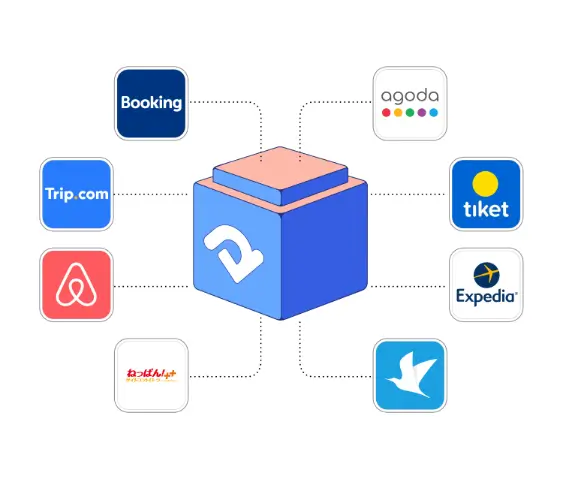
Smart Order Channel Manager
Integrate with the leading OTA channels with our channel manager, and the connection with more visibility on multiple platforms, you can reach more guests and maximize occupancy and revenue.
Conclusion
Choosing between Booking.com and Expedia is not an exclusive decision; it is a strategic allocation of resources. Your hotel’s optimal distribution strategy requires a clear understanding of your property type, target guest demographic, and financial needs.
Expedia excels at securing high-value, package-driven American travelers and offering deep market data. Booking.com is the volume leader, providing unparalleled global reach and superior cash flow control.
Successful hotel management in this era means defining your ideal guest, identifying their platform, and then using that OTA's specific tools—be it the Genius Program or Expedia's bundled deals—to capture that market segment efficiently. By mastering the individual strengths of both Booking.com and Expedia, hotel managers can move beyond simply reacting to bookings and confidently shape their revenue destiny.