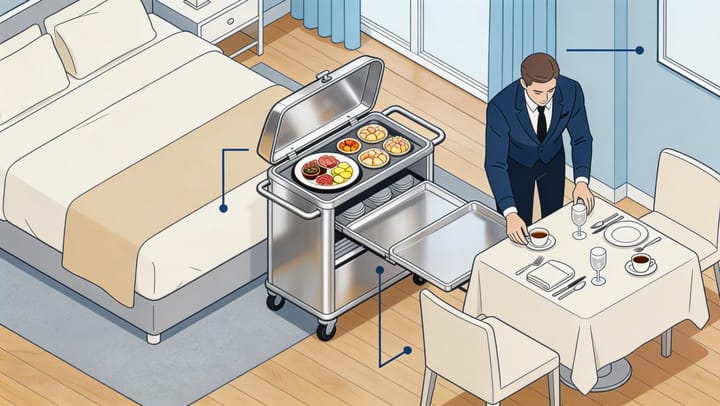
Hotel room service is more than delivering food to guest rooms. When done right, it creates memorable experiences, increases guest loyalty, and drives positive reviews. Hotels that optimize room service can improve operational efficiency, reduce errors, and even increase revenue.
This guide offers practical, actionable steps to improve room service for hotels of any size, from small boutique properties to large resorts.
What is Hotel Room Service?
Hotel room service, also called in-room dining, allows guests to order food, beverages, or amenities directly to their rooms. Guests expect fast delivery, accurate orders, and personalized touches. Modern room service is no longer limited to meals—it includes convenience, quality, and a seamless guest experience.
Providing consistent, high-quality room service can distinguish your hotel from competitors and encourage repeat stays. Poor service, on the other hand, can negatively affect reviews and overall guest satisfaction.
What Types of Room Service Do Hotels Offer?
Hotels provide different room service models depending on size, guest needs, and operational capacity:
- Traditional delivery: Full menu items delivered at specific hours. Suitable for most small to medium hotels.
- Grab-and-go or express service: Pre-packaged meals and snacks for quick delivery. Ideal for boutique hotels or busy city hotels.
- Digital ordering: Guests order via mobile apps, QR codes, or in-room tablets. Large hotels benefit most from this system to manage high volumes efficiently.
- Specialized services: Late-night menus, dietary options, or themed offerings enhance personalization and guest satisfaction.
Understanding which service types fit your property helps align operations with guest expectations and staffing capabilities.
How Can Hotels Improve Room Service?
Improving room service means balancing efficiency, accuracy, and guest experience. Here’s how hotels can take concrete steps:
1. Streamline Ordering Process
Offer multiple channels for guests to order:
- Phone orders: Simple and personal for small hotels.
- Digital ordering: Mobile apps, QR codes, and in-room tablets reduce errors and track orders in real-time.
- Pre-order options: Allow guests to schedule meals or snacks, preventing kitchen bottlenecks during peak hours.
2. Optimize Menu Design
A well-curated menu improves preparation speed and guest satisfaction:
- Keep menus concise, highlighting signature dishes.
- Include dietary-friendly options and local specialties.
- Rotate items seasonally to keep offerings fresh.
- Small hotels may maintain a simple menu; large hotels can manage multiple menus across breakfast, lunch, dinner, and late-night service.
3. Ensure Delivery Excellence
Delivery quality affects guest perception as much as the food itself:
- Maintain proper temperature using insulated trays.
- Present items neatly with all necessary condiments.
- Add small touches like personalized notes or birthday treats.
- Conduct regular audits to ensure staff follow service standards.
4. Train and Empower Staff
Well-trained staff are essential for excellent room service:
- Train on menu knowledge, communication, and problem-solving.
- Empower staff to handle requests or complaints quickly.
- Use role-play and real-case scenarios to improve response times.
- For large hotels, consider specialized delivery teams or cross-training staff to handle peak hours efficiently.
5. Monitor Performance and Feedback
Collect and analyze data to identify improvement areas:
- Track KPIs such as delivery time, order accuracy, and repeat orders.
- Gather guest feedback through surveys or in-app reviews.
- Adjust staffing, menu, or delivery schedules based on insights.
- Examples: If late-night orders are frequent, extend kitchen hours or offer grab-and-go items.
How Can Hotels Increase Room Service Revenue?
Room service can become a significant revenue source when managed strategically. Here are concrete ways hotels can boost income:
- Upselling premium items: Suggest higher-margin dishes, wine pairings, or chef’s specials during the ordering process.
Example: When a guest orders a burger, staff or app can recommend adding a side salad, dessert, or craft beverage.
- Bundled offers: Create meal packages that combine popular items at a slight discount.
Example: Breakfast-in-bed bundle with a croissant, fruit juice, and coffee for a fixed price encourages larger orders.
- Late-night snack menu: Offer pre-packaged or quick-to-prepare items for guests who arrive late or prefer in-room dining at night.
Example: Mini pizza boxes, sandwiches, or dessert platters available between 10 pm – 2 am.
- Loyalty and targeted promotions: Use guest data to offer personalized promotions.
Example: Guests who frequently order room service could receive an in-app coupon for a complimentary drink or dessert on their next visit.
- Dynamic pricing: Adjust prices based on demand, guest segment, or time of day.
Example: Weekend room service specials or premium delivery fees during peak hours for convenience-minded guests.
- Highlight add-ons during booking or check-in: Encourage pre-orders or optional items.
Example: Include a “late-night snack box” option during online check-in that can be charged to the room.
These practical strategies not only increase revenue but also improve guest satisfaction by offering convenience, personalization, and value.
Use Technology to Boost Efficiency & Accuracy
Technology streamlines operations, reduces errors, and improves guest satisfaction:
- Order management software: Track all orders in real time.
- Automation tools: Notify guests of order status and estimated delivery.
- Analytics dashboards: Identify peak hours, popular items, and performance bottlenecks.
- Integration with PMS: Ensure orders sync with billing, inventory, and staff schedules.
Transform Your Room Service with Smart Order PMS
Upgrade your hotel operations with Smart Order. Streamline room service, reduce errors, and delight your guests with real-time tracking and automation. Start managing every order efficiently and boost your revenue today.
Conclusion
Improving hotel room service requires attention to guest expectations, operational efficiency, and staff excellence. By streamlining ordering, optimizing menus, training employees, leveraging technology, and monitoring performance, hotels of all sizes can deliver memorable guest experiences. Enhanced room service not only boosts satisfaction but also drives revenue, loyalty, and positive reviews.
Hotels that adopt these strategies turn room service from a routine offering into a key differentiator.
FAQs
Q1: What are the most common challenges in hotel room service?
A: Common challenges include slow delivery times, inaccurate orders, limited staff during peak hours, and difficulty managing high volumes.
Q2: How can small hotels offer high-quality room service with limited staff?
A: Small hotels can focus on a concise menu, use pre-order or grab-and-go options, schedule deliveries strategically, and leverage simple PMS features to track and coordinate orders efficiently.
Q3: What types of guest personalization can improve room service satisfaction?
A: Examples include remembering guest dietary preferences, offering favorite drinks or snacks, sending personalized notes with orders, and providing recommendations based on past stays.
Q4: How can hotels manage peak hours for room service?
A: Analyze historical order data to identify busy times, stagger staff schedules, implement digital ordering for pre-scheduling, and use automated notifications to manage guest expectations.
Q5: What metrics should hotels track to evaluate room service performance?
A: Key metrics include average delivery time, order accuracy rate, repeat orders, late-night order volume, and revenue per order. These insights can guide menu adjustments, staffing, and technology improvements.
Q6: Can technology help improve room service during special events or high occupancy periods?
A: Yes. Automated order management, predictive analytics for staffing, and real-time monitoring allow hotels to handle large volumes efficiently while maintaining service quality during peak seasons or conferences.