In the vacation rental industry, your photos might stop the scroll, but your rental description stops the clock and closes the booking. A well-crafted rental description transforms casual browsers into paying guests by building trust, answering questions, and painting a vivid picture of what it’s like to stay there.
Whether you’re managing a portfolio of properties or optimizing a single listing, mastering how to write a rental description that balances emotion with practicality is non-negotiable. This guide breaks down the strategy, common mistakes, and actionable templates using real-world vacation rental description examples and rental listing description examples.
The Core Purpose: Why Your Rental Description Matters
Your listing description is more than just words; it’s your first impression. Here’s why it deserves your time:
- Builds Trust: Transparency reduces cancellations and negative reviews.
- SEO Performance: A well-structured rental description helps potential guests find you organically.
- Conversion Driver: It answers the "what's it like?" question before a guest asks it.
Key Insight: The best rental description isn’t a novel—it’s a clear, concise pitch that makes a traveler think, “I want to stay here.”
Know Your Audience: Tailor Your Message
Before you write, define who you’re targeting. A family seeking a resort-style stay needs different information than a solo digital nomad.
- Families: Safety, space, nearby parks, and kid-friendly amenities.
- Business Travelers: Fast Wi-Fi, proximity to transit, and a comfortable workspace.
- Couples: Romantic atmosphere, scenic views, and cozy ambiance.
- Groups: Sleep capacity, living space, and nearby group-friendly dining.
Action: Use this audience focus to prioritize key features in your rental listing description examples.
The Anatomy of a Perfect Rental Description
Let’s break down exactly how to write a rental description that converts, section by section.
The Hook: Title & First Paragraph
The first 100 characters are critical. Your title should be specific and benefit-driven.
- Bad Example: Cozy House in the City.
- Good Example: Spacious 3-Bedroom Home with Backyard & Fire Pit | 5 mins to Downtown
Opening Line (from top vacation rental description examples):Start with a sensory detail or a promise.
“Escape to this bright and airy retreat, perfectly situated for exploring the city or simply relaxing in the private backyard.”
The "Experience" Narrative (Not Just Features)
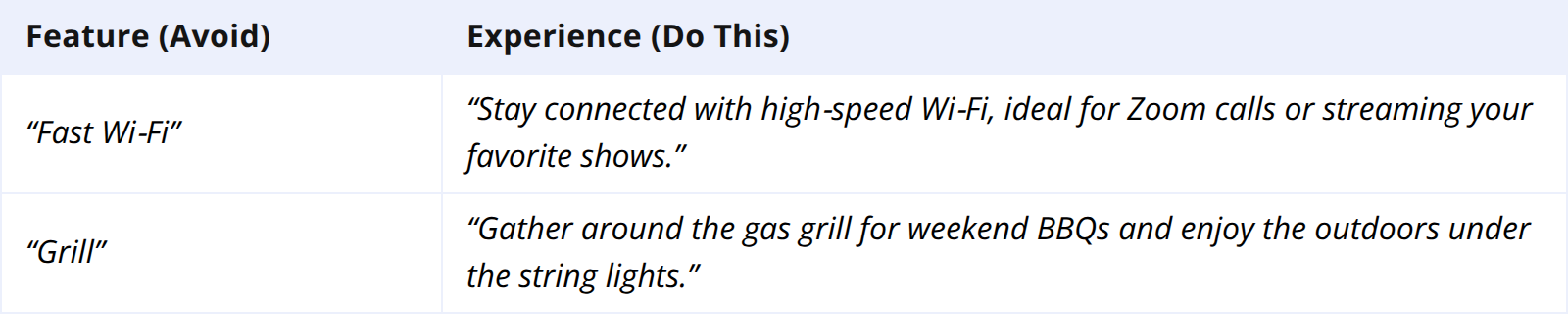
Guests don’t book a washer—they book “fresh towels anytime”. Translate features into experiences.
The Practical Details (Reduce Inquiries)
Answering questions before they are asked is a sure way to improve review scores. Include this critical information:
- Sleeping Arrangements: Clear how many people it sleeps (e.g., “Sleeps 6: 1 King, 2 Queens, 1 Sofa Bed”).
- Location: Walkable distance to attractions, transit, or grocery stores.
- House Rules: Check-in/out times, parking details, pet policies.
- Amenities: List must-haves (Wi-Fi, AC, parking, linens).
The Tone: Friendly & Authentic
Write like a friendly host, not a real estate agent. Use warm language, avoid jargon, and keep paragraphs short for mobile readability.
Common Mistakes to Avoid
Even experienced hosts make these errors in their rental description:
- Being Too Vague: “Nice place” means nothing. Be specific.
- Overlooking Mobile: 90% of travelers book on mobile. Long blocks of text are unreadable.
- Hiding Flaws: Disclose minor drawbacks (e.g., “No elevator, please note”) to avoid surprises.
- Ignoring Keywords: Strategically place location-based keywords and core terms like rental description throughout the copy for SEO.
Ready-to-Use Templates: Rental Listing Description Examples
Now, let’s put it all together with comprehensive vacation rental description examples that you can adapt for your own properties.
Example 1: Family-Friendly Beach House
Title: Spacious 4-Bedroom Beach House with Private Yard & Fire Pit | Walk to the Sand
Description: Welcome to your perfect beach vacation home! This bright and updated 4-bedroom, 2.5-bathroom house sleeps 8 and offers everything you need for a memorable trip.
The Space: Spread out in the open living room with a large flat-screen TV and a cozy sectional. The fully equipped kitchen has everything you need to cook family meals, including a coffee maker and dishwasher. The dining table seats 6, perfect for holiday dinners.
Outdoor Living: Step outside to the fully fenced backyard, complete with a patio furniture set, gas grill, and a fire pit for s’mores and stargazing. It’s safe for little ones to play!
The Location: This unbeatable location is just a 3-minute walk to the public beach access and boardwalk. You’re also within walking distance to several family-owned restaurants and a grocery store.
Amenities & Details:
- Sleeps 8: 2 King Beds, 2 Queen Beds, 1 Sofa Bed
- 2 Full Bathrooms with complimentary toiletries
- High-speed Wi-Fi (500 Mbps) for remote work
- Private parking for 2 cars
- No smoking / No pets allowed
House Rules:Check-in is at 3 PM, check-out at 11 AM. Please respect quiet hours after 10 PM. Linens and towels are provided. We require a damage deposit of $500.This home is designed for comfort and convenience. Book today and make memories that last a lifetime!
Example 2: Modern Urban Loft for Digital Nomads
Title: Sleek Downtown Loft with Rooftop Deck & Fast Wi-Fi | Perfect for Remote Workers
Description:Experience urban living at its finest in this stylish, open-concept loft located in the heart of the city. Designed with modern travelers in mind, this space is ideal for couples or solo adventurers looking to explore.
The Vibe:Floor-to-ceiling windows flood the open space with natural light. The industrial-chic design features exposed brick and a sleek kitchen with a breakfast bar. The living room has a comfortable queen-sized bed with luxury linens and a pull-out sofa.
Work From Anywhere:Stay productive with gigabit-speed Wi-Fi and a dedicated workspace featuring an ergonomic chair and plenty of outlets. The loft is quiet, ensuring you can focus on work or relax without distractions.
The Rooftop Deck:The crown jewel of this property is the private rooftop deck. Enjoy morning coffee or evening cocktails with panoramic city views. It’s a hidden gem in the busy downtown area.
Location:You’re steps away from trendy restaurants, trendy coffee shops, and public transit. The convention center is a 5-minute walk away, and the airport is a 20-minute drive.
Amenities:
- Sleeps 4: 1 King Bed, 1 Sofa Bed
- 1 Full Bathroom
- Fully stocked kitchen with stainless steel appliances
- Rooftop deck with seating
- In-unit laundry
- Self-check-in via smart lock
House Rules:No parties or events. This is a residential building, so please keep noise down after 11 PM. No smoking inside.
Final Checklist for Perfection
Before you hit publish, review this checklist to ensure your rental description is top-tier:
- Is the title specific and keyword-rich?
- Are all key amenities and sleeping arrangements listed clearly?
- Is the language friendly and easy to read?
- Are there any grammar or spelling errors?
- Does it include all necessary house rules and location details?
- Is it optimized for mobile viewing?
Conclusion
Mastering how to write a rental description is an ongoing process. By focusing on your guest’s experience, being transparent, and using the vacation rental description examples provided, you can create a rental description that stands out in a crowded market.Remember, a great rental listing description examples isn’t just about describing a space—it’s about selling a lifestyle. Use these strategies to craft compelling content that drives bookings and grows your vacation rental business.