Introduction
Booking.com is one of the most recognized booking sites in the global travel market. For many hotels and vacation rentals, it delivers consistent exposure and a steady stream of international guests. Its reach, brand trust, and strong presence in search results make it a default choice when listing a property online.
At the same time, relying on a single booking site creates structural risk. Commission rates increase. Ranking rules change. Visibility can drop without warning. Many property owners only notice these issues after revenue becomes unstable or profit margins shrink.
This is why searches for sites like Booking.com, Booking.com competitors, and best booking sites for hotels continue to grow. Property owners are no longer asking whether Booking.com works. They are asking how to build a more balanced distribution strategy that supports long-term growth.
This article looks at practical alternatives to Booking.com, how high-traffic booking sites compare, and how to diversify listings without losing control over pricing or inventory.
Best Booking.com Alternatives by Traffic and Guest Intent
Vacation rentals and hotels operate under different conditions, but both require the same core decision: choosing booking sites that match guest intent, not just traffic volume. While Booking.com delivers broad exposure, many properties perform better when they combine global platforms with more focused alternatives.
Airbnb
For vacation rentals, platforms like Airbnb remain strong options for short-term stays and unique properties. Travelers often search by experience rather than price, and hosts benefit from greater control over house rules, guest communication, and minimum stay requirements. In seasonal destinations, Airbnb frequently attracts guests willing to book longer stays in advance.
Vrbo
Vrbo serves a different but equally valuable segment. It focuses on entire homes and family travel, where guests plan ahead and stay longer. This often leads to higher average booking values and fewer turnovers, especially for villas, cabins, and large apartments.
Holidu
In Europe, vacation rentals may also perform well on regional platforms such as Holidu, where users search specifically for holiday homes in a defined destination instead of browsing globally. A beachfront villa in Spain, for example, may convert better on these platforms due to clearer intent and reduced competition.
Expedia
For properties seeking broader international visibility, high-traffic booking sites still play an important role. Expedia and its network of brands attract a global audience, particularly from North America. Package bookings that combine flights and accommodation can help fill rooms during slower periods, though commission structures and rate parity require close control.
Agoda & Trip.com
In Asia-Pacific markets, platforms like Agoda and Trip.com often outperform global competitors. Many travelers in these regions start their accommodation search directly on these sites. Properties targeting inbound tourism or regional travel benefit from localized content, flexible payment options, and responsive customer support.
Kayak & Trivago
Meta-search platforms such as Kayak and Trivago increase visibility by comparing rates across multiple booking sites. While they do not always handle bookings directly, they amplify exposure for properties already listed on major OTAs.
The key is not choosing between high-traffic or niche booking sites, but using both with clear rules. Properties that centralize pricing and availability through a channel manager can limit inventory on high-commission platforms during peak demand, prioritize niche platforms with higher conversion intent, and maintain consistent rates across all channels. This approach turns distribution from passive exposure into an active revenue strategy.
Diversify Your Listings Beyond One Booking Site
Many properties list on several booking sites but manage them as separate systems. This approach often leads to errors. Prices drift apart. Availability becomes inaccurate. Overbookings occur during peak periods.
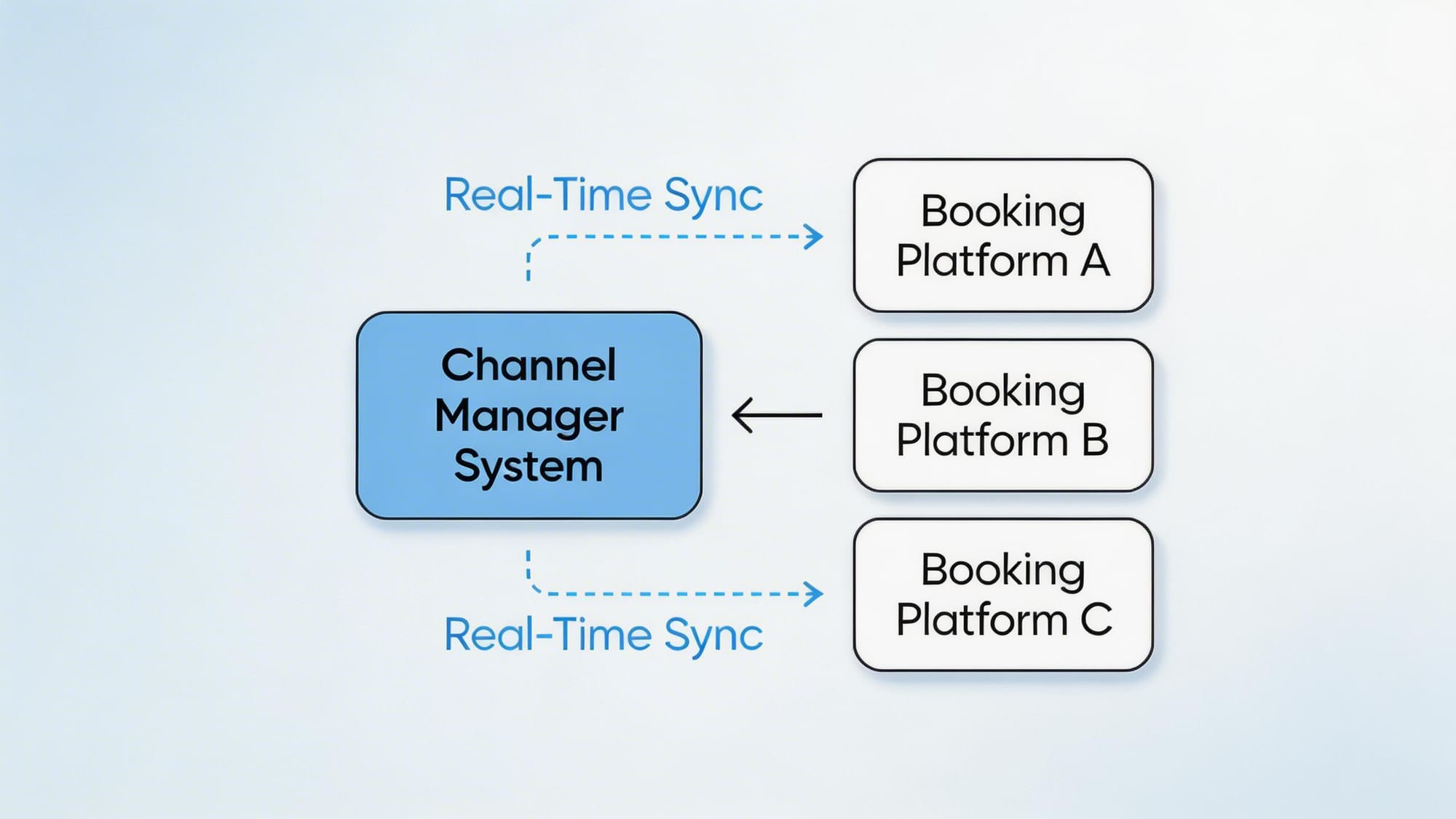
Effective diversification depends on centralized control. Properties that use a channel manager or integrated management system update availability and pricing once, then sync changes across all booking sites in real time.
Manage Every Booking Site from One Place
Update availability and pricing once, then sync changes across all booking sites in real time. Our channel manager helps you avoid overbookings, rate conflicts, and manual updates—while keeping full control of your distribution.
This setup allows owners to apply practical distribution rules, such as limiting availability on high-commission platforms when occupancy is strong or prioritizing lower-cost channels during shoulder seasons. Instead of reacting to demand, properties begin controlling it.
Diversification also improves decision-making. When bookings are tracked across channels, owners can compare net revenue rather than raw reservation counts. A booking site that generates fewer reservations may still perform better due to longer stays or lower cancellation rates.
Spreading demand across multiple booking sites protects revenue stability. If visibility drops on one platform, others continue to deliver bookings. This flexibility becomes critical during market shifts or policy changes.
Choose the Right Platform to Boost Your Bookings
The best booking site depends on your property type, location, and operational scale. Popularity alone should not guide the decision.
Independent vacation rentals often perform better on fewer platforms with strong niche alignment. Longer stays and flexible pricing matter more than maximum exposure.
Small to mid-size hotels typically benefit from a mix of high-traffic booking sites and one or two regional platforms. Automated inventory control becomes essential as distribution expands.
Multi-property operators and growing hotel groups require broader exposure. At this level, centralized software is no longer optional. Without it, rate conflicts and revenue leakage become difficult to manage.
Testing is more effective than assumptions. Many properties launch new booking sites with limited inventory, then evaluate performance over several months. Decisions are based on revenue contribution, cancellation behavior, and operational impact.
Direct bookings should remain part of the strategy. Booking sites like Booking.com generate demand, but direct channels protect margins. Properties that combine OTAs with a strong direct booking engine usually achieve healthier long-term results.
As distribution grows, manual management quickly reaches its limits. Integrated systems allow properties to connect booking sites, direct channels, and pricing rules into a single workflow. This shift turns distribution from a daily struggle into a predictable process.
FAQs
Is Booking.com still worth using?
Yes. Booking.com remains one of the most effective booking sites for global exposure. The key is avoiding over-dependence.
How many booking sites should a property use?
Most properties perform well with three to five active booking sites, supported by centralized inventory control.
Are Booking.com competitors cheaper?
Some platforms offer lower commission or attract longer stays, which can improve net revenue. Performance varies by market.
Can I manage multiple booking sites without software?
It is possible at a small scale, but risks increase quickly as volume grows. Automation reduces errors and saves time.
What matters more, traffic or conversion?
Conversion quality usually matters more. A smaller booking site with higher intent often delivers better profit.