
Introduction
Trip.com is often one of the first platforms hotels consider when expanding into international markets. It is widely recognized among Asian travelers, supports multiple languages and currencies, and feels like a natural gateway to cross-border bookings.
However, international demand rarely lives on a single platform. Travelers from different regions search, compare, and book accommodation in very different ecosystems. A hotel that relies only on Trip.com may perform well in certain markets while remaining invisible in others.
Many hoteliers searching for Trip.com alternatives are not trying to replace the platform. They are looking for ways to reach international travelers more consistently, reduce dependency on one channel, and manage multiple OTA bookings without increasing operational workload.
This article explores Trip.com from a hotel distribution perspective. We’ll clarify the difference between Trip.com and Ctrip.com, explain why Trip.com works well for international travelers, identify when it is no longer enough on its own, and examine sites like Trip.com that help hotels reach global demand more effectively.
Trip.com vs Ctrip.com: What’s the Difference?
Trip.com and Ctrip.com belong to the same group, but they serve very different purposes in hotel distribution.
Ctrip.com primarily targets the domestic Chinese market. Its users are mostly China-based travelers, and the platform is optimized for local language, local payment methods, and domestic travel behavior. For hotels, Ctrip.com mainly delivers demand from within China.
Trip.com, on the other hand, is positioned as the group’s international brand. It supports multiple languages, international payment options, and global customer service. Its audience includes outbound Chinese travelers as well as travelers from other Asian markets and selected international regions.
From a hotel’s point of view, this difference affects:
- Where demand comes from: domestic versus outbound and international travelers
- Booking behavior: local price sensitivity versus cross-border comparison
- Content expectations: international travelers rely more heavily on translated descriptions, policies, and standardized information
Understanding this distinction helps hotels position Trip.com correctly within their channel mix, instead of expecting it to cover all international markets equally.
Why Trip.com Works for International Travelers
Trip.com performs particularly well in markets where Asian outbound travel is strong. Travelers from China, Southeast Asia, Japan, and South Korea are often familiar with the brand and trust it when booking overseas accommodation.
Several factors contribute to this performance:
- A localized booking experience across languages, currencies, and regions
- Strong mobile usage that matches booking habits in Asian markets
- High-intent users who often search with fixed travel dates and destinations
For hotels, this can lead to higher conversion rates from these regions compared to some global OTAs, even if total traffic volume is smaller. In many destinations, Trip.com becomes a key source of international bookings that would not appear through Western-focused platforms.
At the same time, Trip.com’s strength is closely tied to regional demand. Its influence is not evenly distributed across all outbound markets, which creates natural limitations.
When Trip.com Alone Is Not Enough
In real hotel operations, the limits of relying on Trip.com usually appear in performance data rather than theory.
A property may see steady bookings from Asian markets through Trip.com, while demand from Europe or North America remains flat. Revenue managers often notice that adjusting prices or availability on Trip.com alone does not significantly impact overall occupancy. This is rarely a pricing issue. It usually means travelers in other regions are searching on different platforms.
Depending on a single international channel also increases risk:
- Market exposure becomes unbalanced toward one region
- Seasonal demand swings hit harder
- Pricing decisions are made with incomplete market signals
At this stage, hotels do not need to abandon Trip.com. Instead, they need to complement it with other platforms that serve different international audiences.
Sites Like Trip.com That Help You Reach International Travelers
Rather than comparing platforms by size, it is more effective to view them as regional demand gateways.
Sites like Trip.com connect hotels with international travelers, but each one dominates different source markets:
- Agoda
Strong across Southeast Asia and increasingly important for Asian outbound travel. It often performs well for international leisure travelers who are price-conscious. - Expedia Group platforms (Expedia, Priceline)
Key entry points for North American travelers booking international trips. These platforms attract users who value flexible policies and bundled travel options. - eDreams and Opodo
Widely used in parts of Europe, especially for short-haul and mid-range international travel. - Rakuten Travel
A major booking channel for Japanese travelers going overseas, particularly for well-rated international hotels. - MakeMyTrip
A growing source of outbound demand from India, especially to popular tourist destinations.
Each of these platforms reaches travelers who are already comfortable booking cross-border trips within their ecosystem. For hotels, the goal is not maximum coverage, but targeted exposure in the right source markets.
Managing Global Bookings Across Regional Platforms
The main challenge of using multiple international platforms is not demand—it is complexity.
Each channel introduces its own commission structure, cancellation rules, payment timelines, and content requirements. As the number of platforms increases, manual updates quickly become error-prone and time-consuming.
For most hotels, the breaking point comes when rates and availability need to be adjusted multiple times per day across different platforms. At that point, hotels typically shift from manual channel updates to a centralized distribution setup.
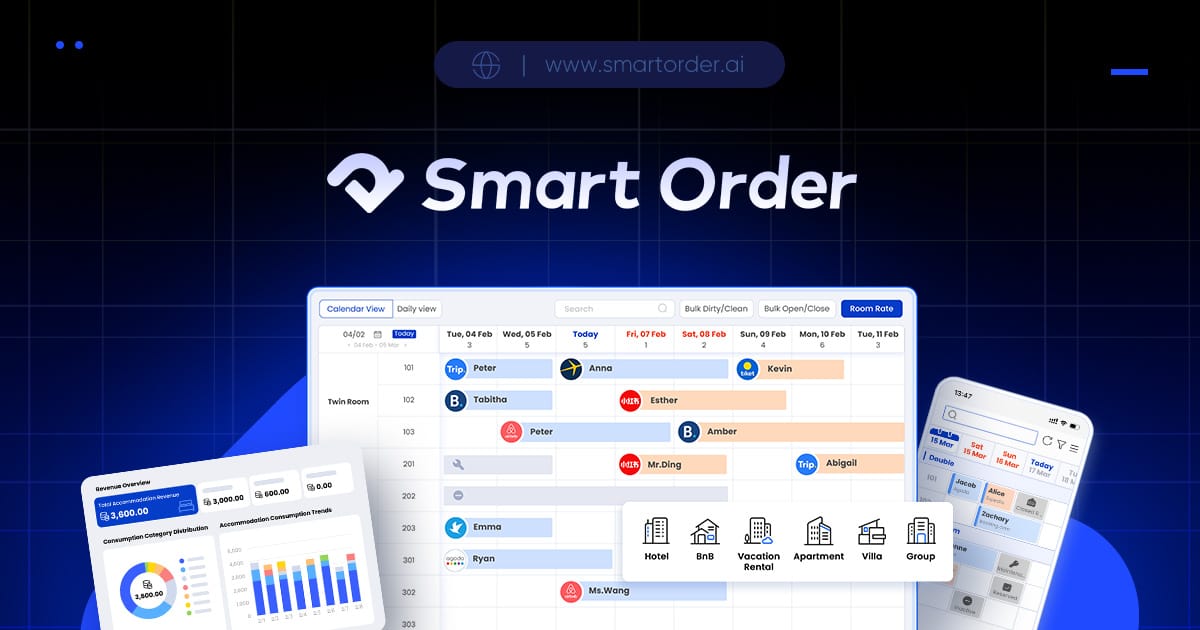
Manage All Booking Platforms from One Dashboard
Reduce manual updates, prevent overbookings, and make pricing decisions based on real-time demand. Our PMS centralizes rates, availability, and reservations across Trip.com, Agoda, Expedia, and more—so your hotel stays in control while scaling international bookings.
With centralized control:
- Rates and availability are managed in one place
- Updates are synchronized across platforms like Trip.com, Agoda, and Expedia
- Overbookings are reduced during high-demand periods
- Pricing decisions can reflect real-time regional demand
This approach is not about adding more channels. It is about maintaining control as international distribution grows.
Distribution Strategies by Hotel Size
Distribution needs vary significantly depending on hotel scale.
Independent hotels usually focus on a small number of platforms. Trip.com combined with one or two regional alternatives often provides sufficient international reach without operational overload.
Small and mid-sized chains require consistency across properties. Centralized updates and standardized content become essential as the number of listings increases.
Large hotel groups manage distribution at scale. Their priorities include regional demand analysis, automated inventory control, and system-level workflows that support dozens or hundreds of properties simultaneously.
Understanding these differences helps hotels choose not only the right platforms, but also the right operational setup to support growth.
FAQs
Is Trip.com enough for international bookings?
Trip.com works well for certain regions, especially Asia. For broader international coverage, most hotels benefit from additional platforms.
Are Trip.com alternatives competitors or complements?
In most cases, they are complements. Each platform serves different source markets and traveler behavior.
Does listing on multiple platforms reduce direct bookings?
Not necessarily. OTA visibility often supports brand discovery, which can later drive direct demand.
What is the biggest risk of multi-platform distribution?
Operational inconsistency. Without proper systems, rate errors and availability issues can negatively affect revenue and guest trust.
Choosing sites like Trip.com is only one part of reaching international travelers. The larger challenge is building a distribution strategy that scales across regions without increasing complexity. Hotels that succeed internationally usually invest early in systems and workflows that grow with demand, rather than reacting after problems appear.