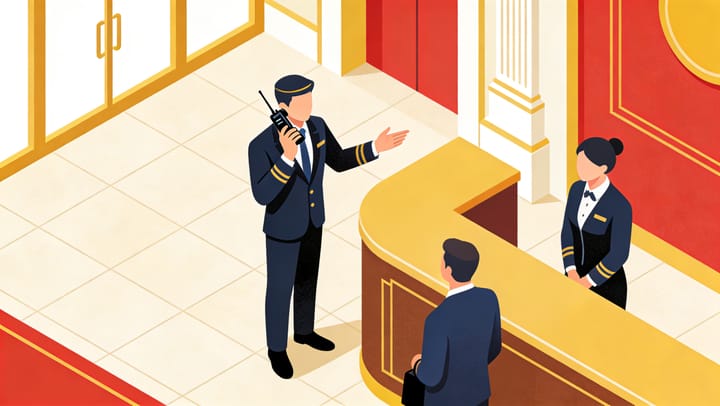
In modern hospitality, a hotel concierge is more than a staff member answering questions. They are the central figure in shaping a guest’s experience, providing guidance, solving problems, and creating lasting memories. Whether managing a luxury hotel or a small boutique property, understanding the role, responsibilities, and performance metrics of a concierge is essential for guest satisfaction and operational success.
What is a Hotel Concierge?
A hotel concierge is a specialized staff member dedicated to guest assistance, local expertise, and logistics. While the front desk handles the "transaction" (check-in/out), the concierge handles the "interaction."
In the modern context, the role has expanded. We now see the rise of the Digital Concierge and the Virtual Concierge, where technology helps human staff manage requests like restaurant reservations, transportation, and "hidden gem" local recommendations. Essentially, they are the face of your hotel's brand promise
Why is a Hotel Concierge Important?
Investing in a concierge isn't just a luxury; it's a strategic move for your Hotel CRM (Customer Relationship Management).
- Boosting Online Reputation: According to TripAdvisor data, guests are 40% more likely to leave a 5-star review if they mention a specific staff member who helped them—usually the concierge.
- Capturing Ancillary Revenue: A concierge acts as an internal salesperson. By suggesting your hotel’s rooftop bar or spa instead of a street-side competitor, they keep revenue within your four walls.
- Operational Efficiency: By offloading complex guest queries (e.g., "How do I get to the airport during the marathon?") from the front desk, you reduce wait times during peak check-in hours.
Key Hotel Concierge Duties and Responsibilities
Core responsibilities of a hotel concierge include:
- Guest Assistance: Offering information about local attractions, events, and transportation options.
- Booking & Reservations: Handling restaurant tables, show tickets, and tours.
- Problem Resolution: Quickly addressing guest complaints or special requests.
- Personalized Service: Remembering guest preferences and tailoring recommendations.
- Department Coordination: Working closely with front desk, housekeeping, and management for smooth operations.
- Technology Utilization: Leveraging concierge management tools or PMS software to manage guest interactions.
Example in practice: A concierge at a boutique hotel may use a CRM system to track guest dining preferences and proactively book tables at favorite restaurants.
How to Implement Hotel Concierge Services
Hotels can implement concierge services effectively by following these steps:
- Define Scope: Decide which services the concierge will offer based on property type and guest profile.
- Staff Training: Conduct workshops on local knowledge, communication, problem-solving, and cultural sensitivity.
- Leverage Technology: Use hotel management software, apps, and CRM tools to streamline requests and record guest preferences.
- Standardize & Personalize: Create protocols for common requests while leaving room for unique guest experiences.
- Measure Success: Collect guest feedback, monitor satisfaction scores, and track service fulfillment times.
Even small properties can provide a high-touch concierge experience using digital tools combined with personalized attention.
How Small Hotels Can Train a Hotel Concierge
Smaller hotels often have leaner teams, making efficient training essential:
- Cross-Training: Ensure staff understand front desk and housekeeping processes.
- Local Expertise: Organize guided tours or briefings about nearby attractions.
- Soft Skills Training: Focus on communication, empathy, and proactive problem-solving.
- Simulation Exercises: Role-play real guest scenarios to build confidence.
- Digital Tools: Train staff on PMS or CRM systems to handle bookings and guest requests efficiently.
- Staff Empowerment: Give staff a small discretionary budget to offer free coffee or small gifts to stressed guests, no manager approval needed.
By integrating technology with personal service, small hotels can achieve concierge service quality comparable to luxury hotels.
How Do You Judge a Concierge’s Performance?
Key performance indicators (KPIs) include:
- Guest Satisfaction: Reviews, surveys, and repeat guest feedback.
- Response Time: Speed in acknowledging and fulfilling requests.
- Revenue Contribution: Bookings, tours, or services upsold by the concierge.
- Problem Resolution Rate: Ability to solve complaints without escalation.
- Repeat Guest Engagement: Personalized recognition and service.
Regular evaluation, coaching, and leveraging software to track requests ensure concierges maintain high service standards.
Conclusion
A hotel concierge is central to delivering exceptional guest experiences. Proper training, the use of concierge software, and clear performance metrics help both large and small hotels provide efficient, personalized service. By investing in your concierge team, you enhance guest loyalty, improve reviews, and drive revenue.
Tip: Consider integrating a concierge management platform or PMS system to streamline guest requests, monitor performance, and enable personalized service.
FAQs
Q: Can small hotels benefit from a concierge?
Yes, small hotels can provide high-quality concierge services with proper training and digital tools.
Q: What skills make a successful concierge?
Excellent communication, problem-solving, local knowledge, and anticipation of guest needs.
Q: How can technology improve concierge services?
CRM and PMS software help track requests, preferences, and service history, enabling quick, accurate responses.
Q: How to measure concierge effectiveness?
Through guest satisfaction, response times, upselling performance, and repeat guest engagement.
Q: Are there software tools specifically for concierges?
Yes, tools like property management systems (PMS), CRM platforms, and booking apps help concierges manage tasks efficiently.