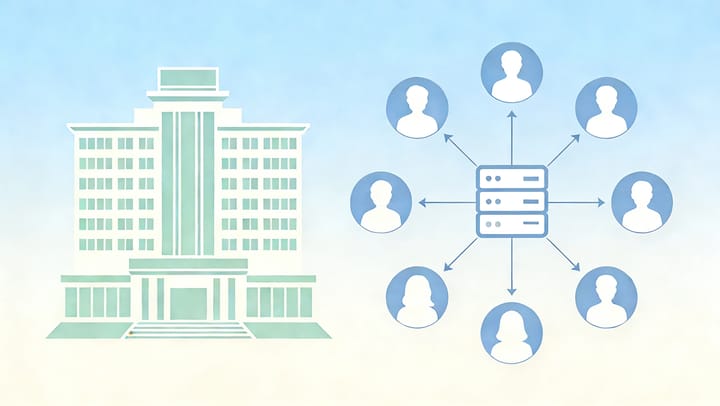
A hospitality CRM is software that helps hotels, resorts, and vacation rentals collect guest data and use it to deliver personalized experiences, drive repeat bookings, and increase loyalty. It works alongside your Property Management System to connect operational data with guest relationship insights—turning one-time visitors into returning guests.
What Is a Hospitality CRM?
CRM stands for Customer Relationship Management. In the hospitality industry, a CRM is a system specifically built to manage the relationship between your property and your guests—before, during, and after their stay.
This is different from a generic CRM used in sales or e-commerce. A hospitality CRM is designed around guest profiles, booking history, stay preferences, and communication patterns. The goal is not just to collect data—it is to use that data to deliver better service and keep guests coming back.
A hospitality CRM typically consolidates information from multiple touchpoints: your booking engine, OTA channels, front desk interactions, and post-stay feedback. This gives your team a complete view of each guest so they can act on it at the right moment.
How CRM Works in Hotels
The core function is building a guest database that grows with every interaction. Here is how it typically works in practice.
When a guest makes a reservation—through Booking.com, Agoda, your direct website, or any other channel—the CRM captures that booking and creates or updates a guest profile. It records contact details, the booking source, room preferences, and any special requests.
During the stay, the system logs additional information: which amenities the guest used, any complaints or compliments, and how staff resolved service issues. This enriches the profile for future visits.
After check-out, the CRM enables automated follow-up: a thank-you email, a review request, a seasonal offer, or a loyalty program update. These touchpoints keep the guest relationship active without requiring manual effort from your team.
Over time, this accumulation of data becomes a strategic asset. You can identify your most loyal guests, understand which channels bring high-value bookings, and spot patterns that drive repeat visits.
Key Benefits of CRM in the Hospitality Industry
Guest Retention and Repeat Bookings
Acquiring a new guest typically costs five to seven times more than retaining an existing one. A hospitality CRM helps you stay connected with past guests through timely, relevant communication—anniversary messages, exclusive loyalty offers, and recommendations based on their previous stays.
When guests feel recognized and valued, they are far more likely to return directly—bypassing OTA platforms and saving you the commission cost.
Personalization That Guests Actually Notice
Without a CRM, staff rely on memory or handwritten notes to personalize service. With a CRM, every team member can instantly see a guest's history—their preferred room floor, dietary restrictions, or whether they always request extra pillows.
This kind of personalization is no longer optional. Guests increasingly expect it, and properties that deliver it consistently earn higher ratings and more word-of-mouth referrals.
Smarter Marketing Without Guesswork
A hospitality CRM lets you segment your guest database and target specific groups. Instead of sending the same email to everyone, you can create a campaign for guests who have not returned in 12 months, or an upsell offer for guests who always book suites.
This precision increases conversion rates and reduces the cost of acquiring repeat bookings. It also reduces the need to rely on OTAs for demand generation.
Operational Efficiency Across the Property
When your team has instant access to accurate guest data, they spend less time searching and more time serving. Faster check-ins, fewer miscommunications, and smoother handoffs between departments all add up to a better guest experience—and a less stressful workday for your staff.
Why CRM Integration with Your PMS Matters
A hospitality CRM works best when it is connected directly to your Property Management System (PMS). Your PMS handles operations—reservations, room assignments, availability, and billing. Your CRM handles relationships—guest history, communication preferences, and loyalty data. When these two systems share data in real time, your team has everything they need in one place.
Here is what this looks like in practice: a guest books a room through Booking.com. Your PMS receives the reservation and updates availability across all channels. At the same time, the CRM creates or updates the guest profile with the booking source, room type, and arrival date. When the guest arrives, your front desk can see their full history in seconds.
Without this integration, guest data lives in separate systems. Staff end up switching between tools, copying information manually, or simply not having the context they need to deliver personalized service. The result is a disjointed experience that guests notice even if they cannot identify the cause.
What to Look for in a Hospitality CRM
Not every CRM is designed for the hospitality industry. Here are the key features to evaluate before choosing one.
- Guest profile management: The system should build comprehensive guest profiles automatically from bookings—no manual data entry required.
- PMS integration: Real-time, two-way sync with your property management system is non-negotiable. Without it, your CRM and operations are working from different data.
- Communication automation: Look for built-in messaging tools with templates for pre-arrival instructions, post-stay follow-up, and seasonal campaigns.
- Segmentation tools: You need the ability to group guests by behavior, booking source, stay frequency, or lifetime value and target each group specifically.
- Reporting and analytics: The CRM should show which guest segments generate the most revenue, which campaigns drive repeat bookings, and how satisfaction scores are trending over time.
- Ease of use: A CRM your team will not adopt delivers no value. Prioritize clear interfaces and workflows that fit the way your staff actually works.
FAQ
What does CRM stand for in hospitality?
CRM stands for Customer Relationship Management. In hospitality, it refers to systems and strategies used to manage and improve the long-term relationship between a property and its guests—from first booking through post-stay follow-up.
How is CRM used in hotels?
Hotels use CRM to store and organize guest profiles, track booking history and stay preferences, automate pre- and post-stay communications, and run targeted marketing campaigns. The goal is to increase guest satisfaction, drive repeat bookings, and reduce dependency on OTA platforms.
What is the difference between a CRM and a PMS?
A Property Management System (PMS) manages hotel operations—reservations, room status, check-in, and billing. A CRM manages guest relationships—history, preferences, communication, and loyalty data. In modern hospitality, the two systems work best when integrated so that operational and relationship data stay in sync automatically.
Does a small hotel need a CRM?
Yes, especially if increasing direct bookings and reducing OTA commissions is a priority. Even properties with fewer than 20 rooms benefit from organized guest data and automated communication. Many hospitality CRM platforms today offer affordable pricing tiers designed specifically for independent operators.
What is the best CRM for the hospitality industry?
The best CRM for your property depends on your size, goals, and existing technology stack—especially your PMS. Prioritize systems that integrate directly with your property management system and offer hospitality-specific features like guest profiles, stay segmentation, and automated pre-arrival communication.