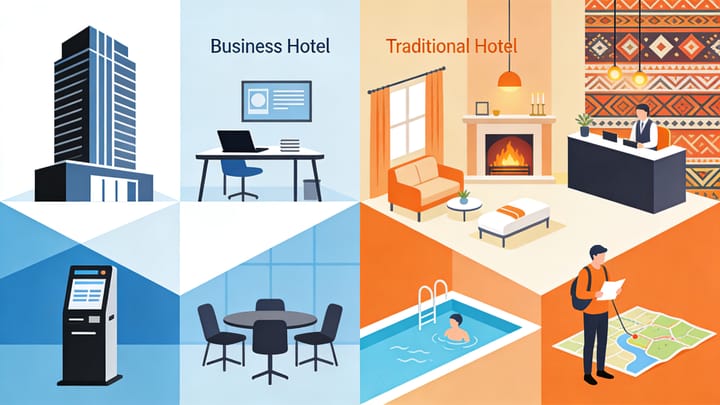
When choosing accommodations, travelers often wonder about the difference between a business hotel and a traditional hotel. Understanding these differences is key for both guests and hotel operators. Each type of hotel serves a distinct audience, offers different services, and presents unique value propositions. In this article, we will explore the key features, service differences, amenities, pricing strategies, and target guests for business and traditional hotels.
Key Features of Business Hotels vs Traditional Hotels
Business hotels are designed primarily to cater to corporate travelers. They focus on functionality, efficiency, and convenience. Rooms are often smaller than traditional hotels but are equipped with workspaces, fast Wi-Fi, and power outlets suitable for laptops and mobile devices. Many business hotels also provide meeting rooms, conference facilities, and co-working spaces. The location is typically close to business districts, airports, or convention centers to minimize travel time for guests.
On the other hand, traditional hotels focus on leisure, family stays, or tourist experiences. Their features prioritize comfort, aesthetics, and a broad range of recreational amenities. Rooms tend to be more spacious, often with additional furnishings like lounge chairs or mini-bars. Traditional hotels may be located near tourist attractions, beaches, or scenic areas. They aim to provide an immersive and relaxing experience rather than a purely functional stay.
From an operational perspective, business hotels often adopt streamlined check-in and check-out processes and may offer mobile apps for room booking and service requests. Traditional hotels, while increasingly adopting technology, usually emphasize personal interaction and concierge services.
How Services Differ in Business vs Traditional Hotels
Service offerings vary significantly between business and traditional hotels due to the needs of their target guests. Business hotels focus on speed, efficiency, and support for work-related tasks. Guests can expect services such as express check-in, business centers, laundry with fast turnaround, and 24/7 room service catering to working hours. Many also offer loyalty programs designed for frequent travelers, helping companies manage accommodation expenses more effectively.
In contrast, traditional hotels prioritize guest experience, leisure, and hospitality. Services often include guided tours, spa treatments, recreational activities, and a variety of dining options. Staff training emphasizes personal attention and anticipating guest preferences. While traditional hotels may provide business facilities, these are usually secondary and not as robust as those in business hotels.
A practical implication for hotel operators is that the service model affects staffing, training, and operational efficiency. Business hotels focus on standardized, repeatable processes to meet corporate expectations, while traditional hotels may allocate more resources to personalized guest experiences.
Business Hotel vs Traditional Hotel: Key Amenities Compared
Amenities are a major differentiator between these two hotel types. In business hotels, key amenities include:
- High-speed internet and business-grade Wi-Fi
- Desk and ergonomic chairs in rooms
- Conference rooms and meeting spaces
- On-site cafes and 24/7 snack options
- Shuttle services to airports or business hubs
Traditional hotels, however, focus on leisure and comfort. Typical amenities include:
- Pools, gyms, and recreational areas
- Spa and wellness services
- Kid-friendly activities and family suites
- On-site restaurants with diverse cuisines
- Scenic views and outdoor relaxation areas
For hotel management software, tracking amenity usage is crucial. Business hotels benefit from analytics on meeting room bookings or in-room office facilities, whereas traditional hotels should monitor spa, dining, and recreational activity usage to optimize revenue.
Comparing Prices and Value of Business and Traditional Hotels
Pricing strategies between business and traditional hotels reflect their respective target markets. Business hotels may charge higher rates for smaller rooms but include essential services that support work efficiency. Their value proposition is convenience, time-saving services, and professional amenities. Many also offer corporate packages with volume discounts or negotiated rates for frequent business travelers.
Traditional hotels often have a wider price range depending on room size, view, and included leisure amenities. Guests pay for experience, comfort, and personalized service rather than efficiency. Seasonal pricing and promotional offers are common, targeting holiday travelers or tourists.
For hotel operators, understanding perceived value vs. cost is essential. Business hotels can optimize revenue by bundling services like breakfast, internet, and shuttle transport into a single rate. Traditional hotels can attract guests with themed packages, spa discounts, or family-oriented deals. Both types benefit from dynamic pricing software that considers occupancy rates, demand trends, and local events.
Who Should Stay in a Business Hotel vs a Traditional Hotel?
Choosing the right type of hotel depends on traveler needs and purpose of the trip:
- Business travelers or frequent corporate visitors benefit most from business hotels. The focus on productivity, location convenience, and professional amenities makes them ideal for meetings, conferences, and short stays.
- Leisure travelers, families, or tourists should consider traditional hotels. Spacious rooms, recreational amenities, and scenic locations provide relaxation, entertainment, and a memorable experience.
- Some hybrid travelers, such as remote workers on vacation, may look for hotels combining both functionality and leisure. In these cases, boutique or lifestyle hotels may offer a mix of business and traditional hotel features.
For hotel managers, defining the ideal guest profile is critical. This guides marketing, room design, amenity selection, and staff training. Business hotels focus on efficiency, repeat corporate bookings, and location-based convenience, while traditional hotels emphasize experience, guest satisfaction, and extended stays.
FAQs
Q1: Can a traditional hotel offer business facilities?
Yes, many traditional hotels provide meeting rooms or business centers, but they may not be as extensive or optimized for frequent corporate guests as in business hotels.
Q2: Are business hotels more expensive than traditional hotels?
Not necessarily. Business hotels focus on efficiency rather than luxury, so room sizes may be smaller. Pricing reflects convenience, amenities, and location rather than opulence.
Q3: Which hotel type is better for long stays?
Traditional hotels typically offer more spacious rooms and leisure amenities, making them more comfortable for longer stays. Business hotels cater to short-term, work-focused stays.
Q4: How should hotel operators choose which model to follow?
Operators should analyze their target market, location, and guest needs. Urban centers with corporate demand are ideal for business hotels, while tourist areas benefit from traditional hotel offerings.
Q5: Are hybrid hotels viable?
Yes, hotels offering both business and leisure amenities can attract a wider audience. Success depends on careful balancing of services, marketing, and operational efficiency.
This comparison demonstrates that business hotels and traditional hotels serve distinct needs. By understanding their core features, services, amenities, pricing, and target audience, both travelers and hotel managers can make informed decisions. Whether the priority is productivity or relaxation, selecting the right type of hotel ensures a more satisfying stay and better operational outcomes.