How to Modify Role and Account Permissions

Use Role Management to preset multiple roles with different permissions, such as housekeeping, Property A staff, or administrators, and then assign those roles to different accounts in batches.

I.Modify Role Permissions

You can add or remove permissions for all accounts assigned to the same role at once.

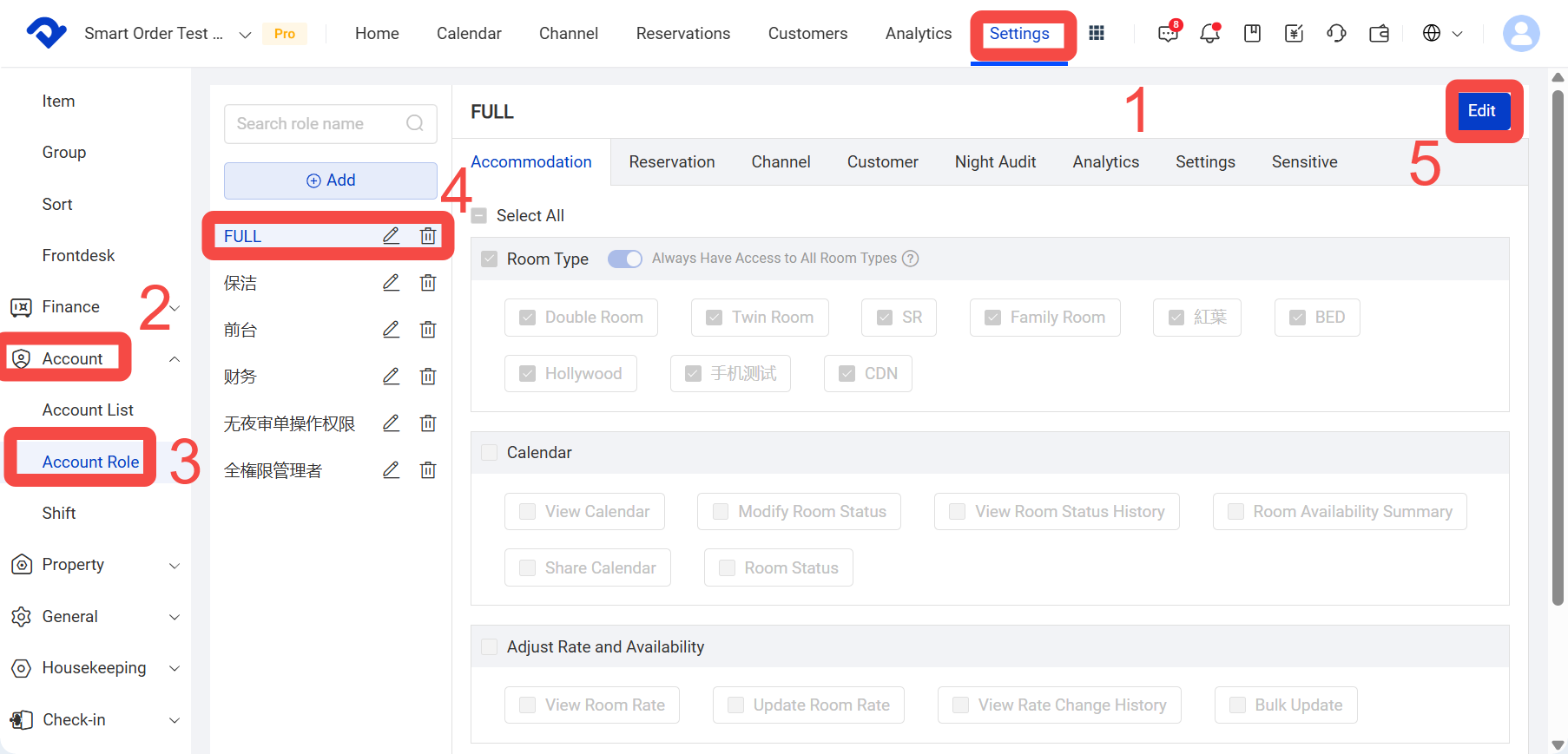
  1. Navigate to Settings > Account > Account Role > Edit
  2. On the Role Management page, click Add to create a new role.
  3. Click the new role, such as [FULL].
  4. Click Edit.
Settings > Account  > Account  Role > Edit
  1. Select each permission section and check the permissions you want.
  2. Click Save. After saving, the updated permissions will be applied to all accounts assigned to this role.
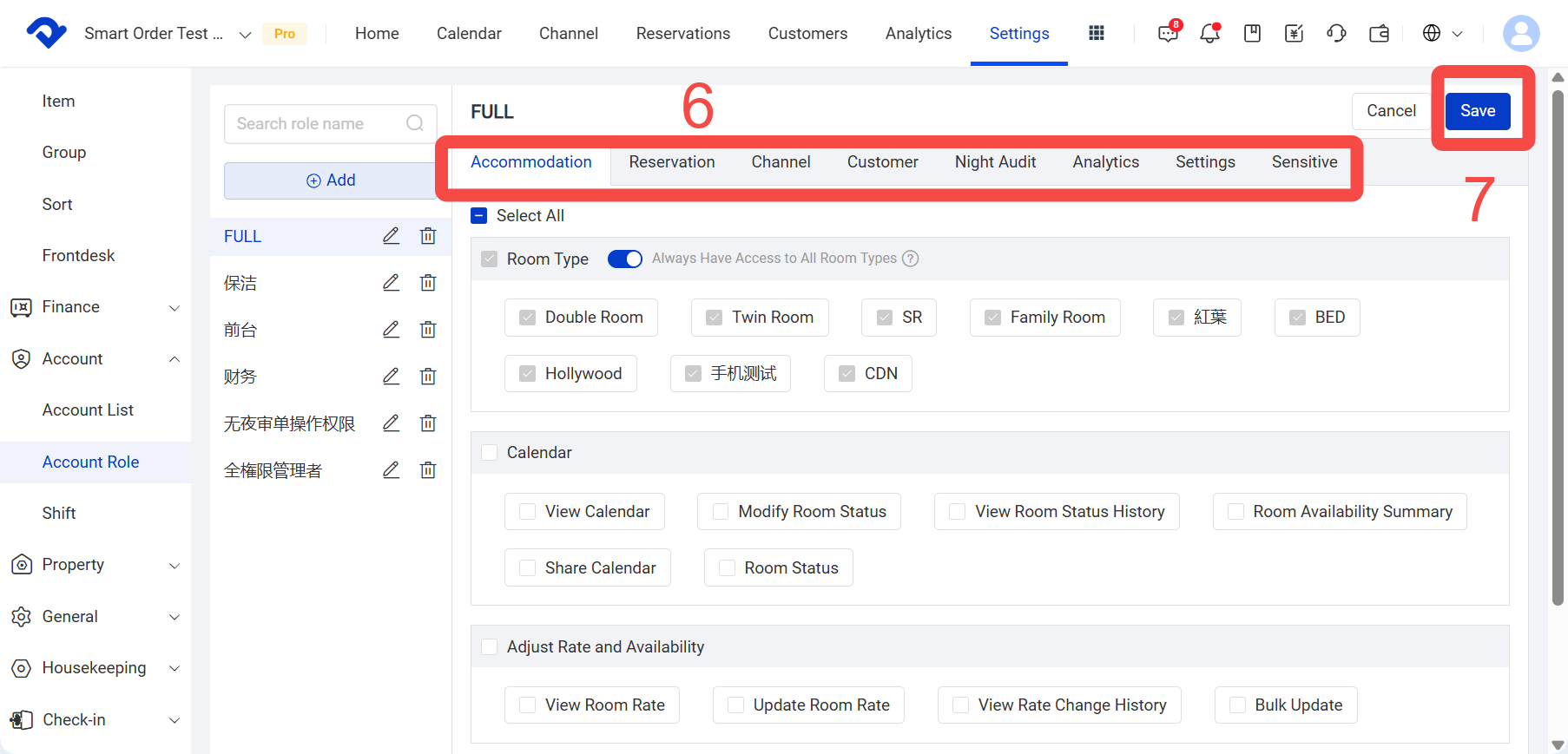
applied to all accounts assigned to this role.

※ To add a new role or assign roles to employees, please refer to the article "Role Management/Adding Employees" under 【I. Role Management】.

Role Management / Add Employees
Path: Settings - - Account - Account Role I. Role Management Role Management lets you preset multiple roles with different permissions, such as housekeeping, Property A staff, or administrators, and then assign those roles to different accounts in batches. 1. Navigate to Settings - - Account - Account Role 2.

II. Modify Account Permissions

You can also modify permissions for an individual account.

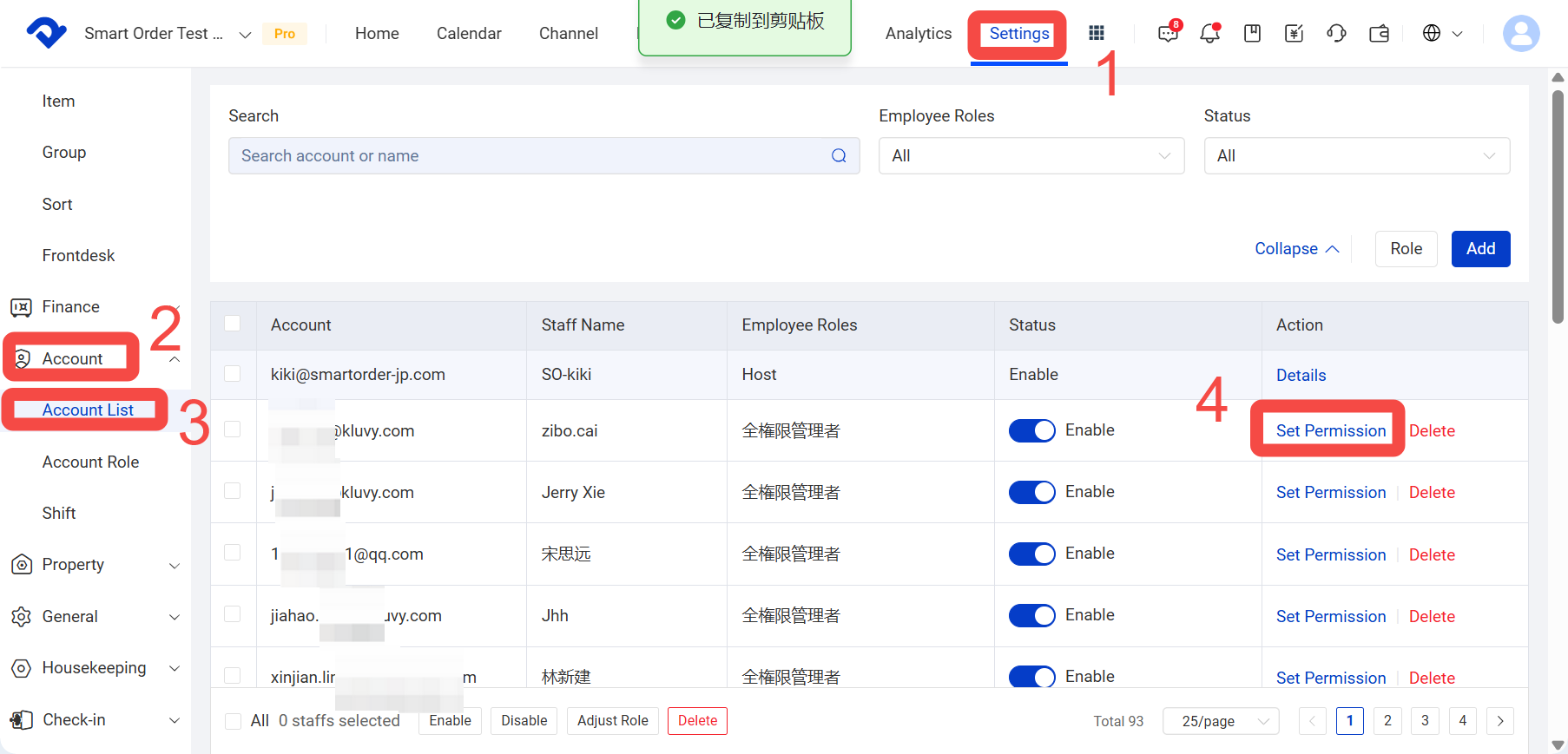
Path: Settings > Account > Account List > Set permissiont > Edit

  1. Click Settings.
  2. Click Account Management.
  3. Click Account List.
  4. Click Set Permissions for the account you want to modify.
  5. Click Edit in the upper-right corner.
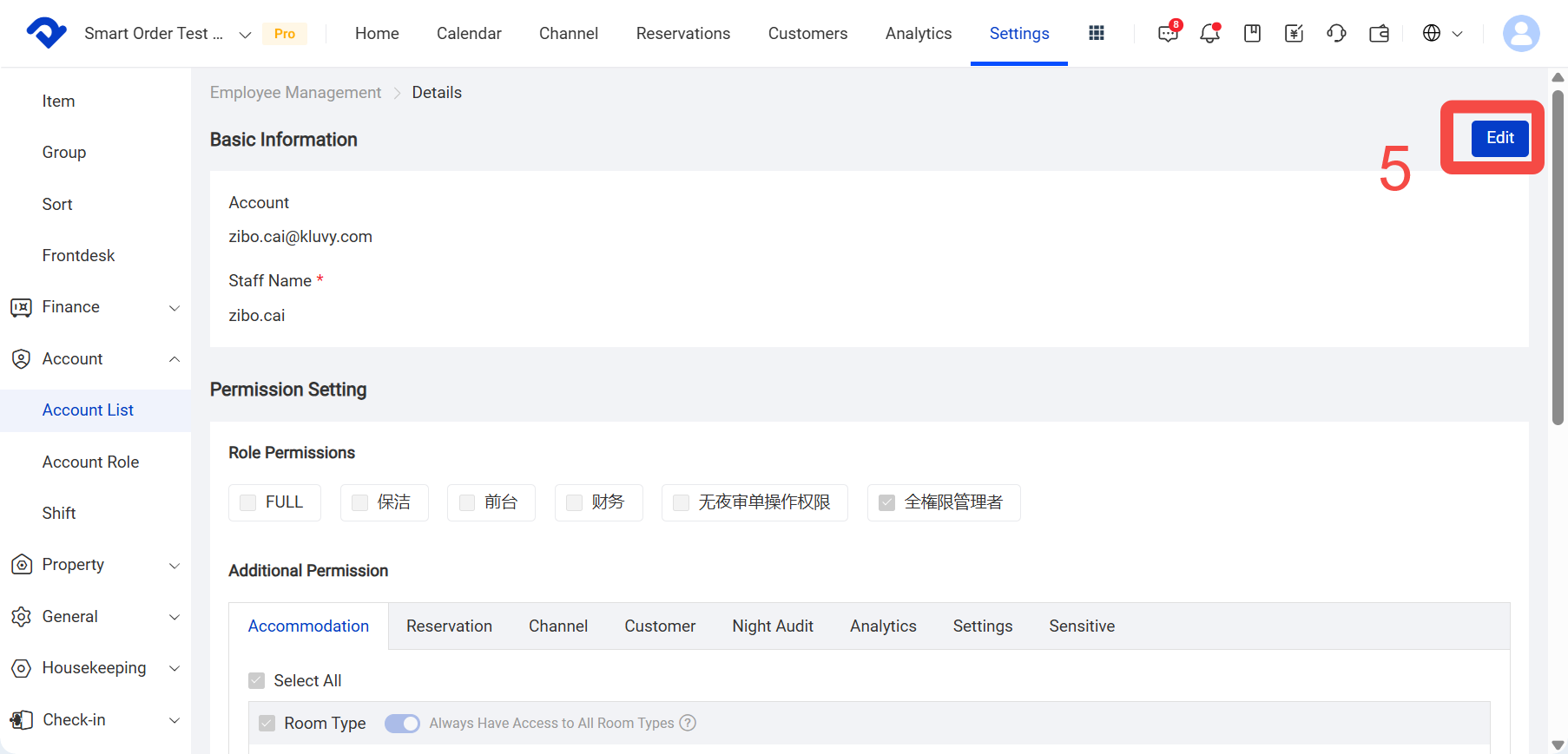
Settings > Account  > Account  List > Set permissiont
Edit
  1. You can remove the role permissions assigned to the account. If you uncheck the assigned role, all permissions provided by that role will be removed from the account.
  2. You can also adjust the account's permissions individually.

If the role remains selected, you can modify permissions in addition to the permissions provided by the role.

If you uncheck the role, you can remove the role settings and configure all permissions individually for that account.
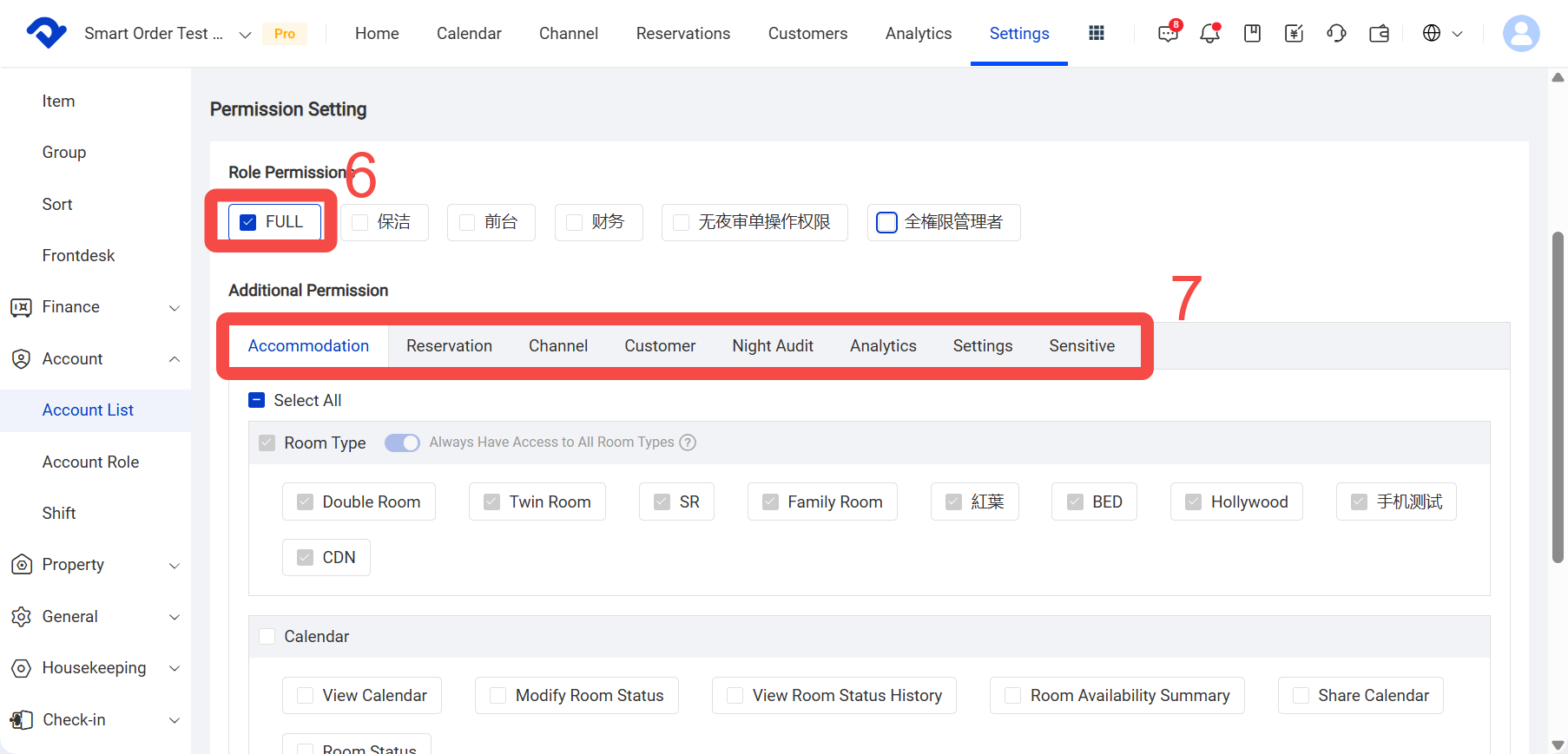
Full role permission

Related Articles

Subscribe to the Professional Plan

Steps 1. Log in to your Smart Order account. ※If you were invited to join a property, you do not need to register an account. On your first login, select Log in with verification code or click Forgot Password to set a password, then log in to the property. Log

Agoda Direct Connect

After direct connection, the current PMS room status and rates will be pushed immediately to each connected channel. Please review the notes below and make sure the PMS pre-setup is completed before connecting. Pre-Connection Checklist – PMS Initial Setup | Smart OrderComplete the pre-connection checklist for PMS initial setup to ensure accurate

Holiday Settings Feature Guide

The Holiday Settings feature displays national holidays, source market holidays, custom holidays, and events in the PMS calendar. This helps businesses identify special dates in advance and check pricing, inventory, channel sales, and staffing arrangements based on actual operations. This feature is only used for calendar labels and reminders. It

Add New Staff Members

Path: Settings > Account > Account List > Add Steps 1. Click Settings. 2. Click Account 3. Click Account List. 4. Click Add. 5. Enter the employee’s email, name, and the required permissions, then click Save. A. Employee email B. Employee name C or D. Select a role directly,

Role Management / Add Employees

Path: Settings - - Account - Account Role I. Role Management Role Management lets you preset multiple roles with different permissions, such as housekeeping, Property A staff, or administrators, and then assign those roles to different accounts in batches. 1. Navigate to Settings - - Account - Account Role 2.

Create and Manage Roles

Set up a role type and customize its permission scope. Steps 1. Navigate to Settings > Account > Account Role 2. On the Role Management page, click Add to create a new role. 3. Select the new role, such as [FULL]. 4. Click Edit. 5. Select each module and check