The hospitality industry has undergone a radical transformation over the last decade, moving away from manual ledgers and fragmented spreadsheets toward integrated digital ecosystems. For hotel managers and short-term rental hosts, the complexity of daily operations—ranging from guest communication to dynamic pricing—can quickly become overwhelming without a centralized hub. As traveler expectations for seamless, "frictionless" stays continue to rise, the pressure on staff to perform perfectly across multiple platforms has never been higher.
This article explores the functional necessity of the Property Management System (PMS) in today’s market. Whether you are overseeing a boutique hotel, a chain of resorts, or a portfolio of vacation rentals, understanding the specific pain points a PMS addresses is the first step toward reclaiming your time and increasing your bottom line. By digitizing the backbone of your business, you transition from reactive firefighting to proactive guest engagement.
So, what problems can a PMS solve for hotel managers and hosts?
A PMS eliminates operational silos by automating administrative tasks, preventing overbookings through real-time synchronization, and providing deep data insights that allow for smarter financial decision-making. Below, we will explore the critical areas where a PMS moves the needle from chaos to streamlined success.
Overcoming the Chaos of Fragmented Channel Management
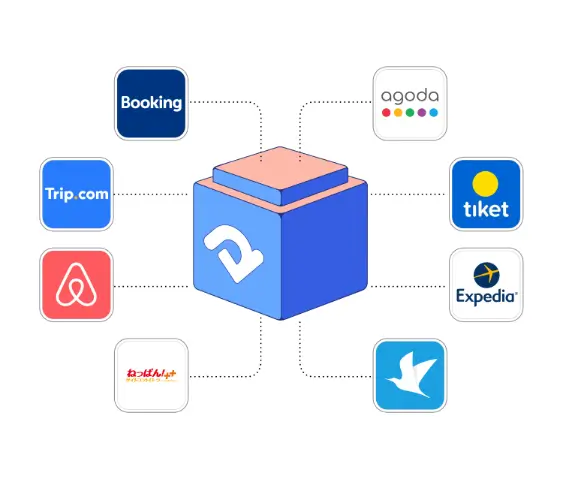
One of the most significant headaches for any modern host or manager is the "multi-channel trap." In an era where visibility is king, your property is likely listed on Expedia, Booking.com, Airbnb, and your own direct website. Manually updating availability across these platforms every time a booking occurs is not only exhausting but also a recipe for the dreaded double-booking. When two guests book the same room simultaneously from different sites, the resulting relocation costs and negative reviews can be devastating to a property’s reputation.
A PMS solves this by acting as the single source of truth for your inventory. Through an integrated channel manager, it uses two-way synchronization to update all platforms instantly. When a guest clicks "book" on one site, that room is immediately pulled from all others. This automation removes the need for constant manual monitoring, allowing managers to sleep through the night without worrying about an accidental overbooking notification appearing on their phone at 3:00 AM.
Beyond just preventing errors, a PMS allows for sophisticated inventory control. You can set specific rules for different channels, such as minimum stay requirements during peak seasons or last-minute discounts to fill gaps. This level of control ensures that you aren't just filling rooms, but filling them at the most profitable rates possible. It moves the manager from a position of data entry to one of strategic oversight.
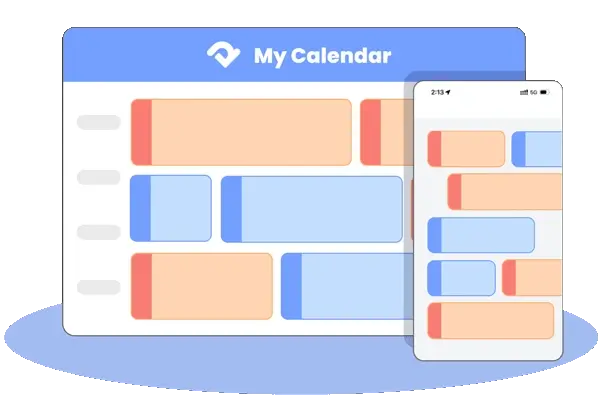
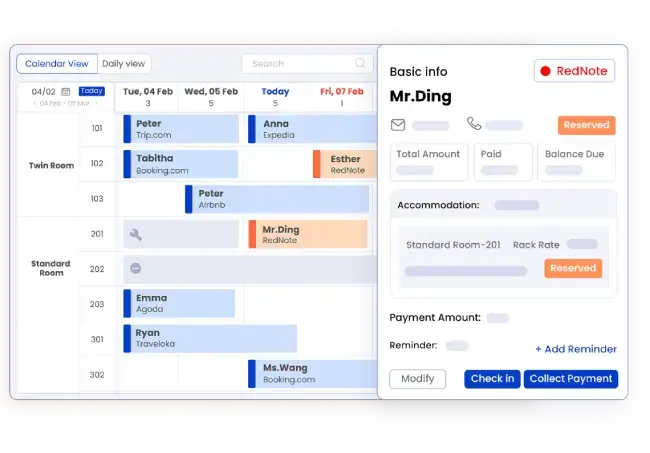
Furthermore, the centralized dashboard provides a visual "tape chart" or calendar view of the entire property. Seeing your entire month’s occupancy at a glance allows you to identify gaps in your schedule that might otherwise go unnoticed. You can quickly drag and drop bookings to optimize room assignments, ensuring that you have the longest possible blocks of availability to attract high-value, long-term guests.
Ultimately, solving the channel management problem is about regaining peace of mind. By trusting a system to handle the technical heavy lifting of distribution, hosts can redirect their energy toward the physical aspects of the property. The shift from manual updates to automated sync is often the moment a small-scale host begins to feel like a professional hospitality mogul.
Streamlining the Guest Experience and Communication
In the modern hospitality landscape, the "experience" starts long before the guest walks through the front door. It begins with the confirmation email and continues through pre-arrival instructions and check-in procedures. For managers handling dozens of guests at once, maintaining a personal touch through manual emails is nearly impossible. This leads to delayed responses, forgotten check-in codes, and frustrated travelers who feel like just another number in a database.
A PMS introduces sophisticated communication automation that maintains a human feel. You can schedule "trigger-based" messages—such as a welcome guide sent three days before arrival or a thank-you note with a review link sent two hours after checkout. By automating these touchpoints, you ensure every guest receives the necessary information at the perfect time, without you ever having to hit "send." This consistency builds trust and significantly reduces the volume of repetitive questions hitting your inbox.
 Hannah Gong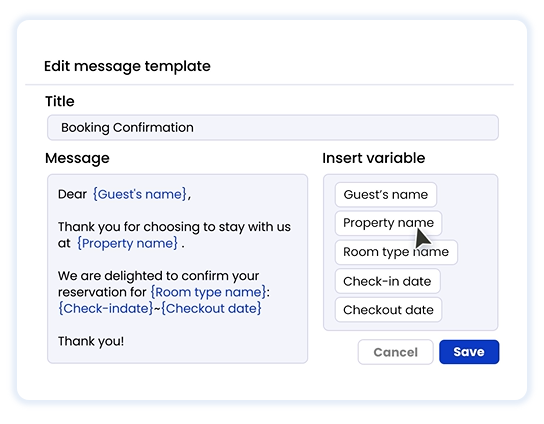
The check-in process itself is often a major pain point, characterized by long lines at a front desk or confusing key handovers. Many modern PMS platforms integrate with smart lock technology, automatically generating unique entry codes for each guest and revoking them at checkout. This "contactless" approach is increasingly preferred by travelers and saves managers hours of physical coordination. It transforms the arrival from a logistical hurdle into a smooth, welcoming transition.
Moreover, a PMS stores guest profiles, which is a goldmine for personalization. If a returning guest previously requested extra pillows or has a specific allergy, the system alerts the staff before they arrive. Solving the problem of "anonymous" guests allows you to provide a bespoke service that drives loyalty and repeat bookings. When a guest feels remembered, they are far more likely to bypass the big booking platforms and book directly with you next time.
Finally, the system handles the sensitive area of payment processing. Instead of chasing guests for deposits or manually swiping cards, a PMS can automate the entire billing cycle. It securely stores payment information, handles authorizations, and sends professional invoices. This professionalism reduces payment disputes and ensures that the financial aspect of the guest's stay is handled with the same care as the hospitality aspect.
Enhancing Operational Efficiency and Housekeeping Coordination
The "back-of-house" operations are where many hospitality businesses lose their profit margins due to inefficiency. Coordinating a cleaning crew and maintenance staff via WhatsApp, phone calls, or paper checklists is notoriously unreliable. Rooms might be cleaned in the wrong order, maintenance issues might be forgotten, and front desk staff may not know which rooms are "guest-ready," leading to awkward wait times in the lobby.
A PMS solves this by providing a dedicated housekeeping module. Cleaners can have their own mobile interface where they see their daily tasks prioritized by check-in times. As soon as a guest checks out, the room status updates to "dirty," alerting the team immediately. Once the room is finished, the cleaner marks it as "ready" in the app, which instantly updates the front desk's dashboard. This real-time loop eliminates unnecessary communication and speeds up room turnover.
Maintenance tracking is another critical problem addressed by the system. If a guest reports a leaky faucet, the staff can create a maintenance ticket directly within the PMS. This ticket stays attached to that specific room's history, ensuring the issue isn't lost in the shuffle of daily operations. Managers can track how long repairs take and identify patterns—perhaps a specific AC unit is failing repeatedly—allowing for better long-term asset management.
From a labor management perspective, a PMS provides the data needed to staff appropriately. By looking at forecasted occupancy, managers can determine exactly how many housekeepers or front-desk agents are needed for the following week. This prevents overstaffing during slow periods and understaffing during rushes, directly impacting the bottom line. It replaces guesswork with data-driven scheduling.
By centralizing these operations, the PMS removes the "information silos" that exist between departments. When everyone is looking at the same live data, the property runs like a well-oiled machine. The manager no longer has to act as a human messenger between the laundry room and the front desk, freeing them up to focus on business growth and guest satisfaction.
Empowering Growth Through Data-Driven Revenue Management
Many hosts and independent hotel managers struggle with pricing. Setting a flat rate for the entire year means you are either leaving money on the table during high-demand events or priced too high to get bookings during the off-season. Solving the problem of static pricing is essential for staying competitive against larger chains that use sophisticated algorithmic tools.
A PMS often includes or integrates with dynamic pricing tools that analyze local market data, competitor rates, and historical trends. The system can automatically adjust your rates multiple times a day to ensure you are always positioned perfectly in the market. This "revenue management" capability can often increase a property's income by 10% to 40% simply by optimizing the price for every single night of the year.
Beyond pricing, a PMS solves the problem of "flying blind" regarding your business health. Without centralized data, calculating your RevPAR (Revenue Per Available Room), ADR (Average Daily Rate), or Occupancy Rate involves hours of manual spreadsheet work. A PMS generates these reports at the click of a button. Understanding where your bookings are coming from (and which channels are costing you the most in commissions) allows you to refine your marketing strategy.
The system also helps with the complex task of financial reporting and taxes. Instead of digging through bank statements at the end of the year, you can export clean, categorized financial reports that are ready for an accountant. For hosts managing properties for other owners, a PMS can automate owner statements and commission splits, solving the administrative nightmare of "who-owes-who-what" at the end of the month.
Ultimately, the goal of any business is sustainable growth. A PMS provides the scalable infrastructure needed to add more rooms or properties to your portfolio without a linear increase in workload. It provides the "big picture" view necessary for a manager to stop thinking like a hobbyist and start thinking like a CEO. By solving the data gap, the PMS turns a property from a simple building into a high-performance investment.
FAQ
Will a PMS be too difficult for my non-technical staff to learn?
Most modern PMS platforms are designed with intuitive, user-friendly interfaces that require minimal training, often mirroring the simplicity of common smartphone apps.
Can I still use a PMS if I only manage a single vacation rental?
Yes, there are many "light" versions of PMS software specifically tailored for single-property hosts that offer essential automation at a lower price point.
Does a PMS replace the need for an accountant?
While a PMS organizes and exports your financial data beautifully, it is still recommended to have an accountant for tax strategy and official filing.